


On April 27, 1861, in the midst of the American Civil War, President Abraham Lincoln took a drastic measure to ensure the fragile unity of the Union, suspending the writ of habeas corpus, a fundamental right that protects citizens from unlawful imprisonment. This bold move allowed the government to detain suspected secessionists and rebels without trial, sending a strong message to Confederate sympathizers.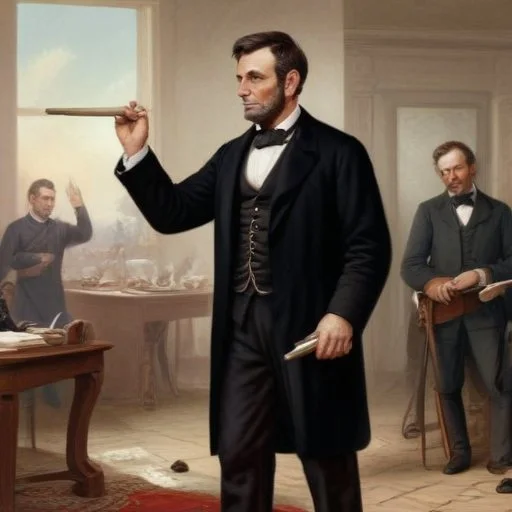
The American Civil War had begun just weeks prior, on April 12, 1861, with the Confederacy's attack on Fort Sumter. As the conflict escalated, Lincoln faced the daunting task of preserving the Union and maintaining order in a nation torn apart by secession and rebellion. Amidst this chaos, the suspension of habeas corpus was a drastic but calculated risk, aimed at quelling the growing rebellion and protecting the Union from within.
The writ of habeas corpus, a cornerstone of American liberty, guaranteed citizens the right to a fair trial and protection from arbitrary arrest. By suspending this writ, Lincoln assumed extraordinary powers, sparking controversy and outrage among many who saw it as an abuse of executive authority. Critics argued that the President had overstepped his constitutional bounds, undermining the very fabric of American democracy.
Lincoln's move was a calculated gamble, walking the tightrope between national security and individual liberties. He believed that the extraordinary circumstances of the Civil War justified extraordinary measures, yet he was keenly aware of the risks involved. The suspension of habeas corpus was a temporary measure, intended to last only until the end of the war, yet its implications would resonate long after the conflict subsided.
Tens of thousands of individuals were detained without trial, many of whom were innocent civilians caught in the crossfire of war. Their stories, often shrouded in secrecy, remain a testament to the human cost of Lincoln's decision. One such example is that of John Merryman, a Maryland farmer who was arrested and imprisoned without trial for suspected secessionist activities. Merryman's case became a lightning rod for criticisms of Lincoln's policy, highlighting the delicate balance between national security and individual freedoms.
The suspension of habeas corpus would have far-reaching implications, setting a precedent for future executive actions during times of crisis. It would also cement Lincoln's reputation as a strong and decisive leader, willing to take bold measures to protect the Union. As the dust settled on the Civil War, Lincoln's decision would be remembered as a turning point in American history, a testament to the enduring struggle between liberty and security.
"Must I shoot a simple-minded soldier boy who deserts, while I must not touch a hair of a wily agitator who induces him to desert?" - Abraham Lincoln, in a letter to Erastus Corning, June 12, 1863
This quote, written two years after the suspension of habeas corpus, captures the essence of Lincoln's dilemma, highlighting the moral complexities of his decision and its ongoing relevance in American political discourse.
The suspension of habeas corpus remains a contested chapter in American history, sparking debates about the limits of executive power and the balance between national security and individual liberties. As the nation continues to grapple with the complexities of war and peace, Lincoln's bold move serves as a poignant reminder of the delicate balance between freedom and security.
Historians have long debated the constitutionality and morality of Lincoln's suspension of habeas corpus. Some, like historian Mark Neely, argue that Lincoln's actions were justified by the emergency circumstances of the Civil War. Others, such as historian James G. Randall, contend that the suspension was an overreach of executive power. This ongoing debate highlights the complexities of balancing individual liberties with national security during times of crisis.
Recent historiographical trends have also focused on the role of slavery in shaping Lincoln's decision. For instance, historian Manisha Sinha argues that Lincoln's suspension of habeas corpus was, in part, a response to the growing threat of slave rebellions in the Border States. This perspective underscores the intricate relationships between slavery, secession, and national security during the Civil War era.

John Merryman, a Maryland farmer, was one of the thousands of individuals detained without trial during the Civil War. Born in 1824, Merryman was a husband, father, and slaveowner who found himself caught in the midst of the conflict. His arrest and imprisonment without trial sparked widespread outrage and became a rallying cry for critics of Lincoln's policy.
Merryman's story serves as a poignant reminder of the human cost of war. Despite his later release and pardon, his experiences during the war had a lasting impact on his life and livelihood. His case continues to be studied by historians as a testament to the complexities of individual freedoms during times of national crisis.
The American Civil War was not an isolated event, but rather part of a broader global conflict over slavery, nationalism, and imperialism. The British and French empires, in particular, were keenly interested in the outcome of the war, as it had significant implications for their own colonial ambitions.
Lincoln's suspension of habeas corpus was, in part, a response to these global pressures. By demonstrating his commitment to preserving the Union, Lincoln hoped to deter European intervention on behalf of the Confederacy. This delicate balance of power highlights the intricate relationships between domestic policy and international relations during times of crisis.
Lincoln's decision to suspend habeas corpus was rooted in a nuanced understanding of the philosophical foundations of American democracy. Drawing on the ideas of John Locke and Thomas Jefferson, Lincoln believed that individual liberties were essential to the preservation of the republic.
However, Lincoln also recognized that these liberties were not absolute. In times of crisis, the government had a moral obligation to protect the greater good, even if it meant temporarily suspending certain individual rights. This philosophical balancing act highlights the ongoing tensions between liberty and security that continue to shape American politics.
The court papers from John Merryman's case provide a unique window into the complexities of Lincoln's suspension of habeas corpus. The documents, housed at the Library of Congress, include pleas, petitions, and writs that offer a firsthand account of the legal debates surrounding the policy.
One particularly striking document is Chief Justice Roger Taney's opinion in Ex Parte Merryman, in which he argues that Lincoln's suspension of habeas corpus was unconstitutional. This document, alongside others in the collection, provides a tangible link to the past, allowing historians and scholars to reconstruct the legal and political contexts of the suspension.