


In the sweltering summer of 1776, the Second Continental Congress gathered in Philadelphia to ratify a document that would change the course of history. On July 4, 1776, fifty-six visionaries representing the thirteen colonies congregated to sign the United States Declaration of Independence, boldly proclaiming their separation from Great Britain and establishing the United States of America as a sovereign nation.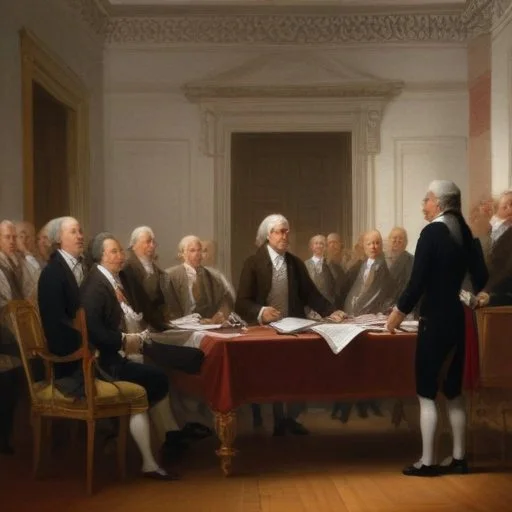
In the years leading up to the Declaration of Independence, tensions between the colonies and Great Britain had been escalating. The introduction of the Tea Act in 1773, which granted a monopoly on tea sales to the East India Company, sparked widespread protests and boycotts. The Boston Massacre, the Boston Tea Party, and the Battles of Lexington and Concord further fueled the flames of revolution. The Continental Congress, formed in 1774, was tasked with coordinating a unified response to British tyranny.
The drafting of the Declaration of Independence was a collaborative effort, with notable contributions from some of the most influential figures of the time. Thomas Jefferson, author of the document, brought his eloquent writing style and philosophical flair to the task. John Adams, a vocal advocate for independence, played a crucial role in convincing his fellow delegates to support the cause. Benjamin Franklin, with his wealth of knowledge and diplomatic expertise, helped to smooth over diplomatic relations with foreign nations.
Between June 11 and June 28, 1776, Jefferson labored over the drafting of the Declaration of Independence. Drawing heavily from the philosophical works of John Locke and the Enlightenment thinkers, he crafted a document that proclaimed the fundamental principles of equality, liberty, and democracy. The final version, adopted on July 4, consisted of a preamble, a list of grievances against King George III, and a formal declaration of independence.
The adoption of the Declaration of Independence marked a turning point in American history, paving the way for the Continental Army's victory in the Revolutionary War. The document's eloquent prose and profound philosophical principles inspired generations of patriots, reformers, and freedom fighters around the world. Today, the Declaration of Independence is regarded as one of the most influential and iconic documents in human history.
The Declaration of Independence has had a profound impact on American culture and society. Its principles of liberty, equality, and democracy have shaped the nation's values, politics, and institutions. The document has inspired countless works of art, literature, and music, and continues to be celebrated on Independence Day, July 4.
Despite its significance, the Declaration of Independence has not been without controversy. Critics have pointed out the document's omission of women's rights, its tacit endorsement of slavery, and its limited definition of citizenship. Nevertheless, the document has remained an enduring symbol of American ideals, with its message of freedom and democracy continuing to resonate with people around the world.
"We hold these truths to be self-evident, that all men are created equal, that they are endowed by their Creator with certain unalienable Rights, that among these are Life, Liberty and the pursuit of Happiness."
— Thomas Jefferson, United States Declaration of Independence
The adoption of the United States Declaration of Independence was a courageous act that marked a nation's rebirth. This defiant declaration of independence ignited a beacon of freedom, inspiring generations to come. As we reflect on this momentous occasion, we are reminded of the power of courage, vision, and collective action in shaping the course of human history.
John Adams, one of the most influential figures of the American Revolution, played a crucial role in convincing the Continental Congress to adopt the Declaration of Independence. A strong advocate for independence, Adams' persuasive arguments and tireless efforts helped to sway the opinions of his fellow delegates.
Adams' commitment to the cause was unwavering, and his dedication to the principles of liberty and democracy earned him the respect and admiration of his peers. His leadership and vision helped to shape the course of American history, cementing his place as one of the founding fathers of the United States.

The Declaration of Independence has had a profound impact on American culture, shaping the nation's values, politics, and institutions. The document's eloquent prose and profound philosophical principles have inspired generations of artists, writers, and musicians.
From paintings to poems, the Declaration has been a source of inspiration for countless works of art. The document's themes of freedom, liberty, and democracy have been echoed in literature, music, and film, continuing to resonate with people around the world.
The signed copy of the Declaration of Independence, known as the "engrossed copy," is a powerful symbol of American independence. Written on parchment in a bold, cursive script, the document measures 29 3/4 inches by 23 3/4 inches and is signed by 56 individuals.
The physical document is a testament to the courage and conviction of the signers, who risked their lives and livelihoods to declare their independence from Great Britain. Today, the document is housed in the National Archives in Washington, D.C., where it remains a revered and iconic symbol of American freedom.

The Declaration of Independence was crafted during a time of great geopolitical turmoil. The British Empire, which had long exerted control over the American colonies, was facing challenges from other European powers, including France and Spain.
The Continental Congress' decision to declare independence was influenced by these global tensions, as well as the colonies' own internal struggles for power and autonomy. The Declaration's Adoption marked a significant shift in the global balance of power, paving the way for the United States to emerge as a major world power.
The Declaration of Independence was deeply influenced by the philosophical ideas of the Enlightenment, particularly the works of John Locke and Jean-Jacques Rousseau. The document's assertions of individual rights and the social contract were rooted in these philosophical traditions.
The Declaration's emphasis on reason, natural law, and individual liberty reflected the Enlightenment values of the time, shaping American political thought and influencing the development of democratic principles around the world.