


Marking the decisive victory of the Continental Army over the British forces, the Siege of Yorktown is remembered as the pivotal moment that ultimately led to the recognition of American independence. On October 17, 1781, British General Charles, Earl Cornwallis, surrendered his army of over 8,000 soldiers, effectively ending the war and paving the way for the Treaty of Paris in 1783.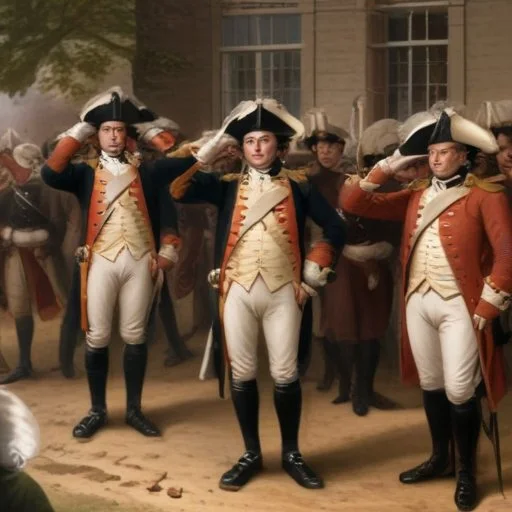
In the late 18th century, tensions between the British Empire and its American colonies had been simmering for years. Protests, boycotts, and eventually, open rebellion had become the norm. The American Revolutionary War had been raging since 1775, with the Continental Army, led by George Washington, fighting for independence from British rule.
In August 1781, British General Charles Cornwallis, confident in his superior forces, marched his army into Yorktown, Virginia, hoping to secure a strategic foothold in the region. However, he soon found himself trapped between the Continental Army and the French fleet, led by Admiral de Grasse, which had blockaded the Chesapeake Bay. The French fleet's presence prevented Cornwallis from escaping or receiving reinforcements, while the Continental Army, aided by French troops, besieged the British forces from land.
As the siege dragged on, Cornwallis' situation grew increasingly desperate. His army was dwindling, and supplies were running low. A failed attempt to escape across the York River on October 16, 1781, only added to his woes. With his troops exhausted, hungry, and demoralized, Cornwallis realized that further resistance was futile.
On October 17, 1781, Cornwallis sent a drummer boy to the Continental Army lines with a white flag, signaling his desire to negotiate a surrender. The terms were agreed upon, and at 2 pm, Cornwallis' army marched out of Yorktown, laid down their arms, and surrendered. In a poignant display of dignity, Cornwallis himself did not attend the ceremony, citing illness. Instead, his second-in-command, General Charles O'Hara, surrendered the British forces.
The surrender at Yorktown marked a crushing defeat for the British and a triumphant victory for the Continental Army. The news of the surrender sent shockwaves throughout the British Empire, leading to a shift in public opinion and ultimately, the recognition of American independence. The Treaty of Paris, signed in 1783, formally ended the war and acknowledged the sovereignty of the United States.
"The boy who has gone to fetch the cannon has not returned, and I have no ammunition left." - General Charles Cornwallis, upon realizing the futility of his situation
The surrender at Yorktown had far-reaching consequences, setting a precedent for future conflicts. It demonstrated the power of combined military efforts, as seen in the coordination between the Continental Army and the French fleet. Moreover, it marked a turning point in the American Revolution, paving the way for the recognition of American independence.
The siege of Yorktown serves as a testament to the perseverance and determination of the Continental Army and its allies. Despite being outnumbered and outgunned, they remained resolute in their pursuit of freedom and independence. Their bravery and sacrifice continue to inspire generations, reminding us of the importance of standing up for our beliefs and fighting for what we hold dear.
The surrender of General Charles Cornwallis at Yorktown will forever be etched in history as a defining moment in the American Revolution, serving as a powerful symbol of the strength and determination of those who fought for independence.
The Siege of Yorktown was a culmination of a series of strategic maneuvers by the Continental Army and its allies. In the summer of 1781, General Washington and his troops marched from New York to Virginia, aiming to trap Cornwallis' forces between the American army and the French fleet. Meanwhile, Admiral de Grasse had been blockading the Chesapeake Bay, preventing British reinforcements from arriving.
The French fleet's presence was a crucial factor in the American victory. De Grasse's ships not only blockaded the bay but also provided firepower to support the Continental Army's land assault. The combined effort of the American and French forces created a formidable opponent that the British could not overcome.
The siege itself was a masterclass in military strategy. Washington's troops constructed trenches and earthworks to approach the British defenses, while French troops launched a series of diversionary attacks to distract the British. The Americans also employed innovative tactics, such as digging tunnels to undermine British strongpoints.
General Charles Cornwallis, the British commander at Yorktown, was a seasoned military veteran with a reputation for bravery and tactical prowess. Born in 1738, Cornwallis had fought in the Seven Years' War and risen through the ranks to become one of Britain's most respected generals.
Despite his impressive credentials, Cornwallis was also known for his arrogance and overconfidence. He frequently underestimated his opponents, a trait that would prove costly at Yorktown. His decision to march into Yorktown without securing a clear line of retreat would ultimately seal his fate.
After his surrender, Cornwallis was criticized for his perceived cowardice in not attending the surrender ceremony himself. However, this decision was likely motivated by a desire to spare himself the indignity of surrendering in person, rather than any lack of courage.
The Siege of Yorktown is often compared to the Battle of Saratoga, another pivotal American victory in the Revolutionary War. While both battles were decisive American wins, they differed significantly in terms of their circumstances and implications.
Unlike Yorktown, the Battle of Saratoga was fought in upstate New York, and it was a more conventional battle with both sides engaged in open combat. Yorktown, on the other hand, was a siege, with the Continental Army and its allies employing trench warfare and artillery to wear down the British defenses.
Despite these differences, both battles shared a common goal: to demonstrate the strength and determination of the American forces and pave the way for eventual independence.
The surrender at Yorktown had a profound impact on American culture, symbolizing the triumph of independence and self-determination. The event was celebrated across the colonies, with parades, fireworks, and other festivities marking the occasion.
The iconic image of Cornwallis' surrender, with the British troops marching out of Yorktown to lay down their arms, has been immortalized in art and literature. It has become an enduring symbol of American patriotism, evoking feelings of pride and national identity.
Furthermore, the surrender at Yorktown inspired a new generation of American artists, writers, and musicians. The event was celebrated in song, with "Yankee Doodle" becoming an unofficial anthem of the Revolution.
Historians have long debated the significance of the Siege of Yorktown, with some arguing that it was a decisive turning point in the American Revolution, while others see it as part of a longer process of British defeat.
One perspective holds that Yorktown marked a shift in British public opinion, turning the tide of support for the war. As news of the surrender spread, popular opinion in Britain began to question the wisdom of continuing the conflict.
Another view emphasizes the crucial role of French support in the American victory. Without the French fleet's blockade and the troops provided by France, the Continental Army may not have been able to achieve such a decisive victory.