Establishment of Continental Army marks US military birth
In a bold move to counter British rule, Continental Congress creates the Continental Army, a unified force to fight for American independence, with George Washington at the helm.
The Birth of a Nation: The Establishment of the Continental Army
A Unified Force for Independence
On June 14, 1775, the Continental Congress took a bold step towards American independence by establishing the Continental Army, a unified force of soldiers dedicated to fighting against British rule. This momentous decision marked the birth of the United States Armed Forces, and with it, a new era of American history.
The seeds of revolution had been sown years earlier, as American colonists grew increasingly dissatisfied with British taxation policies and lack of representation in parliament. Tensions escalated with the Boston Massacre in 1770 and the Boston Tea Party in 1773, culminating in the outbreak of war at Lexington and Concord in April 1775.
The Continental Congress chose George Washington, a seasoned military leader from Virginia, to command the newly formed Continental Army. Washington's experience in the French and Indian War and his natural leadership abilities made him an ideal candidate to spearhead the fight for American independence.
- June 14, 1775: The Continental Congress establishes the Continental Army
- June 15, 1775: George Washington is appointed Commander-in-Chief of the Continental Army
- July 1775: The Continental Army marches to Boston to support the Siege of Boston
- August 1775: The Continental Army captures Fort Ticonderoga, a strategic British outpost
The establishment of the Continental Army marked a turning point in the American Revolution, as it signaled a shift from disorganized resistance to a unified, concerted effort for independence. The Continental Army's early successes, including the capture of Boston and Fort Ticonderoga, boosted morale and demonstrated the colonists' ability to challenge British authority.
The Continental Army's formation galvanized public support for the patriot cause, inspiring countless Americans to take up arms against the British. The army's very existence became a symbol of American determination and resilience, fostering a sense of national identity that would endure long after the war's end.
"We must all hang together, or assuredly we shall all hang separately." - George Washington, in a letter to the Continental Army, July 1775
"I never was so impressed with the necessity of vigilance and activity as I am at this moment... We have the fate of our country to determine." - Joseph Plumb Martin, Continental Army soldier, in his diary, July 1775
The Continental Army's establishment set a lasting precedent for the United States Armed Forces, influencing the development of American military strategy, tactics, and leadership for generations to come. The army's experiences during the Revolutionary War would inform the creation of the United States military academies, the development of military doctrine, and the evolution of American military culture.
- The Continental Army's first flag, the Betsy Ross flag, was designed in June 1776
- The Continental Army's initial recruitment goal was 60,000 soldiers; by the war's end, over 200,000 had served
By examining the establishment of the Continental Army, we gain insight into the bravery, determination, and perseverance of America's founding generation. This pivotal moment in American history forged a nation, shaped a military tradition, and continues to inspire generations of Americans.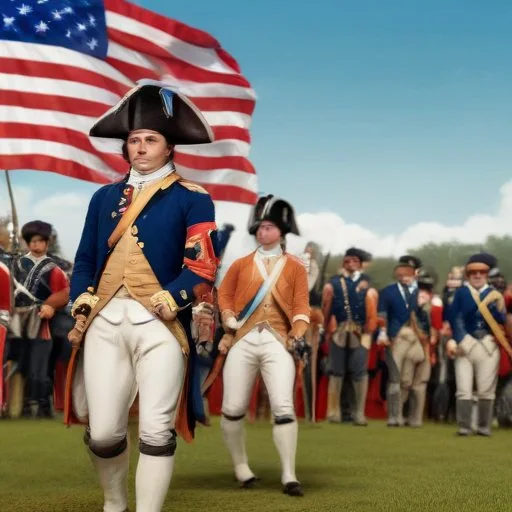
In-Depth Character Profile
John Adams: The Unwavering Advocate for Independence
While George Washington was chosen to lead the Continental Army, John Adams played a crucial role in convincing the Continental Congress to create a unified force. As a passionate advocate for independence, Adams recognized the need for a professional army to take on the British. His persuasive arguments and dedication to the cause helped sway the Congress to make the decision.
Adams' involvement in the Continental Army's establishment highlights his commitment to the patriot movement. Throughout the war, he continued to support Washington and the army, often providing valuable guidance and resources.

In-Depth Cultural Influence Study
The Continental Army's Enduring Legacy in American Culture
The establishment of the Continental Army has had a lasting impact on American culture, symbolizing the nation's struggle for independence and self-governance. The army's bravery and perseverance have inspired countless works of art, literature, and music, cementing its place in the American cultural consciousness.
From patriotic anthems to historical dramas, the Continental Army's story has been retold and reinterpreted, ensuring its relevance to contemporary American society. The army's legacy continues to evoke feelings of national pride and unity, reminding Americans of their shared history and values.
Full Artifact Examination
The Broadside of 1775: A Call to Arms
In June 1775, a broadside was printed and distributed throughout the colonies, announcing the formation of the Continental Army. This rare artifact provides a unique glimpse into the Continental Congress's declaration of war against Britain and the army's early organization.
The broadside, featuring a bold headline and detailed list of army commands, serves as a tangible representation of the Continental Army's birth. Its existence highlights the significance of the army's establishment, demonstrating the Continental Congress's commitment to creating a professional force capable of challenging British authority.

Historiographical Review
Historical Debates Surrounding the Continental Army's Establishment
Historians have long debated the significance of the Continental Army's establishment, with some arguing that it marked a turning point in the American Revolution. Others have suggested that the army's formation was a gradual process, with the Continental Congress incrementally increasing its military capabilities throughout 1775.
Recent scholarship has focused on the role of ideology in shaping the Continental Army's creation, with some historians positing that the army's establishment was motivated by a desire to defend Enlightenment values. These debates demonstrate the ongoing relevance of the Continental Army's history, as scholars continue to refine our understanding of this pivotal event.
In-Depth Geopolitical Examination
The Continental Army's Impact on Geopolitics
The Continental Army's establishment had far-reaching consequences for the global balance of power. The army's ability to challenge British authority and secure French support in 1778 helped shift the geopolitical landscape, creating new opportunities for European powers to engage with the American colonies.
The Continental Army's success also inspired other independence movements, such as the Haitian Revolution, and influenced the development of modern nation-states. Its legacy can be seen in the evolution of international relations, as the army's establishment marked a critical moment in the transformation of the global order.


