


June 13, 1777, marked a pivotal moment in American history as Gilbert du Motier, the stunningly charismatic Marquis de Lafayette, disembarked on the sun-kissed shores of South Carolina, ready to lend his military expertise to the Continental Congress. This dashing young French nobleman's arrival would soon prove to be a turning point in the Revolution, as his military prowess and leadership would make him an invaluable ally to the Continental Army.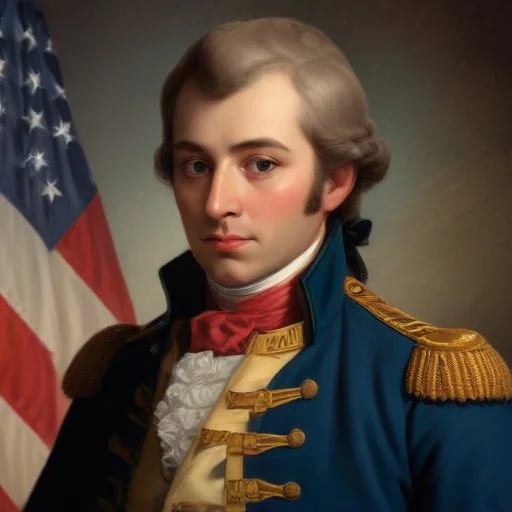
With a letter of introduction from the venerable Benjamin Franklin, Lafayette was determined to contribute his skills to the Continental Army's fight for American independence. This was no ordinary newcomer, for Lafayette was born with a sense of adventure and a heart aflame with the spirit of liberty.
Lafayette was born on September 6, 1757, in Chavaniac, France, to a family of noble heritage. His early life was marked by tragedy, with the loss of his father in battle and his mother's subsequent passing. However, this did not deter his growth into a confident and ambitious young man. Lafayette's passion for the American cause was ignited when he met the Duke of Gloucester, who regaled him with tales of the Revolution.
In 1777, Lafayette set sail for America, braving the treacherous Atlantic Ocean and arriving in Charleston, South Carolina, in June. His journey was not without its challenges, as he faced British spies, treacherous seas, and even a failed assassination attempt. Undeterred, Lafayette persevered, driven by his burning desire to fight for the American cause.
Lafayette's arrival in Charleston sparked a chain of events that would propel him to the forefront of the Continental Army. He soon found himself under the guidance of General George Washington, whom he deeply admired and respected. Lafayette's military prowess and linguistic skills (he spoke fluent English) made him an invaluable asset to the Continental Army.
Lafayette played a crucial role in the Battle of Brandywine, where he distinguished himself with his bravery and tactical genius.
He helped to persuade France to ally itself with the American colonies, securing crucial financial and military aid.
Lafayette's presence boosted the morale of the Continental Army, inspiring confidence and loyalty among the troops.
Lafayette's dashing personality and chivalrous charm won him many admirers in America. He became a beloved figure, feted by the Founding Fathers and the American people alike. His legacy extends beyond the battlefield, as he played a significant role in shaping the cultural and social fabric of the young American nation.
"I am not a liberty cap, but I will do everything that one can do to help the cause of liberty."
According to legend, Lafayette was so enamored with the American cause that he sold his own family's estate to fund his military endeavors. This selfless act earned him the respect and admiration of his American comrades.
Lafayette's contributions to the American Revolution paved the way for his later roles in shaping French and American history. He became a key figure in the French Revolution, advocating for democratic reforms and equal rights.
Gilbert du Motier, the Marquis de Lafayette, left an indelible mark on American history. His bravery, loyalty, and unwavering commitment to the cause of liberty continue to inspire generations to this day. As we look back on his remarkable journey, we are reminded of the transformative power of courage, honor, and the unbreakable bond between two nations.
Lafayette's early life was marked by tragedy, but it also shaped his strong sense of justice and compassion. His father, Michel du Motier, was killed in battle when Lafayette was just two years old. His mother, Marie Louise Jolie de La Rivière, died when he was seven. These early losses instilled in him a deep sense of empathy and a strong desire to protect others.
Lafayette's upbringing was influenced by his guardian, the count of La Rivière, who instilled in him a strong sense of morality and duty. He was educated at the Lycée Louis-le-Grand in Paris, where he developed a passion for the arts, literature, and history.
Lafayette's exposure to the ideas of the Enlightenment, particularly those of Rousseau and Voltaire, further fueled his passion for liberty and democracy. These early influences laid the foundation for his later involvement in the American Revolution.

Lafayette's impact on American culture extends far beyond his military contributions. He became a symbol of French-American friendship and a powerful embodiment of the spirit of liberty.
In the United States, Lafayette is remembered as a hero and a champion of freedom. He has been immortalized in countless works of art, literature, and music, cementing his place in the American cultural psyche.
From Lafayette Square in Washington D.C. to the numerous towns, counties, and monuments named in his honor, the Marquis de Lafayette has left an indelible mark on American culture.
Lafayette played a crucial role in shaping American politics, both during and after the Revolution. His close relationships with key American leaders, including George Washington and Thomas Jefferson, gave him significant influence over the development of the young nation.
Lafayette was a vocal advocate for American independence and played a key role in securing French support for the Revolution. His diplomatic efforts helped to establish the United States as a sovereign nation on the world stage.
After the Revolution, Lafayette continued to play a role in shaping American politics, advising on issues such as the Constitution and the development of the American military.

Historians have long debated the significance of Lafayette's role in the American Revolution. While some have downplayed his impact, others have argued that he was a crucial factor in the Continental Army's ultimate victory.
One school of thought holds that Lafayette's military prowess and strategic thinking were instrumental in key battles such as Brandywine and Yorktown. Others argue that his diplomatic efforts were essential in securing French support for the Revolution.
Despite these differing perspectives, most historians agree that Lafayette's contributions to the American Revolution were significant and far-reaching.
Lafayette's leadership style was marked by a strong sense of empathy and compassion. He was beloved by his troops, who saw him as a champion of justice and equality.
Lafayette's social dynamics extended beyond the military sphere. He was a close friend and confidant of many key American leaders, including George Washington and Thomas Jefferson.
His ability to form strong relationships and build coalitions was instrumental in securing French support for the Revolution and shaping American politics in the years that followed.