King George III declares American colonies in open rebellion
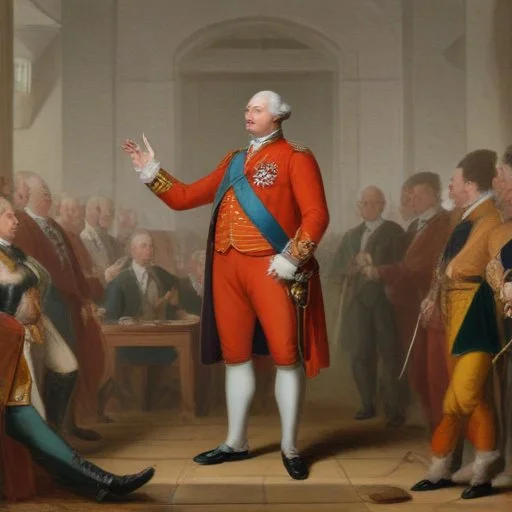
King George III's patience has worn thin! On this fateful day, he takes a bold stance, labeling the American colonies as being in a state of open and avowed rebellion. This proclamation, delivered to the esteemed Court of St James's, marks a significant turning point in the American Revolutionary War. The die has been cast, and the British monarch makes it clear that he will not tolerate the colonies' defiant behavior. This declaration sets the stage for further conflict and paves the way for the Continental Congress to formalize their independence.
The Proclamation of Rebellion: A Turning Point in the American Revolutionary War
A Bold Stance Against the Colonies
The Proclamation of Rebellion, delivered by King George III to the Court of St. James's on August 23, 1775, marks a pivotal moment in the American Revolutionary War. This decree formally declared the American colonies to be in a state of open and avowed rebellion, setting the stage for further conflict and paving the way for the Continental Congress to formalize their independence.
Historical Background: The Road to Rebellion
The relationship between Great Britain and its American colonies had been strained for years, with tensions escalating over issues such as taxation, representation, and colonial autonomy. The Boston Tea Party, the Boston Massacre, and the Intolerable Acts had all contributed to the growing sense of discontent among the colonies. By 1775, the British government had had enough of the colonies' defiance, and King George III was determined to take a stand.
The Proclamation: A Call to Action
The Proclamation of Rebellion was a bold move by King George III, labeling the colonies as being in a state of open and avowed rebellion. This declaration was not only a statement of intent but also a call to action, warning the colonies that they would face severe consequences if they continued to defy British authority. The proclamation also authorized British commanders to quell the rebellion by any means necessary, effectively declaring war on the colonies.
Key Figures Involved: The Players in the Rebellion
- King George III: The British monarch who issued the Proclamation of Rebellion, marking a significant escalation in the conflict.
- George Washington: The Commander-in-Chief of the Continental Army, who would lead the colonies to victory in the war.
- Lord North: The British Prime Minister, who championed the policy of coercion against the colonies.
Timeline of Events: The Path to Independence
- April 19, 1775: The Battles of Lexington and Concord, marking the start of the American Revolutionary War.
- May 10, 1775: The Second Continental Congress convenes, with representatives from 13 colonies.
- August 23, 1775: King George III delivers the Proclamation of Rebellion to the Court of St. James's.
- July 4, 1776: The Continental Congress adopts the Declaration of Independence, formalizing the colonies' separation from Great Britain.
Major Outcomes and Impacts: A New Nation is Born
The Proclamation of Rebellion had far-reaching consequences, including:
- The formalization of the Continental Congress as a unified government for the colonies.
- The escalation of the war, with Britain deploying thousands of troops to quell the rebellion.
- The eventual recognition of American independence, with the signing of the Treaty of Paris in 1783.
Cultural and Social Influences: A Shift in Public Perception
The Proclamation of Rebellion marked a significant shift in public perception, with many Americans viewing the British government as oppressive and tyrannical. This sentiment was reinforced by Patriot leaders, such as
Patrick Henry and
Thomas Paine, who rallied support for the rebellion.
Quotes and Memorable Sayings: Words of Defiance
- "Give me liberty or give me death!" - Patrick Henry, 1775
- "These are the times that try men's souls." - Thomas Paine, 1776
A Lasting Legacy: The Birth of a Nation
The Proclamation of Rebellion played a crucial role in the American Revolutionary War, paving the way for the Continental Congress to formalize their independence and ultimately leading to the creation of a new nation. This event serves as a powerful reminder of the sacrifices made by those who fought for American independence and the enduring spirit of liberty that defines the United States.
Rich Historical Review
The Proclamation of Rebellion marked a significant turning point in the American Revolutionary War, but it was not an isolated event. The seeds of rebellion had been sown years earlier, with the passage of the Tea Act in 1773. This law, which allowed the British East India Company to sell tea directly to the colonies, sparked widespread protests and boycotts. The Boston Tea Party, which took place on December 16, 1773, was a direct response to the Tea Act, and it marked a significant escalation in the conflict between the colonies and Great Britain.
In the months that followed, the British government responded with a series of laws known as the Coercive Acts, which aimed to punish the colonists and reassert British authority. These laws, which included the Boston Port Act, the Massachusetts Government Act, and the Quartering Act, further inflamed tensions and paved the way for the outbreak of war in April 1775.

Character Examination
Lord North: The Architect of Coercion
Lord North, the British Prime Minister, played a crucial role in the events leading up to the Proclamation of Rebellion. A staunch advocate of British authority, North was determined to quell the growing rebellion in the colonies and restore order to the empire. Through his leadership, the British government passed a series of laws aimed at punishing the colonists and reasserting British control.
North's policies, however, ultimately proved counterproductive. By cracking down on the colonies, he only fueled the flames of rebellion and paved the way for the eventual declaration of independence. Despite his best efforts, North was unable to stem the tide of revolution, and he was eventually forced to resign in 1782.
Comparison Report
The Proclamation of Rebellion was not an isolated event, but rather part of a broader pattern of imperial powers responding to colonial unrest. Throughout history, imperial powers have sought to maintain their authority over colonies, often through force and coercion. The British response to the American Revolution was no exception, and it bears striking similarities to other imperial powers' responses to colonial rebellions.
For example, the French response to the Haitian Revolution, which took place in the late 18th and early 19th centuries, was marked by brutal suppression and violence. Similarly, the British response to the Indian Rebellion of 1857 was characterized by brutal force and brutal reprisals against Indian civilians.

Thorough Geopolitical Study
The Proclamation of Rebellion took place against a backdrop of shifting global power dynamics. The British Empire, which had long been the dominant world power, was facing challenges from other European powers, including France and Spain. The British government's response to the American Revolution was therefore shaped by these broader geopolitical considerations.
The British government was acutely aware of the potential consequences of losing the American colonies. Not only would this damage British prestige and influence, but it would also create a power vacuum that other European powers might seek to fill. This fear of being supplanted by other powers drove the British government's responses to the rebellion, including the Proclamation of Rebellion.


