


The American Revolutionary War's largest defeat, the capture of Charleston, South Carolina, marked a pivotal moment in the struggle for independence. On May 12, 1780, British forces, led by General Henry Clinton, claimed victory over the Continental Army, handing the British control of the southern colonies.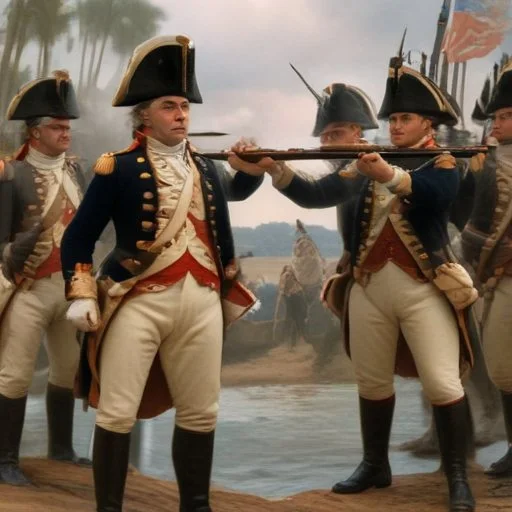
In the years leading up to the siege, Charleston had become a crucial port city for the Continental Army, serving as a vital supply hub and gateway to the southern colonies. The British, eager to crush the rebellion, set their sights on capturing the city, which would cripple the patriot effort and secure a strategic foothold in the region.
On March 29, 1780, General Clinton's fleet of 90 warships and 9,000 troops arrived at Charleston Harbor, signaling the beginning of the 42-day siege. American forces, led by General Benjamin Lincoln, numbering around 5,500, prepared to defend the city against overwhelming odds.
The British victory at Charleston marked a devastating blow to the Continental Army, resulting in the South Carolina's temporary withdrawal from the war effort. The fall of the city also led to the capture of over 5,000 American soldiers, who were either imprisoned or forced to flee.
The consequences of the defeat were far-reaching:
Several notable figures played a crucial role in the Siege of Charleston:
The fall of Charleston serves as a poignant reminder of the Continental Army's resilience and determination in the face of overwhelming adversity. Despite this crushing defeat, the patriots persevered, eventually securing victory at the Battle of Yorktown in 1781, marking the beginning of the end of the American Revolutionary War.
The British army's strategy in the Siege of Charleston was influenced by their experiences in the Siege of Boston four years earlier. The British had learned the importance of naval superiority and the effectiveness of a prolonged siege in wearing down the enemy's defenses.
General Clinton's decision to blockade the harbor and prevent reinforcements from reaching the city was a key factor in the Continental Army's defeat. The British also made use of their superior artillery, bombarding the city's defenses and weakening the American position.
The siege itself was a testament to the British army's discipline and organization. Despite being outnumbered, the Continental Army was unable to break through the British lines, and the British were able to maintain their siege engines and artillery in the face of constant American fire.

General Benjamin Lincoln, the American commander during the Siege of Charleston, was a seasoned military leader with a long history of service in the Continental Army. Despite his brave defense of the city, Lincoln was ultimately forced to surrender, a decision that would haunt him for the rest of his life.
Lincoln's leadership during the siege was marked by his determination to hold out against overwhelming odds. He worked tirelessly to strengthen the city's defenses, and his men admired him for his bravery and tactical skill.
After the surrender, Lincoln was taken prisoner by the British and held for several months. He was eventually exchanged for a British general and returned to service, but the defeat at Charleston would remain a bitter memory for him.
The Siege of Charleston was one of several key battles fought during the American Revolutionary War, and it shares some striking similarities with other conflicts of the time. For example, the British army's strategy in Charleston was similar to their approach in the Siege of Philadelphia two years earlier.
Like the Siege of Charleston, the Siege of Philadelphia was marked by a prolonged blockade and a series of bloody battles. However, the Philadelphia campaign was ultimately unsuccessful, and the British were forced to withdraw.
The Siege of Charleston also bears some resemblance to the Siege of Yorktown, which took place the following year. In both cases, the British army was trapped and forced to surrender, but the circumstances were very different.

The Siege of Charleston took place against the backdrop of a larger geopolitical struggle between the British Empire and its colonial possessions. The British government was determined to crush the rebellion and maintain its authority over the colonies.
The fall of Charleston was a significant blow to the patriot cause, and it marked a turning point in the war. The British were able to gain control of the southern colonies and shift their attention to the north.
The Siege of Charleston also had implications for the European balance of power. The French government, which had allied itself with the Americans, was embarrassed by the defeat and began to question its involvement in the war.
The Siege of Charleston raised important questions about the nature of patriotism and loyalty. For the British, the defeat of the Continental Army was a victory for the crown and a demonstration of the empire's power.
For the Americans, the siege was a painful reminder of the sacrifices required to achieve independence. The defeat was a bitter pill to swallow, but it also galvanized the patriot movement and strengthened their resolve to fight on.
The siege also highlighted the tensions between different groups within the patriot movement. Some Americans, including General Washington, questioned the decision to defend Charleston and argued that the resources would have been better spent elsewhere.