


In the wee hours of May 10, 1775, a daring colonial militia, led by the fearless Ethan Allen and Colonel Benedict Arnold, launched a surprise attack on Fort Ticonderoga, wresting control of the strategic stronghold from the British. This bold move marked a significant turning point in the American Revolutionary War, securing crucial cannons and ammunition for the Continental Army's future battles.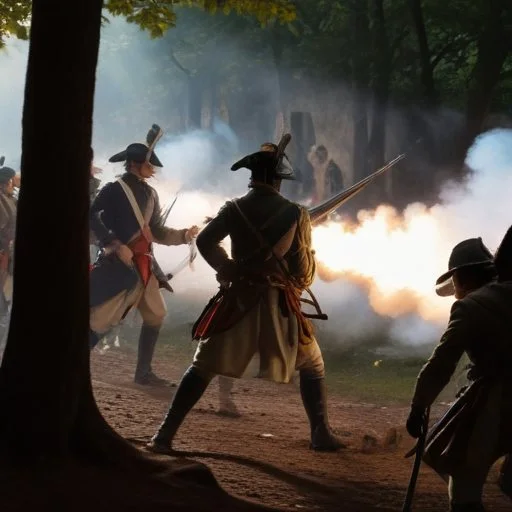
In the spring of 1775, tensions between the American colonies and Great Britain were escalating. The British government, seeking to assert its authority, had fortified key strategic locations, including Fort Ticonderoga, which controlled the southern end of Lake Champlain. This made it a crucial hub for trade, commerce, and communication between the colonies and Canada.
The capture of Fort Ticonderoga had significant repercussions on the American Revolutionary War:
The capture of Fort Ticonderoga had a profound impact on American culture and society:
The event inspired patriotic fervor among the colonists, solidifying their resolve to fight for independence from British rule.
The victory also sparked a sense of regional pride, as the New England colonies saw themselves as key players in the fight for freedom.
According to Ethan Allen's memoirs, as the colonial militia approached the fort, he shouted, "In the name of the Great Jehovah and the Continental Congress, do you surrender?" The British commander, William Delaplace, hesitated before surrendering, reportedly saying, "You'll get nothing but our bare word." Allen retorted, "That's enough. We'll take your word, but not your arms." This exchange underscored the militia's determination to secure the fort without bloodshed.
The capture of Fort Ticonderoga had a lasting impact on the American Revolutionary War:
The victory set a precedent for the Continental Army's future successes, demonstrating that strategic planning and bold action could overcome seemingly insurmountable odds.
The fort's cannons and ammunition played a crucial role in the Siege of Boston, which ended with the British evacuation of the city in March 1776.
Ethan Allen and Colonel Benedict Arnold were hailed as heroes for their role in the capture of Fort Ticonderoga:
Allen received a commendation from the Connecticut legislature for his bravery.
Arnold's military prowess was recognized by the Continental Congress, which promoted him to brigadier general in 1776.

Did you know that:
Sources:
"The Capture of Fort Ticonderoga" by Richard M. Ketchum
"Ethan Allen: His Life and Times" by Charles A. Jellison
While Ethan Allen and Benedict Arnold are often credited with the capture of Fort Ticonderoga, another key figure played a crucial role in the mission's success: Benjamin Hewitt. A skilled engineer and member of the Green Mountain Boys, Hewitt was responsible for gathering intelligence on the fort's defenses and creating a detailed plan of attack.
Hewitt's contributions were instrumental in the mission's success, yet his role has often been overlooked in historical accounts. His bravery and tactical expertise make him an unsung hero of the American Revolutionary War.

On May 9, 1775, Ethan Allen and his band of colonists set out on a perilous journey through the wilderness to reach Fort Ticonderoga. The trek was fraught with danger, as the group navigated treacherous terrain, crossed raging rivers, and braved the elements.
The journey was a testament to the colonists' determination and resilience. Despite the challenges they faced, they remained committed to their mission, driven by their desire for freedom and independence.
The capture of Fort Ticonderoga sent shockwaves throughout the American colonies, galvanizing public opinion and inspiring a wave of patriotism. The victory was seen as a symbol of resistance against British tyranny, and it helped to create a sense of unity among the colonists.
The event also had a profound impact on American art and literature. The bravery and sacrifice of the colonists inspired poets, writers, and artists, who captured the spirit of the Revolution in their work.

The capture of Fort Ticonderoga yielded a treasure trove of historical artifacts, including documents, maps, and military records. These archival materials provide a unique window into the past, offering insights into the lives and experiences of those who fought for independence.
One of the most significant discoveries was the fort's logbook, which contains detailed accounts of daily life at the fort, including troop movements, provisions, and ammunition stores.
Fort Ticonderoga's strategic location at the southern end of Lake Champlain made it a crucial hub for trade, commerce, and communication between the colonies and Canada. The fort's capture had significant geopolitical implications, as it provided the Continental Army with a vital avenue for launching attacks against British forces in Canada.
The fort's strategic importance was further underscored by its role as a conduit for supplies and reinforcements, which enabled the Continental Army to maintain its presence in the region.