


On February 2, 1990, South African President F.W. de Klerk made a groundbreaking declaration, shattering the chains of apartheid by announcing the unbanning of the African National Congress (ANC) and vowing to release Nelson Mandela, the anti-apartheid hero imprisoned for 27 years. This pivotal moment marked a significant shift towards democracy and equality, rekindling hope for a unified South Africa.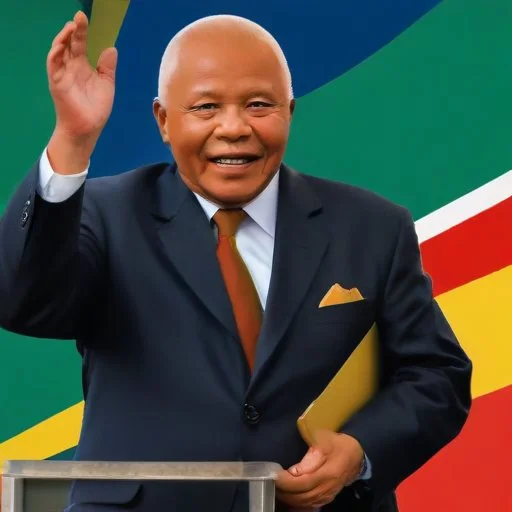
The apartheid regime, established in 1948, had enforced a system of institutionalized racial segregation and discrimination, denying basic human rights to the majority of the population. The ANC, founded in 1912, had been at the forefront of the struggle against apartheid, advocating for equality and democracy. Nelson Mandela, a key figure in the ANC, was arrested in 1962 and sentenced to life imprisonment for his role in the fight against apartheid.
In a speech to Parliament, de Klerk declared that the ANC, along with other banned organizations, would be unbanned, paving the way for negotiations towards a democratic government. He also announced that Mandela's release was imminent, sparking widespread jubilation across the country.
1989: Walter Sisulu and other ANC leaders are released from prison, setting the stage for de Klerk's reforms.
February 2, 1990: De Klerk announces the unbanning of the ANC and promises to release Mandela.
February 11, 1990: Nelson Mandela walks out of Victor Verster Prison, finally free after 27 years.
The unbanning of the ANC and Mandela's release led to:
The announcement and subsequent release of Mandela had a profound impact on South African culture and society:
"I stand before you today as a symbol of the failure of apartheid, and the triumph of the human spirit." - Nelson Mandela, upon his release from prison
"The time for reconciliation is now... We must work together to build a new South Africa." - F.W. de Klerk, in his 1990 announcement
I remember standing in the crowded streets of Cape Town, surrounded by strangers who became instant friends, as we cheered and wept at the news of Mandela's release. It was a moment of pure joy, of hope rekindled, of freedom finally within reach.
As a journalist, I had the privilege of meeting Mandela shortly after his release. His warm smile, his twinkling eyes, and his infectious optimism left an indelible mark on my heart. He was, and remains, an inspiration to us all.
The unbanning of the ANC and Mandela's release paved the way for:
Mandela's journey from prison to presidency serves as a beacon of hope, reminding us that even in the darkest of times, the human spirit can persevere and triumph.
De Klerk's courageous decision to reform the apartheid regime demonstrates the power of leadership and the importance of taking bold action towards a more just and equitable society.
The unbanning of the ANC and Mandela's release marked a new chapter in South Africa's history, a chapter of hope, reconciliation, and freedom. It is a testament to the power of the human spirit, and a reminder that even in the darkest of times, a brighter future is always within reach.
The apartheid regime's grip on South Africa had been tightening for decades, but by the late 1980s, international pressure and economic sanctions were taking their toll. The country was facing diplomatic isolation, and its economy was struggling to stay afloat. It was against this backdrop that De Klerk's reforms were announced, marking a significant shift in the government's approach to the apartheid system.
The decision to unban the ANC and release Mandela was not taken lightly, and it was the result of a complex interplay of factors. De Klerk had inherited a government that was increasingly divided, with hardliners resisting any talk of reform. However, he was also aware that the continuation of apartheid was unsustainable, and that some form of compromise was necessary to avoid further instability.

F.W. de Klerk, the last state president of South Africa during the apartheid era, was a complex figure who played a crucial role in the country's transition to democracy. Born in 1936, de Klerk was raised in a family of politicians and lawyers, and he was educated at the University of Potchefstroom.
De Klerk's early political career was marked by a strong commitment to the apartheid system, and he was a vocal supporter of the segregationist policies of Hendrik Verwoerd. However, as he rose through the ranks, he began to realize that the system was unsustainable, and that some form of reform was necessary to avoid further conflict and instability.
The unbanning of the ANC and the release of Mandela had a profound impact on South African culture, as the country began to come to terms with its complex and troubled past. The event marked a significant shift in the way that South Africans thought about themselves and their place in the world.
The release of Mandela was followed by a wave of cultural productions that celebrated the country's newfound freedom and democracy. From music and art to literature and film, South African creatives were finally able to express themselves freely, without the suffocating grip of apartheid.

The political implications of De Klerk's reforms were far-reaching, as the country began to transition towards democracy. The unbanning of the ANC and the release of Mandela paved the way for negotiations between the government and the ANC, which would eventually lead to the country's first multiracial democratic elections in 1994.
The reforms also had significant implications for the international community, as South Africa began to reengage with the global community after years of isolation. The country's newfound commitment to democracy and human rights was welcomed by the international community, and South Africa began to play a more prominent role on the global stage.
The geopolitics of the late 1980s played a significant role in De Klerk's decision to reform the apartheid system. The collapse of communism in Eastern Europe and the end of the Cold War had created a new global landscape, in which the United States and the Soviet Union were no longer competing for influence in Africa.
In this new environment, South Africa's apartheid system was increasingly seen as an anachronism, and the country's continued isolation was becoming unsustainable. De Klerk's reforms were, in part, a response to these changing global circumstances, as he sought to reposition South Africa as a modern, democratic nation.