


Mandela's journey to Robben Island began in the early 1940s, when he co-founded the ANC Youth League, a radical wing of the party that sought to challenge the entrenched apartheid system. As a lawyer, Mandela had witnessed firsthand the brutal injustices perpetrated against black South Africans, and he was determined to take a stand.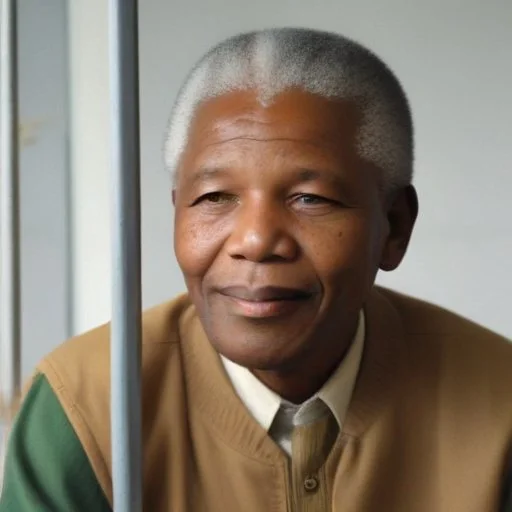
In 1962, Mandela's involvement in the ANC's armed wing, Umkhonto we Sizwe (MK), made him a prime target for the authorities. On August 5, 1962, he was arrested and put on trial, where he was sentenced to life imprisonment. The government hoped that by imprisoning Mandela, they could break the back of the anti-apartheid movement.
In the 1980s, as international pressure mounted and domestic unrest intensified, the South African government began to lose its grip on power. The economy was struggling, and the regime's brutality was increasingly exposed to the world.
On February 11, 1990, Nelson Mandela walked out of Victor Verster Prison, a free man after 28 long years. The world watched in awe as he raised his fist in triumph, his presence electrifying the air.
Mandela's release marked a new era in South African politics, paving the way for the country's transition to democracy. In 1994, he became the country's first black president, leading the nation toward reconciliation and forgiveness.
Nelson Mandela's imprisonment and subsequent release served as a beacon of hope for oppressed people around the world. Today, his legacy continues to inspire generations, reminding us that even in the darkest of times, the human spirit can persevere and triumph.
Historiographical Debates
The imprisonment and subsequent release of Nelson Mandela have been the subject of intense historiographical debates. While some historians have portrayed Mandela as a hero of the anti-apartheid movement, others have critiqued his role in the struggle, arguing that he was not as radical as he claimed to be.
Some historians have also debated the role of the African National Congress (ANC) in the fight against apartheid, with some arguing that the organization was too moderate and others arguing that it was too radical.

Nelson Mandela's Early Life
Nelson Mandela was born on July 18, 1918, in the small village of Mvezo, in the Eastern Cape province of South Africa. His father, Henry Mgadla Mandela, was a local chief and a counselor to the monarch of the Thembu dynasty.
Mandela's early life was marked by a strong sense of tradition and cultural heritage. He was raised in a traditional Thembu household and was trained in the customs and rituals of his ancestors.
The Politics of Imprisonment
Nelson Mandela's imprisonment was a highly political act, aimed at silencing the vocal leader of the anti-apartheid movement. The apartheid government hoped that by imprisoning Mandela, they could break the back of the resistance and maintain their grip on power.
However, Mandela's imprisonment had the opposite effect, galvanizing the anti-apartheid movement and inspiring a new generation of activists to take up the fight.

The Cultural Significance of Robben Island
Robben Island, where Mandela was imprisoned for 18 years, has become a powerful symbol of resistance and freedom. The island has been transformed into a museum and a UNESCO World Heritage Site, attracting millions of visitors each year.
The island's cultural significance extends beyond its physical walls, representing a potent symbol of the human spirit's capacity for resilience and resistance in the face of oppression.
The Global Impact of Mandela's Release
Nelson Mandela's release from prison in 1990 had a profound impact on the global community. The event marked a turning point in the fight against apartheid, inspiring a wave of anti-apartheid protests and boycotts across the world.
The release also marked a significant shift in international relations, as governments and organizations around the world began to distance themselves from the apartheid regime and support the transition to democracy in South Africa.