Apollo 11 launched from Kennedy Space Center on July 16, 1969, carrying the hopes and dreams of humanity. After entering into lunar orbit, Armstrong and Aldrin suited up in their spacesuits, preparing for the historic descent. At 20:17 UTC, the Eagle lunar module separated from the Command Module Columbia, and the world held its breath as the duo began their powered descent.
The Eagle landed on the Moon's surface at 21:17 UTC, with Armstrong radioing back to Mission Control, "Houston, Tranquility Base here. The Eagle has landed."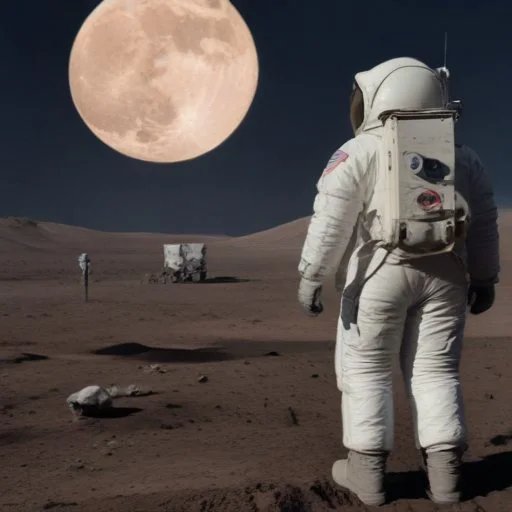
Six hours and thirty minutes later, at 02:56 UTC on July 21, Armstrong made history by becoming the first human to set foot on the Moon. His immortal words, "That's one small step for man, one giant leap for mankind," echoed across the globe, inspiring generations to come.
Aldrin joined Armstrong on the surface shortly afterwards, and the two astronauts spent approximately two and a half hours exploring the alien terrain, collecting samples, and conducting experiments.
The Apollo 11 mission's success paved the way for future space exploration, pushing the boundaries of human achievement and igniting a passion for scientific discovery. The mission's accomplishments continue to inspire new generations of scientists, engineers, and astronauts, shaping the course of space exploration and beyond.
The Apollo 11 astronauts were hailed as heroes, receiving numerous awards and accolades, including the Presidential Medal of Freedom. The mission's legacy extends beyond the realm of space exploration, symbolizing humanity's capacity for innovation, perseverance, and cooperation.

"Here men from the planet Earth first set foot upon the moon, July 1969 A.D. We came in peace for all mankind."
— Inscription left on the Moon's surface by Neil Armstrong and Edwin "Buzz" Aldrin
"Mystery creates wonder, and wonder is the basis of man's desire to understand."
— Neil Armstrong, on the allure of space exploration
Christopher C. Kraft Jr. was the unsung hero behind Apollo 11's historic mission. As the Flight Director, he played a pivotal role in ensuring the success of the mission. Kraft's exceptional leadership skills and vast experience in space exploration made him the perfect candidate to oversee the mission.
Kraft was instrumental in developing the flight plans and mission protocols for Apollo 11. He worked tirelessly with the astronauts, engineers, and technicians to ensure that every aspect of the mission was meticulously planned and executed.
His immense contribution to the mission's success was recognized by NASA, and he was awarded the Presidential Medal of Freedom in 1969.
), {CIS