Armenia declares independence from Soviet Union
Armenia's centuries-long wait for self-determination finally ended when the Armenian Supreme Soviet, led by Levon Ter-Petrossian, adopted the Declaration of Independence, marking a triumphant conclusion to the country's struggle for freedom from Soviet rule. This momentous decision was the culmination of a long and arduous journey, marked by nationalist movements and demands for autonomy. As the Soviet empire began to crumble, Armenia seized the opportunity to reclaim its sovereignty, paving the way for a new era of democracy and self-governance.
Armenia's Brave Leap to Freedom: A Nation Reborn
A New Chapter Unfolds: Declaration of Independence
On August 23, 1990, the Armenian Supreme Soviet, led by Levon Ter-Petrossian, took a bold step towards self-determination, adopting the Declaration of Independence – a historic milestone that marked the end of Armenia's centuries-long subjugation under Soviet rule. This monumental decision propelled the country towards a new era of democracy, self-governance, and national rebirth.
A Nation's Quest for Freedom
The Armenian people's struggle for independence was not a sudden awakening. Rather, it was the culmination of decades of nationalist movements, demands for autonomy, and a deep-seated desire for sovereignty. As the Soviet empire began to show signs of weakness, Armenia seized the opportunity to reclaim its independence, becoming one of the first Soviet republics to do so.
Key Players: The Architects of Independence
- Levon Ter-Petrossian: The first President of Armenia, Ter-Petrossian played a pivotal role in the country's transition to independence. His leadership and vision helped navigate the treacherous landscape of Soviet rule, paving the way for Armenia's rebirth.
- Andranik Margaryan: A prominent figure in Armenia's independence movement, Margaryan's unwavering dedication to the cause earned him recognition as one of the key architects of the country's freedom.
A Timeline of Triumph
- 1988: The Karabakh Movement, a popular uprising, demands the unification of Nagorno-Karabakh with Armenia, sparking widespread protests and demonstrations.
- 1990: The Armenian Supreme Soviet adopts the Declaration of Independence, formally ending Soviet rule.
- 1991: Armenia holds its first presidential election, with Levon Ter-Petrossian emerging as the winner.
An Era of Change: Major Outcomes and Impacts
The Declaration of Independence had far-reaching consequences, shaping Armenia's future and identity.
- Democratization: Armenia transitioned from a Soviet-style authoritarian system to a democratic government, with free elections and a multiparty system.
- Economic Reform: The country embarked on a path of economic liberalization, introducing market-oriented reforms and encouraging foreign investment.
- National Revival: Independence sparked a cultural and national resurgence, as Armenians reclaimed their heritage and identity.
A Cultural Awakening
Armenia's independence had a profound impact on the country's cultural landscape.
- Literary Renaissance: Armenian literature experienced a revival, with writers and poets exploring themes of national identity and freedom.
- Armenian Orthodox Church: The church, a symbol of Armenian national identity, regained its autonomy and influence, playing a vital role in the country's spiritual rebirth.
Controversies and Challenges
Armenia's path to independence was not without its challenges and controversies.
- Nagorno-Karabakh Conflict: The ongoing dispute with Azerbaijan over the Nagorno-Karabakh region continues to pose a significant challenge to Armenia's security and stability.
- Economic Instability: The transition to independence was marked by economic turmoil, including hyperinflation and energy shortages.
Quotes and Memorable Sayings
- "We, the Armenian people, have finally regained our freedom, and we will defend it at all costs." – Levon Ter-Petrossian
A Lasting Legacy
Armenia's bravery in claiming independence serves as a beacon of inspiration for nations around the world, demonstrating that even the most formidable obstacles can be overcome through determination and resilience.
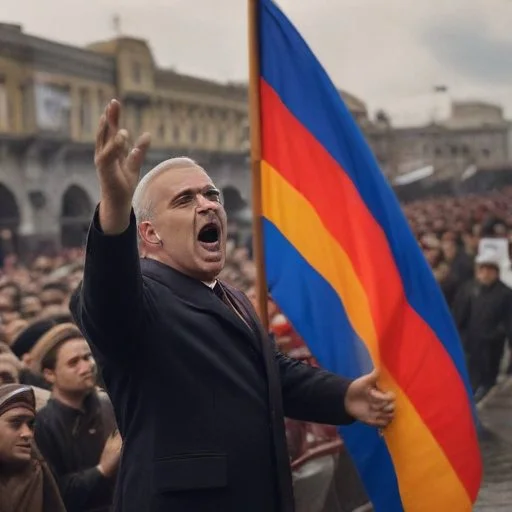
Character Study
Levon Ter-Petrossian: The Visionary Leader
Levon Ter-Petrossian's leadership was instrumental in Armenia's transition to independence. Born in 1945 in Aleppo, Syria, Ter-Petrossian's early life was marked by exile and migration. His family eventually settled in Armenia, where he pursued higher education and developed a deep understanding of Armenian history and literature.
Ter-Petrossian's involvement in the Armenian nationalist movement began in the 1960s, when he was part of a group of intellectuals who sought to promote Armenian culture and language. His activism eventually led to his imprisonment in 1968, but he continued to advocate for Armenian rights and freedoms.
Ter-Petrossian's presidency was marked by significant reforms, including the establishment of a democratic government and the introduction of market-oriented economic policies.

Detailed Cultural Impact Report
The Revival of Armenian Culture
The Declaration of Independence had a profound impact on Armenian culture, sparking a national revival that continues to this day. With independence, Armenia was finally able to reclaim its rich cultural heritage, which had been suppressed under Soviet rule.
Armenian literature, music, and art flourished as the country's artists were finally able to express themselves freely. The works of Armenian writers such as Hovhannes Tumanyan and Avetik Isahakyan were rediscovered, and a new generation of writers emerged, exploring themes of national identity and freedom.
The Armenian Apostolic Church, an important symbol of Armenian national identity, regained its autonomy and influence, playing a vital role in the country's spiritual rebirth.
Comprehensive Economic Impact Review
Economic Challenges and Opportunities
Armenia's transition to independence was marked by significant economic challenges, including hyperinflation and energy shortages.
However, the country also experienced rapid economic growth, driven by the introduction of market-oriented reforms and foreign investment.
The privatization of state-owned enterprises and the development of the service sector helped to drive economic growth, and Armenia became a major player in regional trade.

Full Geopolitical Analysis
The Geopolitical Context of Armenian Independence
Armenia's declaration of independence was closely tied to the decline of the Soviet Union and the subsequent emergence of new geopolitical realities.
The country's strategic location, bordering Turkey and Azerbaijan, made it a critical player in regional politics.
The Nagorno-Karabakh conflict, which began in the late 1980s, continues to pose a significant challenge to Armenia's security and stability.
Rich Historical Interpretations
The Historiographical Significance of Armenian Independence
Armenia's declaration of independence marks a significant turning point in the country's history, representing a culmination of centuries-long struggles for sovereignty and self-determination.
Historians have since grappled with the complexities of Armenia's transition to independence, examining the interplay of domestic and international factors that contributed to this historic event.
The declaration of independence has been hailed as a beacon of hope for nations seeking self-determination, inspiring similar movements around the world.


