


General Jos de San Martín's daring expedition across the treacherous Andes Mountains remains one of the most astounding feats in military history, as he led an army of 5,423 soldiers from Argentina to liberate Chile and eventually Peru from Spanish rule. This perilous journey, undertaken between 1817 and 1821, would cement San Martín's status as a hero and a master strategist, shaping the course of South American history forever.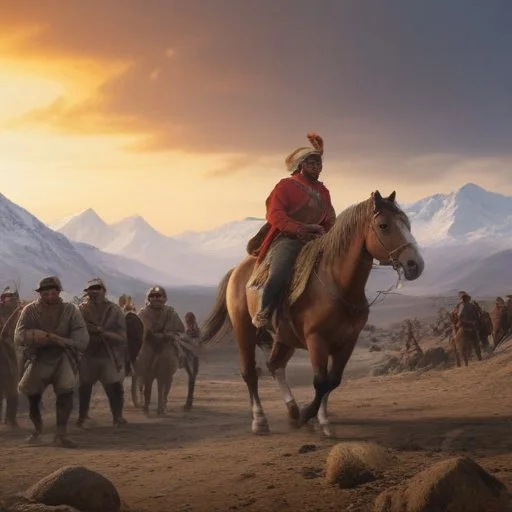
In the early 19th century, the Spanish Empire's grip on South America was beginning to loosen. The Latin American wars of independence had been simmering for decades, with various regions vying for autonomy and self-governance. As the Napoleonic Wars ravaged Europe, the Spanish Empire's attention was diverted, creating an opportunity for the colonies to assert their independence.
San Martín, a skilled and charismatic leader, was born in present-day Argentina in 1778. Having fought alongside the Spanish against Napoleon, he returned to South America, where he became a key figure in the struggle for independence. His military acumen, combined with his vision for a unified South America, made him the ideal candidate to spearhead the liberation of Chile and Peru.
San Martín's Andean odyssey had far-reaching consequences, shaping the course of South American history and cementing his status as a hero:
San Martín's liberation of Chile and Peru had a profound impact on the cultural and social fabric of the region:
San Martín's personal accounts and anecdotes offer a glimpse into his character and leadership style:
"I have not come to Chile to make war, but to bring peace and liberty." - General Jos de San Martín
San Martín's Andean odyssey remains an iconic chapter in South American history, a testament to the power of courage, strategic thinking, and determination. The liberation of Chile and Peru, achieved against all odds, cemented San Martín's status as a hero, inspiring generations to come.
San Martín's Andean odyssey was not just a military campaign, but a carefully crafted strategy to weaken the Spanish Empire's grip on South America. By liberating Chile and Peru, he aimed to create a united front against the Spanish, paving the way for other regions to follow suit. This strategic thinking was evident in his decision to march across the Andes, using the treacherous terrain to his advantage and catching the Spanish off guard.
The timing of the expedition was also crucial. With Napoleon's forces occupying Spain, the Spanish Empire was weakened, and San Martín seized the opportunity to launch a decisive blow. His military campaign was a masterclass in adaptability, using guerrilla warfare, sabotage, and diplomacy to outmaneuver the Spanish.
San Martín's leadership style was characterized by his ability to inspire loyalty and devotion in his troops. He was a natural communicator, able to rally his men with stirring speeches and lead by example in the face of danger. His commitment to the cause was unwavering, and he was willing to make difficult decisions to ensure the success of the expedition.
Despite his military prowess, San Martín was also a humble and compassionate leader. He was deeply concerned about the welfare of his men and took great care to ensure their safety and well-being. This compassion extended to the local populations as well, and he worked tirelessly to build alliances and gain the trust of the people he was liberating.
The cultural impact of San Martín's Andean odyssey was profound and far-reaching. The liberation of Chile and Peru sparked a wave of nationalist sentiment across South America, inspiring a generation of leaders to seek independence from Spanish rule. The expedition also had a significant impact on the region's art, literature, and music, with many works celebrating the heroism and sacrifice of San Martín and his men.
The legacy of San Martín's expedition can still be seen in the region's cultural identity. The Argentine and Chilean flags, for example, feature the Andean condor, a symbol of liberty and independence that was adopted during the wars of liberation.
San Martín's Andean odyssey shares many parallels with other great military campaigns in history. Like Hannibal's crossing of the Alps, it was a daring and innovative feat that caught the enemy off guard. Like Napoleon's conquest of Europe, it was a masterpiece of strategic thinking and tactical genius.
However, San Martín's expedition was unique in its humanitarian focus. Unlike many military leaders, he prioritized the welfare of civilians and worked to minimize bloodshed and destruction. This commitment to human life and dignity sets him apart as a truly exemplary leader.
The economic impact of San Martín's Andean odyssey was significant, with the liberation of Chile and Peru opening up new trade opportunities and stimulating economic growth. The region's natural resources, including copper, silver, and gold, were now available for exploitation, and the resulting wealth helped to fuel development and modernization.
The expedition also had a profound impact on the region's infrastructure, with San Martín investing heavily in road construction, bridge building, and other public works projects. This legacy of infrastructure development continued long after San Martín's death, shaping the region's economic destiny for generations to come.