


On a fateful day in January 1573, Polish nobles dared to challenge the status quo, signing the groundbreaking Articles of the Warsaw Confederation. This pivotal document guaranteed freedom of religion to all citizens of Poland, a radical idea in 16th-century Europe.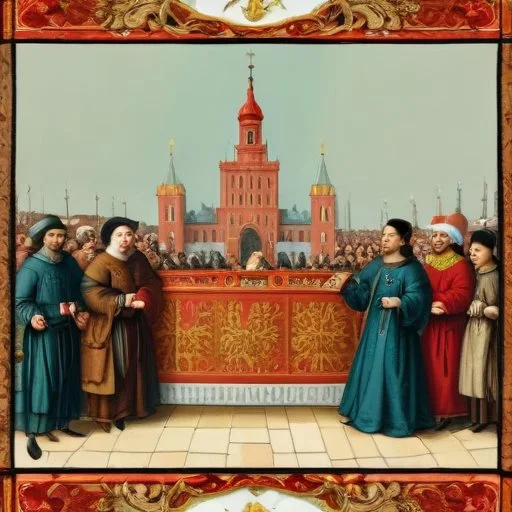
The 16th century was marked by religious strife, with the Protestant Reformation and the Catholic Counter-Reformation dividing Europe. Poland, a nation at the crossroads of Eastern and Western Europe, was no exception. The country was torn between the Catholic Church and the rising tide of Protestantism, with various denominations vying for dominance.
In 1569, the Union of Lublin united Poland and Lithuania, creating a vast, multi-ethnic state. However, this union also brought forth a pressing issue: how to reconcile the religious differences between the two nations. In response, the Warsaw Confederation was formed, comprising a diverse group of Polish nobles and clergy.
At the helm of this movement were visionaries like Jan Zamoyski, a prominent Polish nobleman and champion of religious tolerance. Alongside him were other influential figures, such as Bishop Jan Przerębski and Chancellor Walenty Dembiński, who played crucial roles in shaping the Articles of the Warsaw Confederation.
The Articles of the Warsaw Confederation, signed on January 28, 1573, consisted of 12 clauses. The document's core principle was the guarantee of religious freedom to all citizens, regardless of their denomination. This bold move not only protected Catholics, but also Lutherans, Calvinists, and Orthodox Christians, marking a significant departure from the prevailing religious intolerance of the time.
The Articles of the Warsaw Confederation had far-reaching consequences, cementing Poland's reputation as a beacon of tolerance in a tumultuous era. This radical document inspired other European nations to adopt similar policies, paving the way for a more inclusive and accepting society.
"Let us not forget that the Polish nobility, by sanctioning freedom of religion, paved the way for the flowering of European culture." - Pope John Paul II
The Warsaw Confederation's groundbreaking approach to religious tolerance drew parallels with the Edict of Nantes (1598), which granted similar freedoms to French Protestants. Both documents demonstrated that, even in the face of adversity, human societies could strive for coexistence and understanding.
The Articles of the Warsaw Confederation played a significant role in shaping the course of European history. By promoting religious tolerance, they helped to mitigate the devastating effects of the Thirty Years' War (1618-1648) and paved the way for the Enlightenment's emphasis on reason and individual rights.
The Warsaw Confederation's legacy serves as a powerful reminder that, even in the darkest of times, humanity is capable of remarkable acts of tolerance, compassion, and foresight. As we navigate the complexities of our modern world, the Articles of the Warsaw Confederation stand as a beacon of hope, inspiring us to strive for a more inclusive and harmonious society.
Jan Zamoyski: The Champion of Tolerance
Jan Zamoyski, a prominent Polish nobleman, played a pivotal role in shaping the Articles of the Warsaw Confederation. Born in 1542, Zamoyski was a vocal advocate for religious tolerance, believing that faith should be a matter of personal choice, not state dictate. His diplomatic skills and negotiating prowess earned him the respect of his contemporaries, making him an ideal leader for the Confederation.
Zamoyski's commitment to tolerance was not limited to the Warsaw Confederation. He continued to promote religious freedom throughout his life, even when faced with opposition from the Catholic Church. His legacy as a champion of tolerance has endured for centuries, inspiring generations to promote understanding and coexistence.
The Edict of Nantes: A Comparative Analysis
The Edict of Nantes, signed in 1598, was a French decree that granted similar religious freedoms to French Protestants. While the Articles of the Warsaw Confederation predated the Edict by over 25 years, both documents shared a common goal: to promote religious tolerance and understanding. Both decrees were instrumental in reducing religious conflict and promoting coexistence in their respective countries.
A key difference between the two documents lies in their scope. The Articles of the Warsaw Confederation applied to all citizens of Poland, regardless of denomination, while the Edict of Nantes was primarily focused on protecting French Protestants. Despite this distinction, both documents demonstrate the power of human societies to strive for coexistence and understanding in the face of adversity.
The Cultural Legacy of the Warsaw Confederation
The Warsaw Confederation's commitment to religious tolerance had a profound impact on Polish culture. By promoting understanding and coexistence, the Confederation fostered an environment where artistic and intellectual expression could flourish. The city of Warsaw, in particular, became a hub of cultural activity, attracting scholars, artists, and thinkers from across Europe.
The Confederation's emphasis on tolerance also influenced Polish literature, with many writers exploring themes of religious freedom and coexistence in their works. The legacy of the Warsaw Confederation continues to be felt in Polish culture today, with many regarding it as a beacon of hope and understanding in a tumultuous world.
Historiographical Perspectives on the Warsaw Confederation
Historians have long debated the significance of the Warsaw Confederation, with some viewing it as a landmark moment in the struggle for religious tolerance, while others regard it as a pragmatic response to the complexities of Polish politics. Some historians have argued that the Confederation's emphasis on tolerance was a calculated move to consolidate power and maintain social order.
More recent historiographical perspectives have emphasized the Confederation's role in shaping the course of European history. By promoting religious tolerance, the Confederation helped to mitigate the devastating effects of the Thirty Years' War and paved the way for the Enlightenment's emphasis on reason and individual rights.
The Geopolitical Context of the Warsaw Confederation
The Warsaw Confederation was formed in a time of great geopolitical turmoil, with the Ottoman Empire to the south, the Holy Roman Empire to the west, and the Russian Empire to the east. Poland's strategic location at the crossroads of Eastern and Western Europe made it a key player in the region's politics.
The Confederation's commitment to religious tolerance was largely driven by the need to maintain stability and promote cooperation between the various ethnic and religious groups within Poland's borders. By doing so, the Confederation helped to maintain Poland's independence and sovereignty in a volatile region.