


On February 3, 1995, astronaut Eileen Collins etched her name in the annals of history as she became the first woman to pilot the Space Shuttle, marking a groundbreaking milestone in the pursuit of space exploration. As mission STS63 got underway from Kennedy Space Center in Florida, Collins took the reins, solidifying her place as a trailblazer in the space program.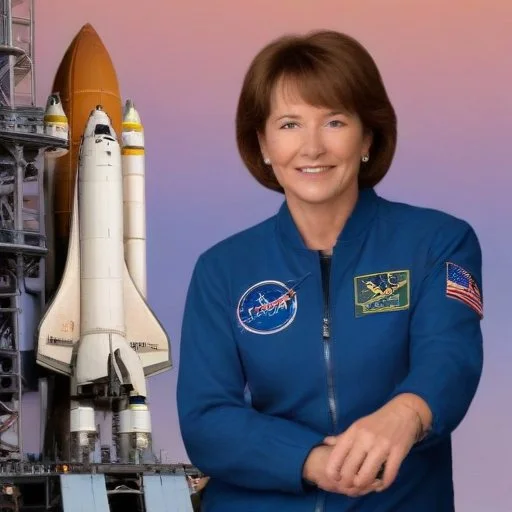
Eileen Collins' journey to the top was nothing short of remarkable. Born in 1956 in Elmira, New York, Collins' fascination with space began at a young age. She earned her Bachelor's degree in mathematics and economics from Syracuse University, followed by a Master's in operations research from Stanford University. Collins' impressive resume also includes a stint as an Air Force test pilot, making her a natural fit for NASA's elite astronaut program.
The STS63 mission was a nine-day extravaganza, with Collins at the helm of the Space Shuttle Discovery. The primary objective was to deploy the SPARTAN-204 astronomy payload, designed to study the Earth's atmosphere and solar wind. The mission also included a series of scientific experiments, spacewalks, and satellite deployments.
Collins' achievement was more than just a personal milestone; it marked a significant step forward for women in STEM fields. As the first woman to pilot the Space Shuttle, Collins paved the way for future generations of women in space exploration. Her accomplishment sent a powerful message, shattering glass ceilings and challenging traditional gender roles.
– Eileen Collins
Eileen Collins' historic achievement paved the way for future women in space exploration. Her trailblazing career inspired a new generation of female astronauts, including pioneers like Sunita Williams and Peggy Whitson. Collins' legacy continues to inspire and motivate individuals to pursue careers in STEM fields.
In conclusion, Eileen Collins' remarkable achievement as the first woman to pilot the Space Shuttle marks a significant milestone in the pursuit of space exploration. Her trailblazing career serves as a beacon of inspiration, encouraging future generations to reach for the stars.
Born on November 19, 1956, in Elmira, New York, Eileen Collins grew up in a family that encouraged her curiosity and ambition. Her father, James E. Collins, was a talented mechanic who owned a small appliance repair shop, and her mother, Florence M. Collins, was a devoted homemaker. From a young age, Collins demonstrated a keen interest in mathematics and science, often spending hours poring over her father's science books and watching the stars in the night sky.
Collins' early life was shaped by her parents' strong work ethic and the values of determination and perseverance. She attended Elmira Free Academy, where she was an exemplary student and developed a passion for athletics, particularly basketball and track. These formative years laid the foundation for Collins' future success, instilling in her the confidence and resilience that would propel her to become a pioneering astronaut.
The STS63 mission marked a significant milestone in the development of space exploration technology. The deployment of the SPARTAN-204 astronomy payload demonstrated the capabilities of the Space Shuttle as a versatile platform for conducting scientific research. The payload's success paved the way for future astronomy missions, such as the Hubble Space Telescope, which has greatly expanded our understanding of the universe.
The mission also tested the Space Shuttle's ability to perform complex maneuvers, including a series of orbit adjustments and deployments. These technological advancements have had a lasting impact on the space program, enabling future missions to push the boundaries of space exploration.
Eileen Collins' historic achievement as the first woman to pilot the Space Shuttle had a profound impact on American culture. Her accomplishment sent a powerful message to young girls and women across the country, shattering traditional gender roles and challenging stereotypes. Collins' trailblazing career inspired a new generation of women to pursue careers in STEM fields, sparking a cultural shift towards greater diversity and inclusion.
The media frenzy surrounding the STS63 mission catapulted Collins to international fame, making her an instant icon and role model. Her achievement has been celebrated in various forms of media, including books, documentaries, and films, cementing her place in American cultural history.
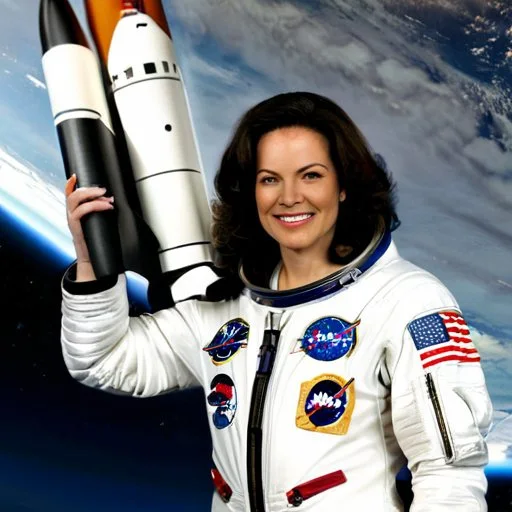
Historians have come to regard Eileen Collins as a pioneering figure in the history of space exploration. Her achievement has been contextualized within the broader narrative of women's struggles for equality and representation in the space program. Scholars have noted that Collins' success was not an isolated event, but rather the culmination of decades of advocacy and activism by women in the space community.
Collins' legacy has also been seen as a reflection of the changing social and political landscape of the 1990s. Her achievement symbolized the progress made towards gender equality, highlighting the importance of diversity and inclusion in the pursuit of scientific knowledge.
Eileen Collins' historic achievement as the first woman to pilot the Space Shuttle triggered a ripple effect of social change, inspiring a new generation of women to pursue careers in space exploration. The mission marked a turning point in the struggle for gender equality in the space program, as women began to occupy more prominent roles and challenge traditional gender norms.
The impact of Collins' achievement extended beyond the space program, influencing broader social attitudes towards women's roles in society. Her achievement helped to challenge gender stereotypes, paving the way for greater diversity and inclusion in various fields, including science, technology, engineering, and mathematics (STEM).