


The Atocha massacre, a senseless and brutal attack, shook the very foundations of Spain's fragile democracy on January 24, 1977. This infamous event, which occurred during the country's transition from authoritarian rule to democracy, left an indelible mark on the nation's history, claiming the lives of five innocent people and wounding four others.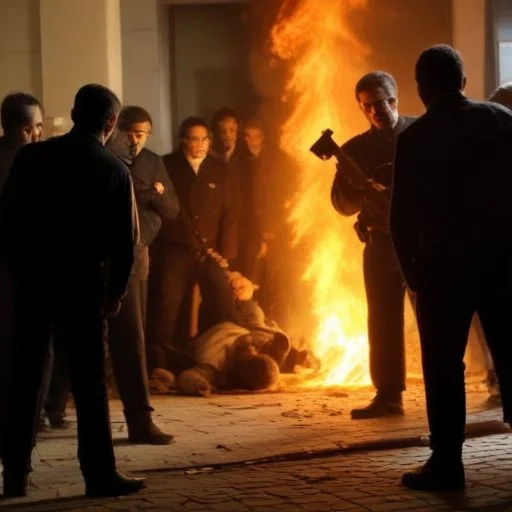
As Spain transitioned from the authoritarian regime of Francisco Franco to a democratic system, tensions ran high. The political landscape was volatile, with factions vying for power and extreme ideologies dominating the discourse. In this tumultuous environment, a group of neofascist gunmen saw an opportunity to disrupt the democratization process and maintain the status quo.
On that fateful day, a group of lawyers and union leaders gathered at a modest office in Madrid's Atocha district. Among them were prominent figures, including trade unionists and outspoken critics of the Franco regime. Unbeknownst to them, their lives were about to take a devastating turn.
At around 10:30 pm, five neofascist gunmen, armed with pistols and explosives, burst into the office, opening fire on the unsuspecting group. The attack lasted mere minutes, but its impact would be felt for generations to come.
The Atocha massacre sparked widespread outrage and condemnation across Spain. The brutal attack galvanized the nation, prompting massive protests and a national outcry for justice and democratic reform. As news of the event spread, Spaniards from all walks of life demanded an end to the authoritarian regime and the establishment of a democratic government.
Theattack also had a profound impact on the political landscape, strengthening the resolve of democratic forces and paving the way for the country's first free elections in 1977. The massacre became a rallying cry for democracy, with many seeing it as a brutal reminder of the horrors that could occur if the transition to democracy was derailed.
In the years that followed, Spain continued to move towards democratization, with the Atocha massacre serving as a poignant reminder of the importance of protecting democratic values. The event also had a profound impact on the nation's psyche, fostering a sense of unity and resilience in the face of adversity.
Today, the Atocha massacre is remembered as a turning point in Spanish history, a brutal attack that galvanized a nation and paved the way for a new era of democracy and freedom.
The Atocha massacre serves as a powerful reminder of the importance of protecting democracy and promoting peace, tolerance, and understanding in the face of extremism and violence.
As Spain transitioned from authoritarian rule to democracy, the country was plagued by political violence. The Atocha massacre was not an isolated incident, but rather part of a broader pattern of neofascist attacks on democratic institutions. In the months leading up to the massacre, there were several other attacks on trade unions, political parties, and civil society organizations.
One of the key factors that contributed to the rise of neofascist violence was the lingering presence of Franco-era security forces, who felt threatened by the democratization process. Many of these individuals had been trained in the use of violence and intimidation, and they saw the rise of democracy as a threat to their power and privileges.
In this context, the Atocha massacre was a brutal attempt to crush the democratic movement and maintain the status quo. However, the attack ultimately backfired, galvanizing the nation and paving the way for the country's first free elections in 1977.
One of the victims of the Atocha massacre was Enrique Valdelvira Ibáñez, a young lawyer and trade unionist who was known for his activism and bravery. Ibáñez was a key figure in the Madrid chapter of the Workers' Commissions, a prominent trade union that was at the forefront of the struggle for democracy.
Ibáñez's colleagues and friends remembered him as a passionate and dedicated individual who was deeply committed to the cause of democracy and social justice. Despite the risks involved, he continued to speak out against the authoritarian regime, even in the face of intimidation and violence.
Today, Ibáñez is remembered as a hero and a martyr for the cause of democracy in Spain. His legacy continues to inspire activists and unionists around the world who are fighting for social justice and human rights.
The Atocha massacre was not only a brutal attack on innocent people, but also a stark reminder of the dangers of extremism and ideological fanaticism. The neofascist gunmen who carried out the attack were driven by a twisted ideology that emphasized violence and hatred over democracy and human rights.
In the aftermath of the massacre, many Spaniards began to question the underlying values and beliefs that had led to such brutality. There was a growing recognition that democracy and human rights were not just abstract concepts, but fundamental principles that required constant vigilance and defense.
Today, the Atocha massacre serves as a powerful reminder of the importance of promoting tolerance, understanding, and peaceful coexistence in the face of extremism and violence. It is a stark reminder that democracy is not a destination, but a continuous process that requires effort and commitment from all citizens.
The Atocha massacre had a profound impact on Spanish culture, contributing to a growing sense of outrage and disillusionment with the authoritarian regime. The attack was widely condemned by artists, intellectuals, and cultural figures, who saw it as a brutal assault on the values of democracy and human rights.
In the aftermath of the massacre, there was a surge in creative expression and cultural activism, as artists and intellectuals sought to respond to the attack and promote a culture of democracy and human rights. This cultural movement played a key role in shaping the country's transition to democracy, providing a powerful impetus for political and social change.
Today, the Atocha massacre is remembered as a cultural turning point in Spanish history, a moment when the country began to shed its authoritarian past and embrace a more democratic and inclusive future.
The Atocha massacre was a pivotal moment in Spanish politics, marking a decisive shift in the country's transition to democracy. The attack was widely condemned by political parties and civil society organizations, who saw it as a brutal attempt to derail the democratization process.
In the aftermath of the massacre, there was a growing recognition that democracy and human rights were not just moral imperatives, but also essential prerequisites for political stability and economic development. This recognition paved the way for the country's first free elections in 1977, which marked a major milestone in Spain's transition to democracy.
Today, the Atocha massacre is remembered as a powerful reminder of the importance of protecting democracy and promoting human rights. It serves as a warning against the dangers of extremism and authoritarianism, and a testament to the power of democratic values in shaping a more just and equitable society.