


In the midst of the Buddhist crisis that had been simmering in South Vietnam, the Joint Communique was signed by President Ngo Dinh Diem and Buddhist leaders, marking a historic turning point in the country's struggle for peace and stability. This landmark agreement, signed in 1963, aimed to resolve the deep-seated religious and political tensions that had been tearing the nation apart.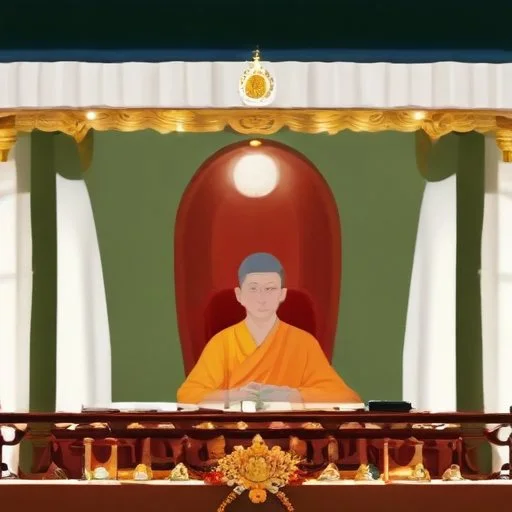
The Buddhist crisis in South Vietnam was a result of growing discontent among the Buddhist population, who felt marginalized and persecuted by the Catholic-dominated government of President Diem. The roots of the crisis can be traced back to the early 1960s, when Buddhist monks and intellectuals began to voice their grievances against the government's discriminatory policies. The crisis escalated in 1963, with the infamous Buddha's Birthday incident, in which nine Buddhist protesters were killed by government forces in Huế, sparking widespread outrage and protests across the country.
The Joint Communique was the result of intense negotiations between President Diem and a delegation of Buddhist leaders, led by the venerable Thich Tri Quang. Thich Tri Quang, a prominent Buddhist monk and scholar, played a crucial role in bridging the gap between the government and the Buddhist community. His tireless efforts and diplomatic skills helped to facilitate the dialogue that ultimately led to the signing of the Joint Communique.
The Joint Communique marked a significant shift in the government's approach to the Buddhist crisis, acknowledging the legitimacy of Buddhist grievances and committing to a series of reforms. The agreement paved the way for greater religious freedom, equal rights for Buddhists, and increased representation in government. Although the implementation of the Communique was far from perfect, it represented a crucial step towards reconciliation and paved the way for future dialogue between the government and the Buddhist community.
The Joint Communique had far-reaching cultural and social implications, helping to foster a sense of national unity and reconciliation. The agreement marked a turning point in the country's struggle for peace, and its impact was felt beyond the realm of politics. The Communique helped to promote greater understanding and respect between the Buddhist and Catholic communities, laying the foundation for a more harmonious and inclusive society.
Despite its significance, the Joint Communique was not without its controversies. Many critics argued that the agreement did not go far enough in addressing Buddhist grievances, and that the government's commitment to reform was lukewarm at best. Moreover, the Communique was seen as a tactical move by the government to placate the Buddhist community, rather than a genuine attempt at reconciliation. These concerns undermined the fragile peace that had been achieved, and the crisis continued to simmer beneath the surface.
"The Joint Communique is a victory for the entire nation, a beacon of hope in these dark times." - Thich Tri Quang
"This agreement marks a new era of cooperation between the government and the Buddhist community. Let us work together to build a brighter future for all Vietnamese." - President Ngo Dinh Diem
The Joint Communique may have been a flawed and imperfect agreement, but its significance cannot be overstated. It represented a crucial step towards reconciliation, acknowledging the grievances of the Buddhist community and paving the way for greater religious freedom and equality. Although the crisis continued to simmer beneath the surface, the Communique remains an important milestone in South Vietnam's struggle for peace and stability, a testament to the power of dialogue and diplomacy in the face of adversity.
Thich Tri Quang was a Buddhist monk and scholar who played a pivotal role in the negotiations leading to the Joint Communique. Born in 1923 in Quảng Nam Province, Quang was educated in Buddhist philosophy and became a prominent figure in the Buddhist community. His peaceful demeanor and diplomatic skills earned him the respect of both the government and the Buddhist leaders, making him an ideal mediator in the crisis.

The early 1960s were marked by heightened tensions between the superpowers, with the Cold War casting a long shadow over Southeast Asia. The Vietnam War was escalating, and the United States was increasing its involvement in the region. Against this backdrop, the Buddhist crisis in South Vietnam was seen as a proxy battle in the global struggle against communism. The Joint Communique was a rare moment of respite in an era of conflict and instability.
The Joint Communique was a 5-point document signed by President Diem and Buddhist leaders on June 16, 1963. The agreement outlined a series of reforms aimed at addressing Buddhist grievances, including the establishment of a national Buddhist university and the recognition of Buddhism as a legitimate religion. The document itself was a testament to the power of dialogue and diplomacy, providing a framework for future reconciliation.

The Joint Communique had far-reaching cultural implications, helping to promote greater understanding and respect between the Buddhist and Catholic communities. The agreement marked a turning point in the country's struggle for national identity, acknowledging the diversity of Vietnamese culture and promoting a more inclusive society. The Communique's emphasis on religious freedom and equality also paved the way for a more pluralistic and tolerant Vietnam.
The Joint Communique was a significant political victory for the Buddhist community, marking a shift in the government's approach to the crisis. The agreement's emphasis on religious freedom and equality also had important implications for the political landscape of South Vietnam, paving the way for greater representation and participation by Buddhists in government. However, the Communique's limitations also underscored the ongoing struggle for power and influence in South Vietnam.