


On September 26, 1983, the sailing world was turned upside down as Australia II, led by skipper John Bertrand, defied the odds and ended the New York Yacht Club's 132-year grip on the Americas Cup. This monumental victory marked a pivotal moment in the history of the sport, cementing Australia's reputation as a force to be reckoned with in international sailing.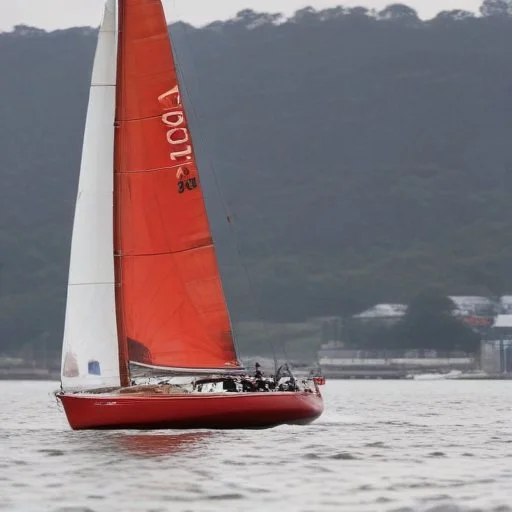
The Americas Cup, often referred to as the "Auld Mug," is the oldest international sporting trophy, with a rich history dating back to 1851. The Cup is a symbol of excellence, perseverance, and innovation, and its prestige is unmatched in the sailing community.
For over a century, the New York Yacht Club (NYYC) had dominated the Americas Cup, with an unmatched record of 24 consecutive victories. The NYYC's reign was marked by a strong sense of tradition, sophistication, and superiority, earning them the nickname "The aristocrats of the sea."

In the early 1980s, a group of passionate and ambitious Australian sailors, led by John Bertrand, set their sights on ending the NYYC's reign. Bertrand, a former Olympic sailor, was determined to shatter the glass ceiling and bring the Americas Cup to Australian shores.

Australia II's innovative winged keel design, created by Dutch designer Ben Lexcen, proved to be the game-changer in the competition. This radical design enabled the boat to cut through the choppy waters of the Atlantic Ocean with unprecedented speed and agility.

In the fifth race, Australia II found themselves trailing Liberty, the American boat, by 31 points. However, the Australian crew refused to give up, and with a fierce determination, they fought back to win the next three races, securing a thrilling 4-3 victory.
The Australia II team's triumph marked a significant shift in the sailing world's balance of power. The victory not only ended the NYYC's dominance but also paved the way for increased international competition and innovation in the sport.
Australia's historic win inspired a new generation of sailors, sparking a surge in interest and investment in sailing infrastructure across the country. The victory also catalyzed the growth of international sailing competitions, with more countries than ever before participating in the sport.

John Bertrand's vision, Ben Lexcen's innovative design, and the unwavering determination of the Australia II crew will forever be etched in the annals of sailing history. Their bravery, skill, and perseverance serve as a testament to the power of human spirit and the importance of pushing boundaries.
The Australia II team's groundbreaking victory continues to inspire generations of sailors, athletes, and scholars alike. Their remarkable achievement serves as a beacon of hope, reminding us that with courage, determination, and innovation, even the impossible can become possible.
During the 1983 America's Cup, the New York Yacht Club's dominance was not only challenged by Australia II's innovative design and determined crew, but also by the changing tides of international sailing politics. The NYYC's long-standing reign was built on a foundation of tradition, prestige, and exclusivity, which was beginning to show signs of cracks in the early 1980s.
As the sailing world began to globalize, the America's Cup was faced with increased competition from European and Asian nations, who saw the competition as an opportunity to showcase their skills and challenge the NYYC's dominance. This shift in the sailing landscape created an atmosphere of uncertainty and excitement, which only added to the drama of Australia II's historic upset.

Ben Lexcen: The Mastermind Behind Australia II's Innovative Design
Ben Lexcen, the Dutch designer behind Australia II's revolutionary winged keel, was a humble and soft-spoken individual with a passion for innovation and design. With a background in aeronautical engineering, Lexcen brought a unique perspective to yacht design, which enabled him to think outside the box and push the boundaries of what was thought possible.
Lexcen's dedication to his craft was unwavering, and his commitment to the Australia II team was instrumental in their success. Despite the intense pressure and scrutiny of the America's Cup, Lexcen remained focused and calm, relying on his technical expertise to overcome the challenges faced by the team.
The 1983 America's Cup victory had a profound impact on Australian culture, sparking a sense of national pride and identity. The country's sporting psyche was forever changed, as the "Aussie underdog" narrative became a beacon of inspiration for generations to come.
The victory also had a significant impact on Australian popular culture, with the phrase "We didn't just win the Cup, we changed the face of sailing" becoming an iconic catchcry. The event was celebrated through music, art, and literature, cementing its place in the nation's cultural consciousness.

The economic impact of Australia II's victory was significant, with the country experiencing a surge in tourism and investment in the sailing industry. The event generated an estimated AU$100 million in revenue, creating new jobs and opportunities for Australian businesses.
The victory also sparked a growth in sailing infrastructure, with new marinas, yacht clubs, and training facilities springing up around the country. This investment in sailing infrastructure paved the way for future generations of Australian sailors, providing them with world-class facilities and resources.
The technological innovations pioneered by Australia II's winged keel design had far-reaching implications for the sailing industry. The design's success sparked a wave of innovation, as designers and engineers pushed the boundaries of what was thought possible in yacht design.
The development of advanced materials and construction techniques enabled the creation of faster, stronger, and more efficient boats, which in turn led to new advances in sailing technology. The legacy of Australia II's innovative design can still be seen today, with modern America's Cup boats featuring cutting-edge technology and design elements.