


On February 13, 2008, Australian Prime Minister Kevin Rudd stood before Parliament and delivered a historic apology to the Indigenous Australians and the Stolen Generations, acknowledging the nation's dark past and expressing deep regret for the pain and suffering inflicted upon the Indigenous people.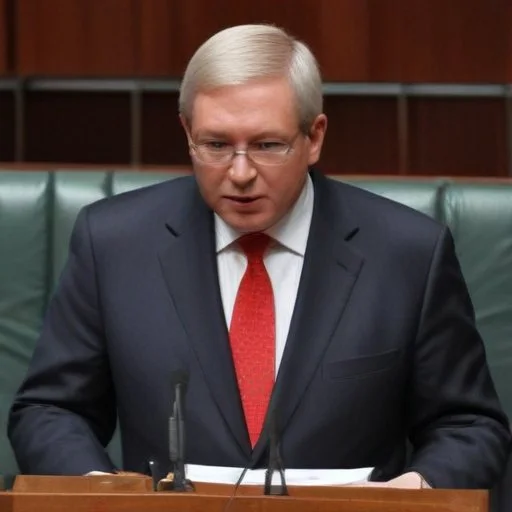
For decades, thousands of Aboriginal children were forcibly removed from their families, subjected to cultural suppression, and forced to assimilate into white Australian culture. This policy, enacted between the 1900s and 1970s, tore families apart, eroding the very fabric of Indigenous culture and identity.
Rudd's apology marked a crucial step towards reconciliation, as Australia began to confront its troubled history and pave the way for a brighter future. The Prime Minister's words echoed with sincerity, "Today, the Parliament of Australia, on behalf of the Australian people, takes a major step towards reconciliation."
The Stolen Generations refer to the Aboriginal and Torres Strait Islander children who were forcibly removed from their families and placed in missions, foster care, or adopted by non-Indigenous families. This policy was based on the flawed assumption that Indigenous Australians were inferior and needed to be "civilized."
Rudd's apology was a significant step towards reconciliation, but it was only the beginning. The apology paved the way for:
The apology had a profound impact on Australian society, sparking a national conversation about Indigenous rights and reconciliation. It:
Rudd's apology was marked by his poignant words, which have become etched in Australian history:
"We apologise especially for the removal of Aboriginal and Torres Strait Islander children from their families, their communities and their country."
"For the pain, suffering and injustice inflicted upon you, and for the devastating effects this had on your lives, your families and your communities."
"Today, we take this first step by acknowledging the past and laying the foundations for a brighter future for all Australians."
As Australia continues on its journey towards reconciliation, Rudd's apology serves as a beacon of hope and a reminder of the power of acknowledgement and apology. It is a testament to the resilience and strength of the Indigenous Australian people, and a powerful step towards a brighter, more inclusive future for all Australians.
The apology had a profound impact on Australian cultural identity, sparking a national conversation about Indigenous rights and reconciliation.
Indigenous Australian artists, in particular, responded to the apology with a surge in creative expression, using their work to process the emotions and experiences of the Stolen Generations.
The apology also led to an increase in Indigenous representation in mainstream media, with more Indigenous Australians being featured in film, television, and literature.
Furthermore, the apology paved the way for the recognition of Indigenous Australian culture in national institutions, such as the National Museum of Australia and the Australian National University.
Today, Indigenous Australian culture is celebrated and recognized as an integral part of Australian identity, thanks in part to the power of the apology.

Kevin Rudd, the 26th Prime Minister of Australia, is remembered for his historic apology to the Stolen Generations.
Rudd's apology was a testament to his commitment to social justice and his willingness to confront the dark chapters of Australia's past.
A strong advocate for Indigenous rights, Rudd worked closely with Indigenous leaders and communities to craft the apology and develop policies aimed at redressing the legacy of the Stolen Generations.
Rudd's leadership on Indigenous issues earned him recognition and praise from both domestic and international organizations.
His apology will forever be remembered as a pivotal moment in Australian history, marking a significant step towards reconciliation and healing.
The policy of forced removals was first introduced in the early 20th century, when the Australian government passed the Aboriginals Protection Act in 1909.
The act gave the government sweeping powers to regulate the lives of Indigenous Australians, including the removal of children from their families.
Over the years, the policy was enforced through a network of missions, reserves, and Native Police, who were tasked with rounding up Indigenous children and transporting them to institutions.
Many of these institutions were run by Christian missionaries, who believed they were "civilizing" the Indigenous children by eradicating their cultural identity.
The policy remained in place until the 1970s, when growing public outcry and international pressure forced the government to abandon it.
The apology was a significant political milestone, marking a shift in the Australian government's approach to Indigenous affairs.
For decades, Australian governments had resisted acknowledging the wrongs of the past, instead perpetuating policies that further marginalized and disadvantaged Indigenous Australians.
Rudd's apology signaled a new era of cooperation and consultation between the government and Indigenous Australians, paving the way for the development of policies aimed at "closing the gap" in health, education, and economic outcomes.
The apology also prompted a re-examination of Australia's colonial past, with many historians and scholars re-evaluating the country's early history and the impact of colonialism on Indigenous Australians.
Today, the apology is recognized as a crucial step in the process of reconciliation, one that has helped to build trust and foster a sense of national pride and responsibility.
The apology sparked a wave of social change, as Australians from all walks of life began to engage with Indigenous issues and advocate for Indigenous rights.
The phenomenon of "sorry books" emerged, with thousands of Australians writing letters and compiling books of apologies to the Stolen Generations.
The apology also prompted a surge in volunteerism, with many Australians giving their time and energy to organizations working with Indigenous communities.
Furthermore, the apology led to the development of Reconciliation Action Plans, which aimed to promote greater understanding and respect between Indigenous and non-Indigenous Australians.
Today, the social impact of the apology is still being felt, with many Australians continuing to work towards a more just and equitable society for all.