


In the early morning hours of January 21, 1968, a United States B-52 Stratofortress bomber, call sign "Hard Luck," plummeted towards the icy landscape near Thule Air Base in Greenland, releasing a catastrophic payload of radioactive material into the environment. This devastating crash would go down in history as one of the most harrowing nuclear accidents of the Cold War era, leaving behind a trail of contamination and a sense of unease that would linger for decades to come.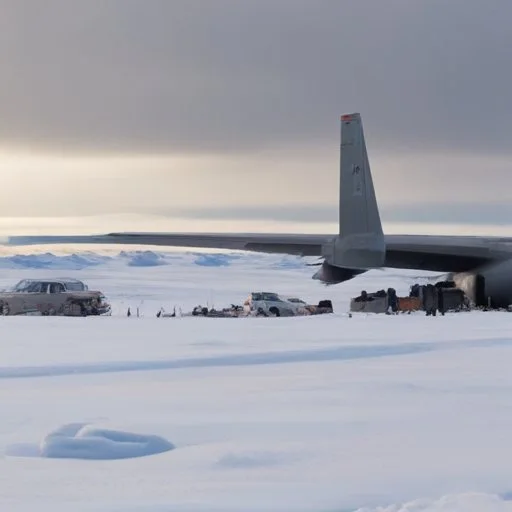
The B-52 bomber, piloted by Captain John Haug, was on a routine mission to test its nuclear payload as part of the US military's Operation Chrome Dome. The crew had embarked on a 24-hour patrol near the North Pole, flying in a giant circular pattern to maintain a constant state of readiness in the event of a Soviet attack. However, fate had other plans.
The crash ruptured the plane's nuclear payload, consisting of four B28 thermonuclear bombs. The resulting fireball explosion released radioactive material into the environment, contaminating a vast area around the crash site.
The cleanup operation, code-named "Project Crested Ice," was one of the largest and most complex in history. Over 700 personnel, including US military personnel, Danish scientists, and local hunters, worked tirelessly to contain and remove the radioactive material. However, despite their efforts, one of the four nuclear bombs remained unaccounted for, leaving behind a lingering sense of uncertainty.
The Thule Air Base crash had far-reaching consequences, both environmental and political. The accident sparked a heated debate about the safety of nuclear weapons and the risks associated with their transportation.
The Thule Air Base crash serves as a poignant reminder of the devastating consequences of nuclear accidents and the importance of prioritizing safety and accountability in the development and deployment of nuclear weapons.
Today, the crash site is a testament to the enduring legacy of the Cold War era, a powerful symbol of the devastating consequences of human error and technological failure.
In the words of Captain John Haug, pilot of the ill-fated B-52 bomber, "It was a routine mission that turned into a nightmare. We were lucky to have made it out alive, but the consequences of that crash will be felt for generations to come."
The Thule Air Base crash had a profound impact on the environment, with the radioactive material released from the nuclear payload contaminating a vast area around the crash site. The cleanup operation, code-named "Project Crested Ice," involved the removal of over 10,000 tons of contaminated snow and ice. Despite the efforts, the crash site remains contaminated to this day, with some areas still restricted due to high levels of radiation.
The incident also raised concerns about the effects of nuclear testing on local ecosystems. The radioactive fallout from the crash contaminated the local wildlife, including polar bears, reindeer, and arctic foxes. The long-term effects of the radiation on the ecosystem are still being studied, but it is clear that the crash had a lasting impact on the environment.

The Thule Air Base crash sparked a heated debate about the safety of nuclear weapons and the risks associated with their transportation. The incident prompted a re-evaluation of the US military's nuclear safety protocols and led to the implementation of new safety measures to prevent similar accidents in the future.
The crash also had significant political implications, with the Danish government facing criticism for its role in allowing the US military to operate in Greenland. The incident strained relations between the US and Denmark, with some calling for greater transparency and accountability in the handling of nuclear weapons.
The Thule Air Base crash occurred during a period of heightened tensions between the US and the Soviet Union, with the Cold War at its peak. The incident highlighted the risks of nuclear weapons and the devastating consequences of a nuclear accident.
The crash also underscored the importance of the US military's Arctic presence, with the Thule Air Base serving as a critical strategic location for monitoring Soviet activity. The incident reinforced the need for a strong US military presence in the region, particularly in light of the Soviet Union's growing nuclear capabilities.
Captain John Haug, the pilot of the ill-fated B-52 bomber, was a seasoned aviator with over 10 years of experience flying for the US Air Force. Haug was known for his exceptional flying skills and had a reputation for being calm under pressure.
In the aftermath of the crash, Haug was hailed as a hero for his bravery and quick thinking in the face of disaster. Despite the devastating consequences of the crash, Haug's actions likely prevented an even greater catastrophe.
The Thule Air Base crash led to significant advances in nuclear safety technology, with the development of new safety features and protocols to prevent similar accidents in the future. The incident highlighted the need for more reliable and fail-safe systems to prevent mechanical failures.
The crash also spurred the development of new technologies for cleaning up radioactive contamination, including the use of specialized equipment and techniques for removing radioactive material from the environment.