


The Battle of Alnwick, fought on November 13, 1093, is etched in the annals of history as a devastating defeat for the Scots, resulting in the loss of their fearless King Malcolm III and his valiant son Edward. This pivotal conflict marked a significant shift in the balance of power between Scotland and England, leaving an indelible mark on the trajectory of both nations.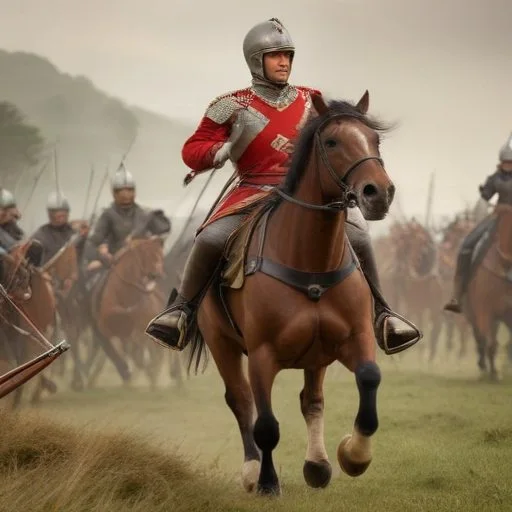
In the late 11th century, the Anglo-Scottish border was a hotbed of tension, with both nations vying for dominance. Malcolm III, a seasoned warrior and shrewd politician, had long been a thorn in the side of the English monarchy. His territorial ambitions and military prowess had earned him the respect and admiration of his people, but also the enmity of his southern neighbors.
Malcolm III of Scotland, also known as Malcolm Canmore, was the King of Scotland from 1058 until his untimely demise at Alnwick. A skilled military strategist and charismatic leader, he had successfully expanded Scotland's borders, earning him the admiration of his contemporaries. His unwavering courage and unrelenting ambition made him a formidable opponent on the battlefield.
Edward, son of Malcolm III, was a promising young warrior who fought alongside his father at Alnwick. Little is known about Edward's life, but his bravery in the face of overwhelming odds has become the stuff of legend. His tragic death, alongside his father, would have far-reaching consequences for the Scottish monarchy.
The English army, led by Robert de Mowbray, Earl of Northumberland, was superior in numbers and firepower. Despite being outnumbered, the Scots fought valiantly, but ultimately, they were no match for the English forces. The battle was fierce and brutal, with both sides suffering heavy casualties. In the end, Malcolm III and Edward fell to the English swords, dealing a crushing blow to the Scottish army's morale.
The sudden demise of Malcolm III and Edward sent shockwaves throughout Scotland, creating a power vacuum that would take years to fill. The Scottish monarchy was plunged into a period of uncertainty, with various factions vying for control. The English, meanwhile, capitalized on their victory, securing a significant advantage over their northern neighbors. The Battle of Alnwick would become a turning point in Anglo-Scottish relations, shaping the course of future conflicts and diplomatic endeavors.
The Battle of Alnwick's significance extends far beyond the confines of the battlefield. It marked a shift in the balance of power, with England emerging as the dominant force in the region. The conflict also highlighted the importance of strategic alliances and diplomatic maneuvering in the pursuit of national interests. As such, it serves as a valuable lesson for historians and students of politics alike, offering a poignant reminder of the far-reaching consequences of conflict and the importance of wise leadership.
The Battle of Alnwick was not an isolated incident, but rather the culmination of centuries-long tensions between Scotland and England. In the 11th century, Scotland was plagued by factionalism, with powerful nobles vying for control of the throne. Meanwhile, England was consolidating its power under the Norman Conquest. This feudal system created an environment of competition and mistrust, setting the stage for the Battle of Alnwick.
The Scottish monarchy, in particular, was beset by internal power struggles. Malcolm III's rule was marked by a series of conflicts with rival claimants to the throne, including his own brother Donald III. This internal instability weakened Scotland's position vis-à-vis England, making it more vulnerable to English aggression.
The Norman Conquest of England in 1066 had far-reaching consequences for Scotland. William the Conqueror's victory introduced a new era of feudalism, where loyalty to the crown was paramount. This system created a culture of obligation and duty, where vassals were bound to their lords. Scotland, still largely a tribal society, struggled to adapt to this new paradigm, leading to tensions with its southern neighbor.

Robert de Mowbray, Earl of Northumberland, was the English commander who led the forces that defeated the Scots at Alnwick. Little is known about his early life, but his military prowess and strategic thinking made him a formidable opponent. De Mowbray's victory at Alnwick cemented his reputation as a skilled warrior and earned him the gratitude of the English monarchy.
De Mowbray's role in the battle is often overshadowed by the more dramatic tale of Malcolm III's demise. However, his leadership and tactical acumen were instrumental in securing the English victory. His ability to adapt to the fluid battlefield and respond to the Scots' guerrilla tactics ultimately proved decisive.
The Battle of Alnwick was a clash of two distinct military traditions. The Scots, long accustomed to fighting in their rugged terrain, employed guerrilla tactics to harass and disrupt the English forces. These hit-and-run attacks, often launched from the safety of dense forests or behind rocky outcroppings, sought to exploit the English army's size and cumbersome movement.
In contrast, the English army relied on its heavy cavalry, armored knights who charged into battle with devastating effect. This tactic, honed in the Norman Conquest, was designed to break enemy lines and shatter morale. The English cavalry's superior training and equipment gave them a significant advantage on the battlefield, ultimately proving too much for the Scots to overcome.

The Battle of Alnwick was not an isolated event, but rather part of a larger struggle for power and influence in medieval Europe. The conflict formed part of a complex web of alliances, rivalries, and territorial ambitions that spanned the continent. The English victory had far-reaching implications, influencing the balance of power in the region and shaping the course of future conflicts.
The battle also highlights the critical role of the Anglo-Scottish border in shaping the fate of both nations. This contested region, often a flashpoint for conflict, would continue to be a source of tension and competition between the two nations for centuries to come.
Archaeological excavations at Alnwick have uncovered tantalizing clues about the battle that took place there. The Alnwick Cross, a beautifully crafted stone monument, stands as a testament to the event. Inscribed with intricate designs and symbols, the cross is believed to mark the spot where Malcolm III fell.
Ongoing excavations have also yielded fragments of armor, sword hilts, and other battle detritus. These artifacts provide a unique window into the material culture of medieval Scotland and England, offering insights into the tactics, equipment, and rituals of the warriors who fought at Alnwick.