


On a fateful day in 1996, the Taliban militia, driven by their fundamentalist Islamic ideology, stormed into Kabul, marking the culmination of a brutal four-year civil war and the establishment of an Islamic Emirate in Afghanistan. This pivotal event would forever alter the course of Afghan history, casting a long shadow over the war-torn nation.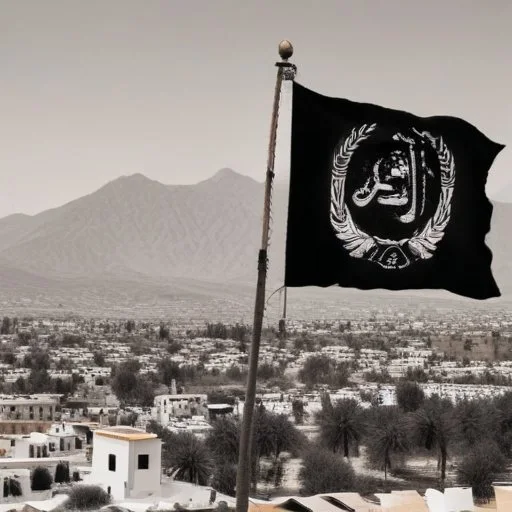
The roots of the Battle of Kabul can be traced back to the Soviet withdrawal from Afghanistan in 1989, which left a power vacuum that spawned a decade of factional infighting and instability. The Taliban, initially a group of Islamic students, emerged as a dominant force in the early 1990s, distinguished by their radical ideology and unwavering commitment to implementing Islamic law.
The Taliban's supreme leader, Mullah Omar, a reclusive cleric with a reputation for ruthlessness, was the architect of the Kabul conquest. Alongside his trusted deputies, including the notorious Jalaluddin Haqqani, Omar orchestrated the Taliban's military campaign, leveraging their superior numbers and guerrilla tactics to outmaneuver their fragmented opponents.
The Taliban's conquest of Kabul had far-reaching consequences, including:
The Taliban's ascendance had a profound impact on Afghan culture, as:
The Taliban's austere interpretation of Islam led to the destruction of cultural artifacts, the banning of music and art, and the enforced seclusion of women.
The regime's policies also sparked a brain drain, as many of Afghanistan's intellectuals, artists, and moderate clerics fled the country or went into hiding.
The Taliban's rule was marked by widespread human rights abuses, earning the regime international condemnation and censure. Critics argued that the regime's policies were:
In the end, the Battle of Kabul remains a dark chapter in Afghan history, a testament to the enduring legacy of the Taliban's brutal regime and the ongoing struggle for peace and stability in a war-torn nation.
"We are not here to make friends, we are here to implement Islamic law."
- Mullah Omar, Taliban Supreme Leader
The Taliban's ascent to power shares parallels with other fundamentalist movements, such as the Iranian Revolution and the ascendancy of ISIS in Iraq and Syria. These regimes often capitalize on power vacuums, leveraging popular discontent and exploiting religious or ideological fervor to implement radical policies.
Afghan journalist and writer, Ahmed Rashid, recalled the sense of unease that gripped Kabul in the days leading up to the Taliban's victory: "There was a feeling of impending doom, as if the city was holding its breath, waiting for the inevitable."
Rashid's account captures the mood of despair that characterized the final days of the Afghan government, as the Taliban's advance seemed irreversible and the world watched in horror.
The Battle of Kabul and the establishment of the Islamic Emirate had far-reaching consequences, contributing to:
The struggle for a stable and inclusive Afghanistan continues, as the country navigates the treacherous landscape of power politics, religious extremism, and social reform. The Battle of Kabul serves as a poignant reminder of the devastating consequences of unchecked ideology and the enduring quest for peace and justice in a troubled region.
Afghanistan's rich cultural heritage was decimated by the Taliban's rule, as ancient artifacts,including the famous Buddhas of Bamiyan, were destroyed in a frenzy of iconoclasm. The regime's disdain for pre-Islamic relics was matched only by its contempt for modern art, as musicians, artists, and writers were forced into hiding or exile.
The Taliban's cultural purge had a profound impact on Afghan identity, as the country's complex tapestry of ethnic groups and traditions was reduced to a monolithic Islamic narrative. The loss of cultural diversity was compounded by the destruction of educational institutions, which had been the bedrock of Afghan society for generations.
Today, Afghanistan struggles to rebuild its cultural landscape, with many artists and intellectuals still living in exile. Despite these challenges, the country's resilience and creativity continue to inspire, as a new generation of Afghans seeks to reclaim their cultural heritage and forge a brighter future.

Mullah Abdul Salam Zaeef, the Taliban's former ambassador to Pakistan, was a key figure in the regime's diplomatic efforts. A former Mujahideen fighter, Zaeef was known for his loyalty to Mullah Omar and his unwavering commitment to the Taliban's ideology.
As the Taliban's chief diplomat, Zaeef navigated the treacherous world of international politics, attempting to legitimize the regime's brutal rule. Despite his controversial past, Zaeef remains a complex figure, whose insights into the Taliban's mindset offer a unique perspective on the regime's inner workings.
The Soviet withdrawal from Afghanistan in 1989 created a power vacuum that was exploited by various Mujahideen factions. The Taliban, led by Mullah Omar, emerged as a dominant force in the early 1990s, capitalizing on the chaos and disillusionment that followed the Soviet occupation.
The Taliban's rise to power was facilitated by Pakistan's military establishment, which provided critical support to the regime. This covert backing allowed the Taliban to build a formidable military machine, which proved decisive in their conquest of Kabul.
The consequences of Pakistan's involvement in Afghan affairs continue to reverberate, as the region grapples with the legacy of Islamist radicalism and political instability.

The Taliban's ideology shares striking parallels with other fundamentalist movements, such as the Iranian Revolution and the rise of ISIS in Iraq and Syria. Each of these regimes has exploited power vacuums, leveraging popular discontent and religious fervor to implement radical policies.
In each case, the removal of a dictatorial or authoritarian regime created an opening for extremist groups to fill the power void. The subsequent imposition of draconian laws, human rights abuses, and repression of minorities has been a hallmark of these regimes.
Understanding the commonalities between these movements is crucial in developing strategies to combat their ideology and prevent future instances of extremism.
The Taliban's ideology was rooted in a austere interpretation of Deobandi Islam, which emphasized the importance of Islamic law and the suppression of cultural and intellectual freedoms. This rigid worldview was reinforced by Mullah Omar's charismatic leadership and the regime's reliance on Pashtun tribal networks.
The Taliban's ideology has had far-reaching consequences, influencing the development of global Islamist movements and fuelling regional instability. The regime's intellectual legacy continues to shape the discourse around political Islam, with many scholars and policymakers grappling with the implications of its radical ideologies.