


On a fateful day in February 1141, the streets of Lincoln ran red with the blood of nobles and knights as King Stephen, the self-proclaimed ruler of England, clashed with the forces of Empress Matilda, his rival claimant to the throne. This infamous Battle of Lincoln would go down in history as one of the most pivotal moments of the medieval period, marking a dramatic shift in the balance of power and forever changing the course of English history.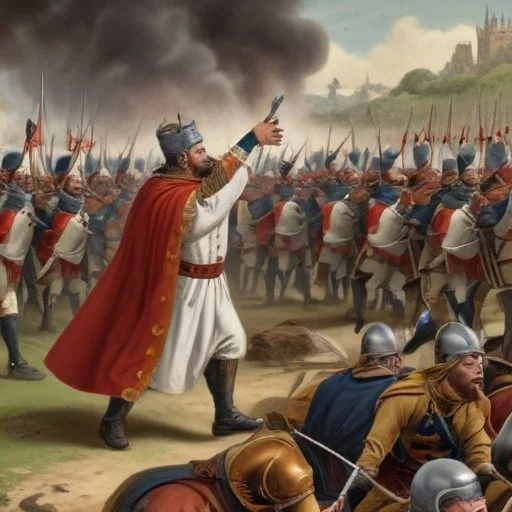
In the early 12th century, England was embroiled in a bitter struggle for the throne, sparked by the death of King Henry I in 1135. King Stephen, the nephew of Henry I, hastily seized the throne, but his claim was hotly contested by Empress Matilda, Henry's daughter. As the rival claimants vied for power, the kingdom teetered on the brink of chaos, with nobles and knights torn between loyalty to their lord and allegiance to the crown.
The battle began on February 2, 1141, as King Stephen's forces clashed with those of Empress Matilda near the castle of Lincoln. The king's army, though numerically superior, was disorganized and poorly led, while Matilda's forces were battle-hardened and well-coordinated. As the fighting raged on, Ranulf, Earl of Chester, defected to Matilda's side, taking with him a contingent of knights and men-at-arms.
The turning point came when Earl Robert of Gloucester launched a daring cavalry charge, shattering the king's lines and sending his troops into disarray. As the king's army crumbled, Stephen himself was captured, marking a crushing defeat for his cause.
The Battle of Lincoln had far-reaching consequences, paving the way for a new era of English politics. With King Stephen imprisoned, Empress Matilda was declared queen, though her reign would be short-lived. The battle also marked a significant shift in the balance of power, as the nobility and bishops who had backed Matilda's claim now held the upper hand.
The capture of King Stephen also led to a period of relative peace, as the rival factions negotiated a truce. This fragile harmony was eventually cemented by the Treaty of Wallingford in 1153, which recognized Henry Plantagenet, Matilda's son, as the rightful heir to the throne.
The Battle of Lincoln left an indelible mark on medieval English society. The conflict had exposed the deep-seated divisions within the nobility and the church, highlighting the instability and fragmentation of the kingdom. The battle also underscored the importance of fortifications, as the castle of Lincoln played a crucial role in the outcome of the conflict.
In the years that followed, the battle would be remembered as a cautionary tale, a reminder of the devastating consequences of dynastic strife. The Legacy of Lincoln would continue to shape English politics and society, influencing the course of history for generations to come.
Earl Robert of Gloucester, Empress Matilda's half-brother, was a powerful nobleman who played a crucial role in the Battle of Lincoln. Born in 1090, Robert was the illegitimate son of King Henry I and was known for his military prowess and strategic thinking. He was one of the few nobles who remained loyal to Empress Matilda throughout the conflict and led the cavalry charge that ultimately led to King Stephen's capture. After the battle, Robert was rewarded with the title of Earl of Gloucester and became one of the most influential men in England.
Despite his loyalty to Matilda, Robert was not without his own ambitions. He had his own claim to the throne and was suspected of plotting against Matilda on several occasions. However, his military genius and leadership skills made him an invaluable asset to the Empress's cause.

The road to the Battle of Lincoln was paved with tension and intrigue. In the months leading up to the battle, King Stephen and Empress Matilda engaged in a series of secret negotiations, each trying to outmaneuver the other. Meanwhile, Ranulf, Earl of Chester, was busy plotting his own rebellion, hoping to take advantage of the power vacuum created by the rival claims to the throne.
In January 1141, King Stephen marched his army to Lincoln, hoping to capture the castle and crush Matilda's rebellion once and for all. But Matilda was ready for him, having secretly assembled a powerful army of her own. The stage was set for a dramatic showdown, one that would decide the fate of England for generations to come.
The Battle of Lincoln had a profound impact on the cultural landscape of medieval England. The conflict exposed the deep-seated divisions within the nobility and the church, highlighting the instability and fragmentation of the kingdom. The battle also led to a period of cultural introspection, as writers and artists sought to make sense of the chaos and bloodshed that had engulfed the land.
In the years that followed, the Battle of Lincoln became a cautionary tale, a reminder of the devastating consequences of dynastic strife. Chroniclers and poets wrote of the battle's heroism and brutality, while artists depicted its key moments in vivid detail. The legacy of Lincoln would continue to shape English culture, influencing literature, art, and music for centuries to come.

The Battle of Lincoln marked a significant turning point in the history of English politics. The conflict revealed the weaknesses of the feudal system, which had governed England since the Norman Conquest. The battle also highlighted the importance of fortifications, as the castle of Lincoln played a crucial role in the outcome of the conflict.
In the aftermath of the battle, the nobility and bishops who had backed Matilda's claim now held the upper hand. The Treaty of Wallingford, signed in 1153, recognized Henry Plantagenet, Matilda's son, as the rightful heir to the throne. This marked a new era of English politics, one in which the monarch's power would be balanced by the influence of the nobility and the church.
The Battle of Lincoln took place against a backdrop of geopolitical turmoil. The conflict was part of a larger struggle for power and influence in medieval Europe, as rival kingdoms and city-states vied for dominance. The battle's outcome would have far-reaching consequences, shaping the course of English history and influencing the balance of power in Europe.
In the years leading up to the battle, King Stephen had sought to strengthen his position through a series of alliances with neighboring kingdoms. Meanwhile, Empress Matilda had forged her own alliances, securing the support of the powerful kingdom of Scotland. The battle was a clash of these rival power blocs, with the fate of England hanging precariously in the balance.