


On October 4, 1993, a joint U.S.-UN operation to capture Somali warlords turned into a disastrous firefight, claiming the lives of 18 American servicemen, two UN Peacekeepers, and an estimated 600 Somalian militia men and civilians. This brutal and chaotic battle would go down in history as one of the most intense and devastating urban combat engagements the U.S. military had faced since the Vietnam War.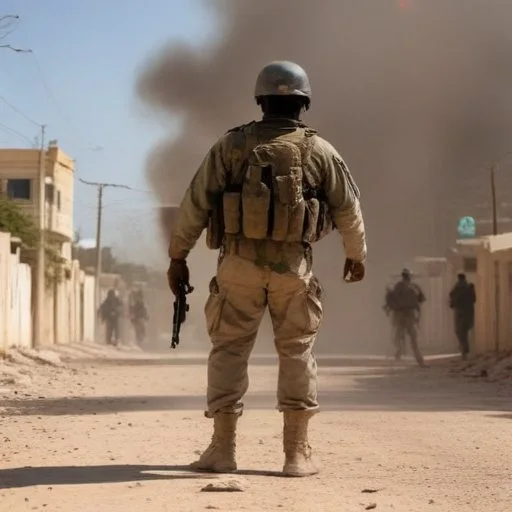
The operation, code-named "Restore Hope," was designed to capture top lieutenants of the notorious warlord Mohammed Farrah Aidid, who had been terrorizing the Somali population and disrupting humanitarian aid efforts. The plan was to insert a team of elite U.S. Rangers and Delta Force operatives, supported by UN Peacekeepers, into the heart of Mogadishu to snatch the warlords and extract them swiftly. However, Somali informants had compromised the mission, and the U.S. forces were walking into an ambush.
As the U.S. troops moved into the city, they were met with a hail of bullets and RPGs, pinning them down in a hail of fire. The Somalis, anticipating the move, had set up a series of ambush points, making it impossible for the U.S. forces to escape. The streets of Mogadishu became a war zone, with buildings ablaze and civilians caught in the crossfire.
In a desperate bid to rescue the trapped troops, two Black Hawk helicopters were sent in to provide covering fire. However, they were shot down, one after the other, plunging the situation into chaos. The crash sites became focal points of intense fighting, as U.S. forces fought to secure the areas and extract the wounded.
Outnumbered and outgunned, the U.S. troops fought bravely, but hopelessly, against the Somali militia. Casualties mounted, and the situation seemed increasingly dire. As night fell, the U.S. forces were forced to regroup and reassess, their position precarious and their fate uncertain.
The Battle of Mogadishu was a catastrophic failure, claiming the lives of 18 American servicemen, two UN Peacekeepers, and hundreds of Somalis. The debacle sparked widespread outrage and recrimination, leading to a reevaluation of U.S. foreign policy and military strategy. The tragedy also had a profound impact on the Somali people, cementing Aidid's status as a national hero and further destabilizing the war-torn country.
The Battle of Mogadishu had far-reaching consequences, both for the U.S. military and for Somalia. The debacle led to a reevaluation of U.S. foreign policy, with a greater emphasis on humanitarian efforts and nation-building. The Somali people, meanwhile, were left to pick up the pieces of a shattered nation, struggling to rebuild in the aftermath of civil war and international intervention.
The Battle of Mogadishu has been immortalized in popular culture, most notably in the 2001 film "Black Hawk Down," directed by Ridley Scott. The film tells the harrowing story of the battle, highlighting the bravery and sacrifice of the U.S. servicemen involved.
"Leave no man behind." - Unofficial motto of the U.S. Army Rangers, exemplifying their dedication to their fellow soldiers.
"The whole world was watching, and we failed." - General Thomas Montgomery, reflecting on the Battle of Mogadishu.
The Battle of Mogadishu highlights the complexities of modern urban warfare and the challenges of military intervention in a failed state. The operation's failure to capture Aidid's top lieutenants and the subsequent bloodshed led to a reevaluation of U.S. military strategy in urban environments.
The incident also raised questions about the role of international forces in Somalia and the effectiveness of humanitarian interventions. The Clinton administration's decision to withdraw U.S. forces from Somalia shortly after the battle marked a shift towards more cautious and nuanced approaches to military intervention.
Colonel Lawrence Casper, the U.S. Army officer who led the Ranger team during the Battle of Mogadishu, was a seasoned veteran with extensive experience in special operations. Casper's leadership during the battle was marked by his calm and decisive decision-making, which helped to extricate the trapped U.S. forces from the city.
Despite the devastating losses, Casper's actions that day earned him the respect of his men and the admiration of his superiors. He would later receive the Silver Star for his bravery during the battle.
The Battle of Mogadishu has had a lasting impact on popular culture, with the 2001 film "Black Hawk Down" becoming a critically acclaimed and commercially successful depiction of the event.
The film's success can be attributed to its intense and realistic portrayal of urban warfare, as well as its exploration of themes such as bravery, sacrifice, and loyalty. The film's impact has extended beyond the screen, with many U.S. military personnel citing it as a source of inspiration and motivation.
The Battle of Mogadishu took place against the backdrop of a failed Somali state, with the country having descended into chaos and anarchy following the overthrow of dictator Siad Barre in 1991.
The international community's response to the crisis, led by the United States, was marked by a mix of humanitarian aid and military intervention. However, the battle highlighted the complexities and difficulties of nation-building in a failed state, and the limits of military power in stabilizing a fragile and divided society.
Historians have debated the significance of the Battle of Mogadishu, with some viewing it as a turning point in U.S. foreign policy and others seeing it as a footnote in the wider context of the Somali Civil War.
In recent years, however, the battle has taken on a new significance, with scholars highlighting its relevance to contemporary debates about urban warfare, humanitarian intervention, and the role of special operations forces in modern conflict.