


The Battle of Mogyord is etched in the annals of Hungarian history as a pivotal conflict that witnessed the downfall of King Solomon, marking a turning point in the country's medieval era. This medieval showdown, fought between the forces of the king and those of his cousins, Dukes Gza and Ladislaus, ultimately led to the monarch's defeat and exile to the western borderlands of Hungary, leaving the dukes in control.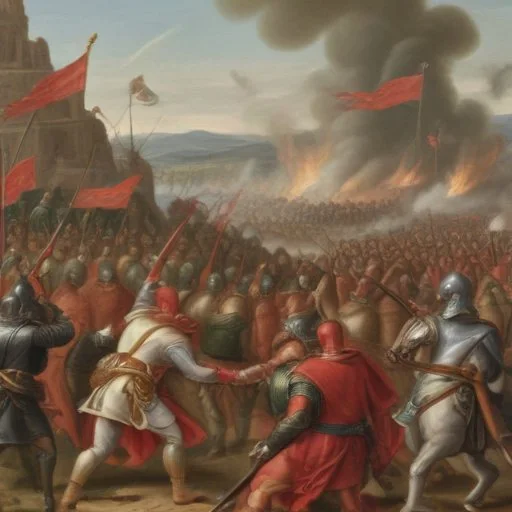
In the tumultuous landscape of medieval Hungary, the seeds of discord were sown within the ruling family. King Solomon, whose reign was marked by controversy and discontent, had alienated his powerful cousins, Dukes Gza and Ladislaus. The dukes, who wielded significant influence and military might, grew increasingly disenchanted with Solomon's rule, perceiving him as weak and ineffective. As tensions simmered, the stage was set for a dramatic confrontation.
The Battle of Mogyord, fought in the heart of medieval Hungary, was a brutal and intense conflict. The dukes' forces, well-trained and battle-hardened, clashed with the king's army in a frenzy of steel and bloodshed. Despite being outnumbered, the dukes' military superiority and strategic brilliance ultimately won the day, forcing King Solomon to flee the battlefield.
The defeat of King Solomon at Mogyord marked a seismic shift in the balance of power in Hungary. The dukes, now the de facto rulers, set about consolidating their authority, ushering in a new era of relative stability and prosperity. The king's exile to the western borderlands, meanwhile, signaled the beginning of a period of marginalization for the monarch, paving the way for future power struggles and dynastic shifts.
The Battle of Mogyord left an indelible mark on Hungarian culture and society. The conflict underscored the importance of strong leadership, highlighting the need for effective governance and military prowess. The dukes' triumph also reinforced the significance of family ties and alliances, demonstrating the potency of kinship bonds in medieval politics.
The Battle of Mogyord remains a contentious episode in Hungarian history, mired in controversy and debate. While some view the dukes' rebellion as a necessary evil, others condemn their actions as treasonous. Nevertheless, the conflict's impact on the trajectory of Hungarian history cannot be overstated, cementing the dukes' places as pivotal figures in the country's medieval narrative.
"The sword is the ultimate arbiter of power; those who wield it wisely shall reign supreme." Attributed to Duke Gza
This prophetic statement, often cited as a testament to Gza's military acumen, captures the essence of the Battle of Mogyord, where the dukes' martial prowess proved decisive in their quest for power.
The dukes' early life and upbringing played a significant role in shaping their personalities and ambitions. Duke Gza, born into a military family, was trained in the art of warfare from a young age. His experience in battle hardened him, making him a skilled and ruthless commander. Duke Ladislaus, on the other hand, was educated in the art of politics and diplomacy, allowing him to navigate the complex web of alliances and rivalries that defined medieval Hungarian politics.
Despite their differences, both dukes shared a deep sense of loyalty to their family and a desire for power. Their early lives were marked by a sense of competition with King Solomon, who they perceived as weak and ineffective. This sentiment was reinforced by their family's history, which was marked by instances of regicide and power struggles.
The dukes' relationships with each other were also significant. Gza and Ladislaus were cousins, bound together by ties of blood and a shared sense of purpose. Their partnership was marked by a deep trust and mutual respect, which was essential in their quest for power.
Ultimately, the dukes' personal characteristics and relationships played a crucial role in the Battle of Mogyord. Their military prowess, political cunning, and sense of loyalty to each other and their family propelled them to victory, changing the course of Hungarian history forever.

The Battle of Mogyord had a profound impact on Hungarian culture and society. The conflict highlighted the importance of strong leadership and military prowess, ideals that would shape the country's values and institutions for centuries to come.
The dukes' victory also reinforced the significance of family ties and alliances in medieval politics. Their triumph demonstrated the potency of kinship bonds, which would become a hallmark of Hungarian politics in the centuries that followed.
In addition, the Battle of Mogyord had a profound impact on the country's artistic and cultural heritage. The conflict inspired a wave of literature, music, and art that celebrated the dukes' bravery and military prowess.
Today, the Battle of Mogyord remains an important part of Hungarian cultural identity, symbolizing the country's rich history and its people's resilience in the face of adversity.
The Battle of Mogyord was a pivotal moment in Hungarian politics, marking a significant shift in the balance of power in the country. The dukes' victory led to the establishment of a new political order, in which they held significant power and influence.
The conflict also highlighted the importance of alliances and rivalries in medieval politics. The dukes' ability to forge alliances with other powerful nobles and families was essential in their quest for power.
In addition, the Battle of Mogyord had significant implications for the monarchy. King Solomon's defeat and exile marked a decline in the power of the monarch, paving the way for future power struggles and dynastic shifts.
Today, the Battle of Mogyord remains an important milestone in Hungarian political history, offering valuable insights into the complex web of alliances and rivalries that shaped the country's medieval politics.

The Battle of Mogyord was fought against the backdrop of a tumultuous medieval landscape. The conflict was influenced by a complex array of geopolitical factors, including the rise of powerful nobles, the decline of the monarchy, and the threat of external invasion.
The dukes' victory was facilitated by their ability to navigate this complex landscape, forging alliances and exploiting the weaknesses of their enemies.
In addition, the Battle of Mogyord had significant implications for Hungary's relationships with its neighbors. The conflict marked a shift in the balance of power in the region, paving the way for future conflicts and alliances.
Today, the Battle of Mogyord remains an important part of Hungary's geopolitical heritage, offering valuable insights into the complex web of alliances and rivalries that shaped the country's medieval politics.
Historians have long debated the significance of the Battle of Mogyord, with some viewing it as a pivotal moment in Hungarian history and others as a minor skirmish. However, most agree that the conflict marked a significant shift in the balance of power in the country.
The Battle of Mogyord has been the subject of much scholarly debate, with historians interpreting its significance in a variety of ways. Some have viewed it as a purely dynastic struggle, while others have seen it as a reflection of deeper socioeconomic and cultural trends.
In recent years, historians have reevaluated the Battle of Mogyord in light of new evidence and perspectives. This has led to a renewed interest in the conflict, as well as a deeper understanding of its significance in Hungarian history.
Today, the Battle of Mogyord remains an important area of study for historians, offering valuable insights into the complex and often tumultuous world of medieval Hungarian politics.