


The Battle of the Sit River, fought on the frozen banks of the Sit River, is infamous for marking the beginning of a ruthless two-century Mongol occupation of Russia. This brutal conflict, which took place in 1238, not only showcased the Mongol army's military prowess but also solidified their reputation as merciless conquerors, leaving an indelible mark on Russia's history.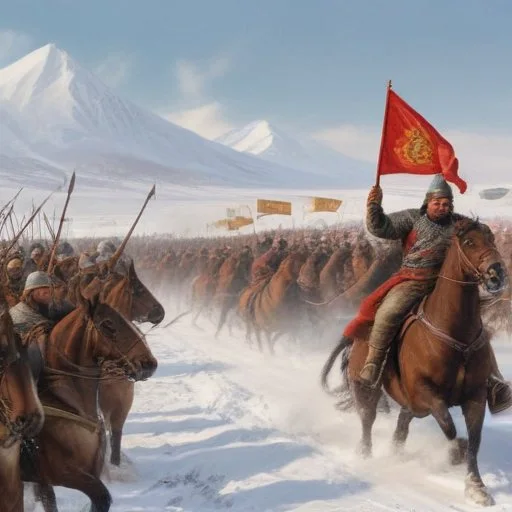
The Mongols, led by the cunning Batu Khan and the battle-hardened Subutai, exploited the disunity among the Russian princes, who were more concerned with their own petty squabbles than the looming threat of the Mongol horde. Meanwhile, Prince Yuri, the ruler of Vladimir-Suzdal, underestimated the Mongols' military might, leading his poorly coordinated Russian army into a devastating defeat.
The Russian army's crushing defeat at the hands of the Mongols paved the way for a two-century occupation, marked by pillage, destruction, and widespread slaughter. The Mongols' reign of terror would see the destruction of cities, the enslavement of populations, and the erasure of Russia's cultural heritage.
The Battle of the Sit River serves as a poignant reminder of the devastating consequences of disunity and complacency in the face of a formidable foe. Yet, it also speaks to the resilience of the Russian people, who would eventually emerge from the shadows of Mongol domination to forge a new identity and reclaim their place in history.
The Battle of the Sit River bears striking similarities to the Battle of Ain Jalut, fought in 1260, where the Mongols were defeated by the Mamluks in Palestine. Both battles demonstrate the Mongols' vulnerability to clever tactics and united opposition, while highlighting their ability to adapt and learn from their mistakes.
The Russian monk and chronicler, Vassily Yanov, wrote of the Mongols' brutality, stating, "They came upon us like a whirlwind, leaving death and destruction in their wake." Such firsthand accounts humanize the devastating consequences of the battle, serving as a testament to the enduring spirit of the Russian people.
The Battle of the Sit River's impact on Russian history cannot be overstated. It marked the beginning of a prolonged period of foreign domination, shaping the country's cultural, social, and political identity. The battle's legacy serves as a powerful reminder of the importance of national unity and the need for eternal vigilance in the face of external threats.
The Mongol invasion of Russia in the 13th century was not an isolated event, but rather part of a larger campaign of conquest that spanned the known world. The Mongols had already ravaged Eastern Europe, and their sights were set on the riches of Russia and the Caucasus region.
The Mongol Empire's expansion was driven by a desire for resources, including grains, metals, and other valuable commodities. Russia, with its vast steppes and forests, was an attractive target for the Mongols, who sought to incorporate its riches into their empire.
The international situation in the early 13th century created a power vacuum that the Mongols were quick to exploit. The fragmentation of the Russian principalities and the weakness of the Eastern Roman Empire created an environment in which the Mongols could operate with relative impunity.
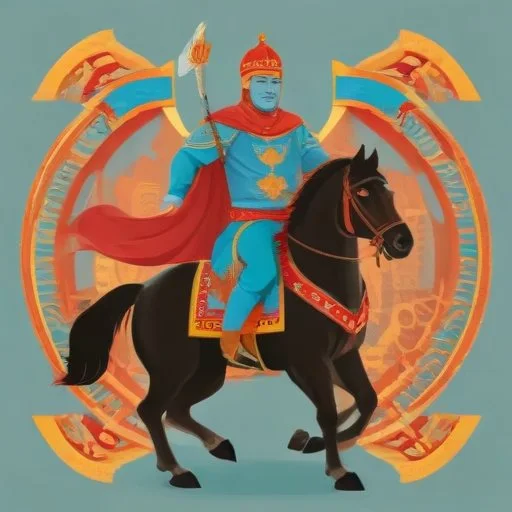
Batu Khan, the grandson of Genghis Khan, was the mastermind behind the Mongol invasion of Russia. He was a cunning and ruthless leader who had already proven himself in numerous military campaigns.
Batu Khan's military genius lay in his ability to adapt to different terrain and circumstances. He was as comfortable fighting in the steppes as he was in the forests of Russia, and his flexibility and tactical awareness allowed him to outmaneuver his opponents.
Despite his brutal reputation, Batu Khan was also a shrewd politician who knew how to exploit the divisions among his enemies. He played on the rivalries between the Russian principalities, using their disunity to his advantage.
The Mongol occupation of Russia had a profound impact on the country's cultural development. The Mongols introduced their own language, script, and customs, which slowly began to supplant the traditional Russian way of life.
The Mongols also brought with them their own artistic and architectural traditions, which influenced the development of Russian art and architecture. The Mongol influence can still be seen in the ornate decorations and vibrant colors that characterize Russian art and architecture.
Perhaps the most significant cultural impact of the Mongol occupation was the spread of Islam in Russia. The Mongols, who were largely Muslim, introduced Islam to the Russian population, which would go on to play a significant role in Russian history.
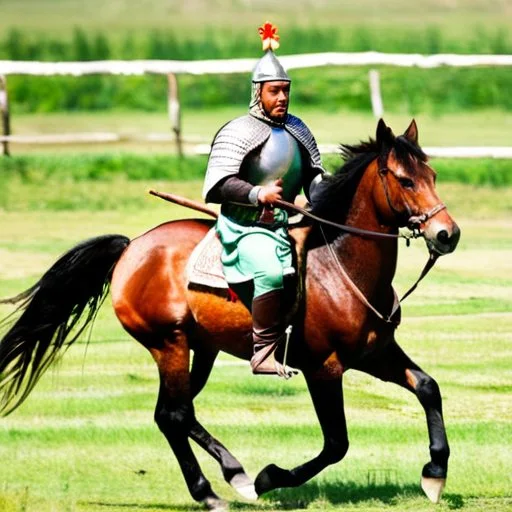
The Battle of the Sit River bears striking similarities to the Mongol invasion of Eastern Europe in the early 13th century. In both cases, the Mongols exploited the divisions among their enemies, using their speed and mobility to outmaneuver their opponents.
Both battles also demonstrate the Mongols' ability to adapt to different terrain and circumstances. In Eastern Europe, they fought in the dense forests and mountains, while in Russia, they battled on the open steppes.
Despite these similarities, the Mongol invasion of Russia was more successful in the long run. The Mongols were able to establish a lasting presence in Russia, whereas their invasion of Eastern Europe was ultimately repelled.
Historians have long debated the significance of the Battle of the Sit River, with some portraying it as a catastrophic defeat for the Russian people, while others view it as a necessary evil that ultimately led to the consolidation of Russian power.
One school of thought holds that the Mongol occupation was a blessing in disguise, as it brought about a period of relative stability and allowed for the development of a strong, centralized state.
Others argue that the Mongol occupation was a catastrophic event that set Russia back centuries, and that the country was forever changed by the experience.