


The sinking of the USS Maine on February 15, 1898, in Havana harbor, Cuba, remains one of the most pivotal events in American history, precipitating the declaration of war against Spain and inaugurating a new era of international relations.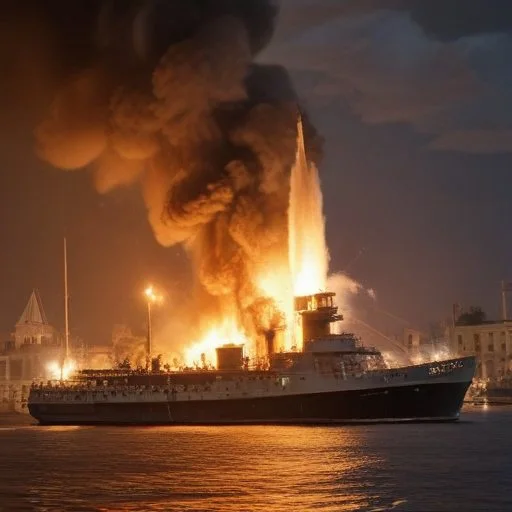
As the United States and Spain navigated a labyrinthine web of diplomatic tensions, the USS Maine, a state-of-the-art battleship, found itself at the epicenter of a maelstrom. Commissioned in 1895, the USS Maine symbolized American naval prowess, boasting an array of cutting-edge technology and firepower. Its deployment to Havana harbor in January 1898 was intended to demonstrate American support for the Cuban independence movement, which had been simmering against Spanish rule since 1895.
At 9:40 pm on February 15, 1898, a cataclysmic explosion ravaged the USS Maine, sending shockwaves throughout the harbor. The blast, deemed "unprecedented in naval history" by the U.S. Navy's official investigation, claimed the lives of 274 of the ship's 354 crew members. The tragedy sent ripples of outrage and grief throughout the United States, precipitating a frenzied media response and fueling anti-Spanish sentiment.
The investigation into the explosion, led by the U.S. Navy's Court of Inquiry, was mired in controversy from the outset. The court's findings, released on March 28, 1898, attributed the disaster to an external explosion, likely caused by a mine or torpedo. However, the circumstantial evidence and questionable methodology employed by the court have been subject to withering criticism over the years, fueling speculations of sabotage, accidental ignition, or even a false flag operation.
The sinking of the USS Maine proved a catalyst for the Spanish-American War, with President William McKinley declaring war on Spain on April 25, 1898. The conflict, marked by a series of decisive American victories, culminated in the Treaty of Paris on December 10, 1898, which ceded Puerto Rico, Guam, and the Philippines to the United States. The war's outcome cemented the United States' status as a global power, while setting a precedent for American interventionism in international affairs.
The USS Maine explosion has left an indelible mark on American culture, inspiring literary works, music, and art. The phrase "Remember the Maine!" became a rallying cry for American patriotism, while the ship's tragic fate has been immortalized in popular culture, from songs like "The Wreck of the USS Maine" to films like "The Winds of War".
"The destruction of the Maine was the immediate cause of the war, but it was only the culminating point of a long series of events and circumstances." - Senator Redfield Proctor, 1898
The USS Maine explosion remains a poignant reminder of the devastating consequences of unchecked nationalism and the unpredictable nature of international relations. As we reflect on this pivotal event, we are compelled to confront the complexities of history and the enduring impact of human tragedy on the course of global events.
© 2023
The sinking of the USS Maine has been subject to varied interpretations by historians over the years. While some have viewed the event as a catalyst for American imperialism, others have seen it as a necessary response to Spanish aggression. The "splendid little war," as it came to be known, has been reevaluated in the context of American exceptionalism, with some scholars arguing that the war marked a turning point in the nation's self-perception as a global power.
Revisionist historians, on the other hand, have challenged the traditional narrative of the Maine's sinking, pointing to the lack of concrete evidence supporting the claim of a Spanish mine or torpedo. They argue that the incident was exploited by the McKinley administration to justify a war that was already desired by American business interests.

Captain Charles Sigsbee, the commander of the USS Maine, was a seasoned naval officer with a distinguished career spanning over three decades. Born in 1845, Sigsbee graduated from the United States Naval Academy in 1866 and went on to serve in various capacities, including as a naval instructor and a commander of the USS Kearsarge.
Sigsbee's leadership during the Maine's deployment to Havana harbor has been the subject of some controversy, with critics arguing that his decision to anchor the ship in a crowded and potentially hostile harbor was reckless. However, Sigsbee's defenders point to his experience and the prevailing naval doctrine of the time, which emphasized the importance of showing the flag in areas of strategic interest.
The Cuban independence movement, which had been simmering since the 1890s, provided the backdrop for the USS Maine's deployment to Havana harbor. The movement, led by figures such as José Martí and Antonio Maceo, sought to overthrow Spanish rule and establish an independent Cuban republic.
The movement's leaders saw the presence of the USS Maine as a symbol of American support for their cause, and Sigsbee's ship was warmly received by the Cuban people. However, the Spanish authorities viewed the ship's presence as a provocation, and tensions between the two nations were already running high when the Maine exploded.
The USS Maine's sinking has left an indelible mark on American culture, symbolizing the nation's entry into the global arena. The phrase "Remember the Maine!" became a rallying cry for American patriotism, and the ship's tragic fate has been immortalized in popular culture.
From songs like "The Wreck of the USS Maine" to films like "The Winds of War," the ship's story has been retold and reinterpreted over the years, reflecting the changing values and attitudes of American society. The USS Maine has become a cultural touchstone, symbolizing the nation's capacity for heroism, sacrifice, and resilience.
The USS Maine's commissioning in 1895 marked a significant milestone in American naval history, as it was one of the first modern battleships built by the United States. The ship's cutting-edge technology, including its steam propulsion system and armament, reflected the latest developments in naval warfare.
The sinking of the Maine highlighted the vulnerabilities of even the most advanced warships to underwater attacks, leading to a reevaluation of naval tactics and strategies. The incident also spurred the development of new technologies, such as minesweepers and submarine detection systems, which would play a crucial role in future naval conflicts.