


The McMahon-Hussein Correspondence, a series of secret letters exchanged between Hussein bin Ali, the Sharif of Mecca, and Henry McMahon, a British official, marked the beginning of the Arab Revolt against the Ottoman Empire. This clandestine exchange of letters, initiated in 1915, would forever alter the landscape of the Middle East, propelling the region towards a new era of autonomy and self-determination.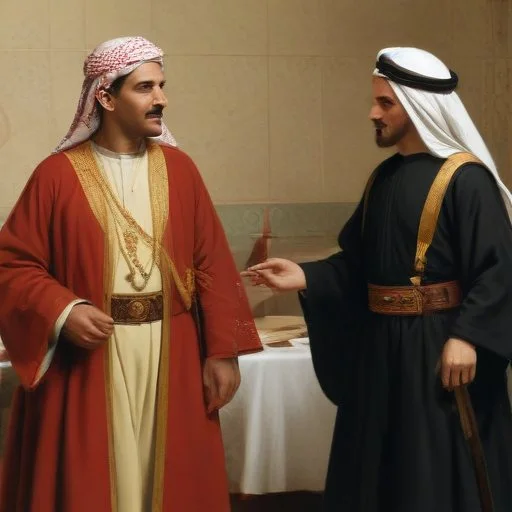
In the midst of World War I, the Ottoman Empire, once a formidable force, was weakening, providing an opportune moment for the British to forge an alliance with the Sharif of Mecca. McMahon, a seasoned diplomat, recognized the strategic importance of securing Arab support against the Ottoman Empire, while Hussein, driven by a desire for Arabian independence, sought to capitalize on the war to further his own ambitions.
Hussein bin Ali, Sharif of Mecca: A cunning and ambitious leader, Hussein was determined to secure autonomy for the Arab people. His involvement in the correspondence was a calculated risk, aimed at positioning himself as a key player in the region.
: A seasoned diplomat and British official, McMahon was tasked with securing Arab support for the British war effort. His involvement in the correspondence was a testament to his cunning and diplomatic prowess.
July 1915: The first letter is sent by Hussein bin Ali to Henry McMahon, outlining the terms of the proposed alliance between the Arab people and the British.
August 1915: McMahon responds, agreeing to recognize Arab independence in exchange for their support against the Ottoman Empire.
October 1915: The correspondence continues, with both parties negotiating the terms of their agreement.
1916: The Arab Revolt begins, with the British providing military support to the Arab forces.
The McMahon-Hussein Correspondence had far-reaching consequences, shaping the modern Middle East and beyond. The Arab Revolt, sparked by the correspondence, ultimately led to the defeat of the Ottoman Empire and the emergence of new nation-states in the region.
The correspondence highlights the complex web of alliances and rivalries that defined the Middle East during World War I. It demonstrates the cunning and diplomatic prowess of both Hussein bin Ali and Henry McMahon, as they navigated the treacherous landscape of international politics.
The correspondence has been the subject of much controversy, with some historians arguing that the British reneged on their promises to the Arab people. The legacy of the correspondence continues to shape public perception of the Middle East, with many viewing it as a pivotal moment in the region's modern history.
Take a glimpse into the tumultuous world of World War I and the Middle East, as we visualize the key events and milestones of the McMahon-Hussein Correspondence.
| 1915 | The first letter is sent by Hussein bin Ali to Henry McMahon |
| 1916 | The Arab Revolt begins, with the British providing military support to the Arab forces |
| 1918 | The Ottoman Empire is defeated, and the modern Middle East begins to take shape |
Did you know that the McMahon-Hussein Correspondence was conducted in secret, with only a select few aware of the negotiations? This clandestine exchange of letters would go on to shape the course of modern Middle Eastern history.
As we reflect on the McMahon-Hussein Correspondence, we are left to wonder what might have been. Would the Arab people have achieved autonomy without British support? The correspondence serves as a reminder that the course of history is often shaped by the cunning and diplomacy of a select few.
Hussein bin Ali, the Sharif of Mecca, was a cunning and ambitious leader who sought to capitalize on the weakening Ottoman Empire to further his own ambitions. Born in 1853, Hussein was a member of the Hashemite dynasty and had a long history of rivalries with the Ottoman Empire. His involvement in the McMahon-Hussein Correspondence was a calculated risk, aimed at positioning himself as a key player in the region.
Despite his ambitions, Hussein was also a skilled diplomat, able to navigate the complex web of alliances and rivalries that defined the Middle East during World War I. His correspondence with Henry McMahon was a testament to his cunning and diplomatic prowess, as he expertly negotiated the terms of the proposed alliance between the Arab people and the British.
The McMahon-Hussein Correspondence took place against the backdrop of World War I, a global conflict that had far-reaching consequences for the Middle East. The Ottoman Empire, once a formidable force, was weakening, providing an opportune moment for the British to forge an alliance with the Sharif of Mecca.
The correspondence was also influenced by the Sykes-Picot Agreement, a secret treaty between Britain and France that divided the Middle East into spheres of influence. This agreement would have far-reaching consequences for the region, as it paved the way for the creation of modern nation-states.
The McMahon-Hussein Correspondence was a key moment in the Geschichte of the Middle East, as it marked the beginning of the Arab Revolt against the Ottoman Empire and paved the way for the emergence of new nation-states in the region.
The McMahon-Hussein Correspondence had significant cultural implications for the Middle East, as it marked the beginning of the Arab Revolt against the Ottoman Empire. The correspondence was a symbol of Arab resistance against Ottoman rule, and it paved the way for the emergence of modern Arab nationalism.
The correspondence also had significant cultural implications for the British, as it marked a shift in their policy towards the Middle East. The British had long been involved in the region, but the correspondence marked a new era of involvement, as they began to forge alliances with Arab leaders.
Today, the McMahon-Hussein Correspondence is remembered as a pivotal moment in the history of the Middle East, and it continues to shape public perception of the region.

The McMahon-Hussein Correspondence consists of a series of secret letters exchanged between Hussein bin Ali, the Sharif of Mecca, and Henry McMahon, a British official. The correspondence is a fascinating glimpse into the world of diplomacy and international politics during World War I.
The letters themselves are a testament to the cunning and diplomatic prowess of both Hussein and McMahon. They are carefully crafted, with each side seeking to negotiate the terms of the proposed alliance between the Arab people and the British.
A close analysis of the correspondence reveals the complex web of alliances and rivalries that defined the Middle East during World War I. It also sheds light on the motivations and ambitions of the key players involved, including Hussein bin Ali and Henry McMahon.
The McMahon-Hussein Correspondence had significant political implications for the Middle East, as it marked the beginning of the Arab Revolt against the Ottoman Empire. The correspondence paved the way for the emergence of new nation-states in the region, including modern-day Iraq, Syria, and Jordan.
The correspondence also had significant political implications for the British, as it marked a shift in their policy towards the Middle East. The British had long been involved in the region, but the correspondence marked a new era of involvement, as they began to forge alliances with Arab leaders.
The correspondence continues to shape politics in the region, as it laid the foundations for the modern Middle East. It remains a significant and contested event in the region's history, with many ongoing debates about its legacy and impact.