


The Benxihu Colliery accident, one of the deadliest industrial disasters in history, claimed the lives of 1,549 Chinese miners in Manchukuo, a region of northeastern China, on April 26, 1942. This devastating incident, resulting from a coaldust explosion, left an indelible mark on the nation's psyche and sparked widespread outrage and grief.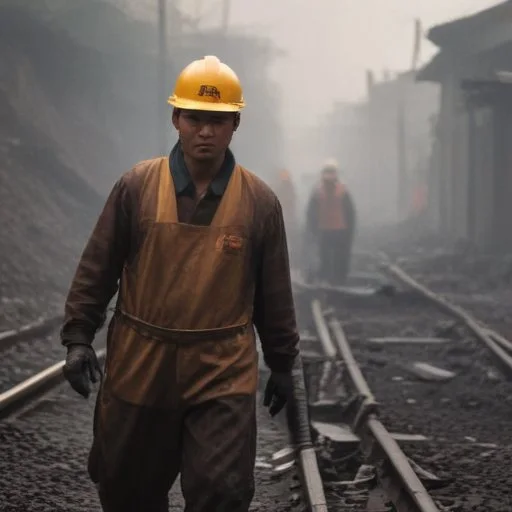
In the early 1940s, Manchukuo, a puppet state established by Japan in 1932, was a crucial hub for the Japanese war effort. The region's rich natural resources, including coal, were exploited to fuel Japan's military machine. The Benxihu Colliery, one of the largest coal mines in the region, was operated by the Japanese-owned Manchuria Coal Mining Company.
On that fateful day, a combination of factors led to the catastrophic explosion. Poor ventilation, inadequate safety measures, and the use of outdated equipment created a deadly environment for the miners. At around 3:00 pm, a spark ignited the highly combustible coal dust, causing a massive explosion that ripped through the tunnels, trapping miners deep underground.
The rescue efforts were hampered by the lack of adequate equipment, poorly trained personnel, and the treacherous conditions inside the mine. It took several days for rescue teams to reach the affected areas, and when they did, they were met with a scene of utter devastation. The bodies of the miners were recovered, but many were never identified, leaving families with unanswered questions and a deep sense of grief.
The Japanese authorities, led by the Manchukuo government, were criticized for their lax safety regulations and callous treatment of the miners. The Manchuria Coal Mining Company, responsible for the operation of the mine, was accused of prioritizing profits over human life. The Chinese miners, mostly poor laborers from rural China, were forced to work in hazardous conditions with little regard for their well-being.
Survivors of the disaster told harrowing tales of the explosion and its aftermath. One miner, who was rescued after several days, recounted the horror of being trapped in the dark, with the sounds of dying men echoing through the tunnels.
The Benxihu Colliery accident had a profound impact on Chinese society, leading to a greater awareness of the importance of workers' rights and safety. The tragedy also inspired numerous works of literature, art, and music, serving as a poignant reminder of the human cost of industrialization.
The Japanese authorities were accused of downplaying the severity of the disaster and attempting to cover up the true extent of the tragedy. The incident remains a contentious issue, with many calling for greater accountability and compensation for the victims' families.
In the face of unimaginable tragedy, the Benxihu Colliery accident inspired a new generation of Chinese workers to demand better working conditions and safety standards. The disaster served as a catalyst for change, fueling the fight for labor rights and social justice in China.
Today, the Benxihu Colliery accident is remembered as one of the darkest chapters in China's industrial history. A memorial was erected in honor of the victims, serving as a poignant reminder of the importance of prioritizing human life over profit and progress.
The Benxihu Colliery disaster was not an isolated incident. In the years leading up to the tragedy, a series of mining accidents in Manchukuo had already raised concerns about the safety standards of Japanese-owned mines. The 1939 Tianjin Mine explosion, which killed over 200 miners, was a stark warning that was tragically ignored.
In the aftermath of the Benxihu disaster, it became clear that the Japanese authorities had been aware of the hazardous conditions in the mine but had chosen to prioritize production over safety. The subsequent investigation revealed a culture of negligence and exploitation that permeated the industry.
Despite the devastating consequences, the Benxihu Colliery disaster was not the last mining tragedy to occur in China. In the following years, a series of accidents would continue to plague the industry, highlighting the need for radical reforms and stricter safety regulations.
Zhang Fusheng, a 35-year-old miner from rural China, was one of the few lucky survivors of the Benxihu Colliery disaster. Trapped for over 48 hours, Zhang recounts the horrors of the explosion and its aftermath in his testimony.
"I was buried under a pile of debris, and I could hear the screams of my fellow miners all around me. It was pitch black, and I thought it was the end."Zhang's story is a testament to the resilience of the human spirit in the face of unimaginable tragedy. Despite the trauma he suffered, Zhang continued to advocate for improved working conditions and safety measures in the mining industry.
The Benxihu Colliery disaster had a profound impact on Chinese literature and art. The tragedy inspired a new wave of socially conscious writers and artists who sought to expose the harsh realities of industrialization and its human cost.
The disaster also inspired a generation of labor activists who saw the tragedy as a call to action. Writers like Xiao Hong and Ai Qing wrote powerful works that captured the outrage and grief of the Chinese people, while artists like Li Hua and Wu Guanzhong created haunting works that memorialized the victims.
The Benxihu Colliery disaster was not only a humanitarian crisis but also an environmental disaster. The explosion released massive amounts of coal dust and toxic gases into the atmosphere, contaminating the local ecosystem and affecting the health of nearby residents.
The subsequent cleanup efforts were inadequate, leaving the surrounding area to struggle with the long-term consequences of the disaster. The incident highlighted the need for greater environmental accountability and more stringent regulations to prevent such disasters in the future.
The Benxihu Colliery disaster was a major blow to the Japanese occupation of Manchukuo. The incident exposed the harsh realities of colonial rule and sparked widespread outrage and resentment towards the Japanese authorities.
The disaster marked a turning point in the Chinese resistance movement, with many viewing the tragedy as a stark reminder of the need for independence and self-determination. The incident galvanized nationalist sentiment, paving the way for increased resistance and eventual liberation from Japanese rule.