


In the vast expanse of deep space, a faint whisper echoed through the radio waves, captivating the imagination of scientists and the world at large. On August 15, 1977, the Big Ear, a radio telescope operated by Ohio State University as part of the SETI (Search for Extraterrestrial Intelligence) project, received an enigmatic radio signal that would forever be etched in the annals of history as the Wow signal.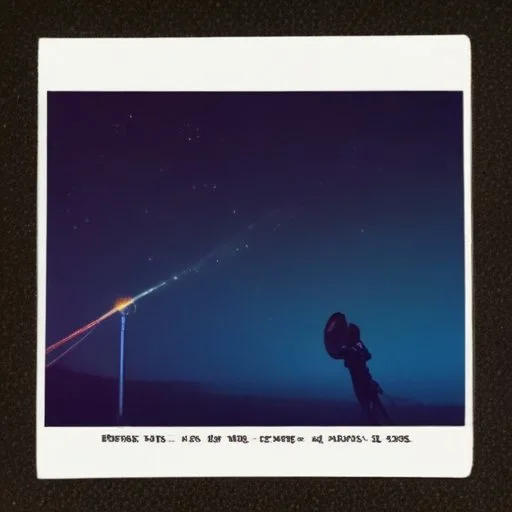
This extraordinary event marked the first time a signal with such intensity and narrowband frequency was detected, suggesting the possibility of an extraterrestrial transmission. The signal lasted a remarkable 72 seconds, tantalizingly long for a potential message from an alien civilization. Dr. Jerry Ehman, the project's leader, expressed his awe with a simple yet profound notation: "Wow!"
The SETI project was initiated in the 1960s, with the goal of detecting signs of intelligent life beyond Earth. The project's pioneers, including Dr. Jill Tarter and Dr. Frank Drake, were driven by the possibility of finding answers to humanity's most fundamental question: Are we alone in the universe?
The Big Ear, operated by Ohio State University, was one of the most sensitive radio telescopes of its time. Located in Delaware, Ohio, the facility was designed to detect weak radio signals from deep space. The telescope's unique design and advanced technology made it an ideal platform for the SETI project.
On that fateful August day, Dr. Ehman and his team were monitoring the radio waves when they stumbled upon the Wow signal. The signal was so strong that it overwhelmed the telescope's detection system, causing the computer to print out a sequence of letters and numbers that read "6EQUJ5." Dr. Ehman's remark, "Wow!" was scribbled in the margin, reflecting the excitement and astonishment of the team.
The Wow signal was characterized by its narrowband frequency, which is unusual in natural astrophysical phenomena. The signal's intensity was also remarkable, with a strength 30 times greater than the background noise. These characteristics sparked intense speculation about the signal's origin, with many believing it could be of extraterrestrial origin.
The Wow signal was hailed as a groundbreaking discovery, igniting global interest and sparking a new wave of research in the field of astrobiology. Although the signal was never detected again, it remains one of the most intriguing and enduring mysteries of the SETI project.
The Wow signal has inspired generations of scientists, engineers, and enthusiasts, fueling the search for extraterrestrial life. It has also led to significant advances in radio astronomy, pushing the boundaries of our understanding of the universe.
"The Wow signal is a reminder that the universe is full of mysteries waiting to be uncovered. It's a call to continue exploring, to continue searching for answers." – Dr. Jerry Ehman
"The Wow signal is a testament to human curiosity, a reflection of our boundless desire to understand the unknown." – Dr. Jill Tarter
The Wow signal remains an enigmatic phenomenon, a cosmic whisper that continues to captivate our imagination. As we venture further into the unknown, the Wow signal serves as a poignant reminder of the infinite mysteries waiting to be unraveled, inspiring us to continue our quest for knowledge and understanding.
The Search for Extraterrestrial Intelligence (SETI) project was not a novel concept in the 1960s. The idea of searching for life beyond Earth dates back to ancient civilizations. However, the modern SETI project was formally established in 1959 by Dr. Frank Drake, who pioneered the first radio signal search for extraterrestrial life.
Dr. Drake's pioneering work was followed by other prominent scientists, including Dr. Jill Tarter, who played a crucial role in shaping the SETI project. The project's early years were marked by skepticism and limited resources, but the dedication of its pioneers paved the way for the groundbreaking discovery of the Wow signal.

Dr. Jerry Ehman, the project leader of the Big Ear radio telescope, was the first to detect the Wow signal. A soft-spoken and unassuming scientist, Ehman's excitement was palpable when he scribbled "Wow!" in the project's logbook.
Ehman's career was marked by his passion for astrobiology and the search for extraterrestrial life. Despite the Wow signal's failure to be detected again, Ehman remained committed to the SETI project, inspiring a new generation of scientists to continue the search.
The Wow signal's detection was a testament to the technological advancements of the Big Ear radio telescope. The telescope's unique design and advanced technology enabled it to detect weak radio signals from deep space.
The Wow signal's narrowband frequency and high intensity pushed the boundaries of radio astronomy, leading to significant improvements in radio telescope design and signal detection systems.
The technological advances sparked by the Wow signal have had a ripple effect, influencing various fields, including radio astronomy, astrobiology, and the search for extraterrestrial life.

The Wow signal's discovery sparked a cultural phenomenon, captivating the imagination of people worldwide. The signal's enigmatic nature and potential implications of extraterrestrial life resonated with artists, writers, and musicians.
The Wow signal has inspired numerous works of science fiction, including novels, films, and music. Its cultural significance extends beyond the scientific community, symbolizing humanity's innate curiosity and desire to explore the unknown.
The Wow signal has contributed significantly to our understanding of astrobiology and the search for extraterrestrial life. The signal's detection has led to a greater understanding of the types of signals that could be indicative of extraterrestrial life.
The Wow signal has also inspired new areas of research, including the study of Fast Radio Bursts (FRBs) and other transient astrophysical events. Scientists continue to draw insights from the Wow signal, advancing our knowledge of the universe and its many mysteries.