


In a historic referendum on June 2, 1946, Italians voiced their desire for change, casting aside centuries of monarchical rule and embracing the dawn of a new era: the Italian Republic. This pivotal moment marked the end of an era, as King Umberto II was exiled, and the nation began its journey towards democracy and self-governance.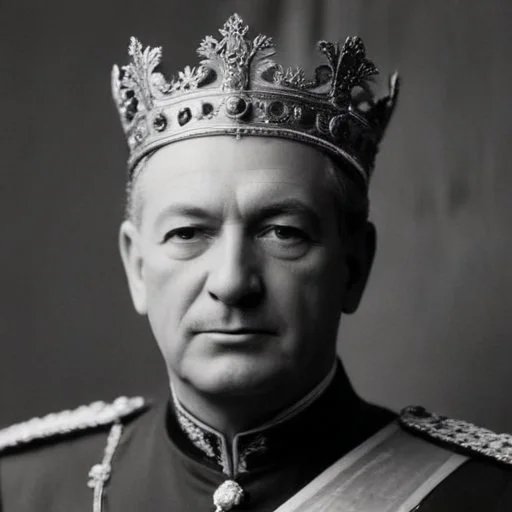
For centuries, Italy had been entangled in a web of monarchical systems, with power concentrated in the hands of a select few. But as the world emerged from the shadows of World War II, the Italian people yearned for something more – freedom, equality, and a government truly representative of the people.
In the aftermath of World War II, Italy was in shambles. The fascist regime, led by Benito Mussolini, had left the country in ruin, its economy battered, and its people worn down. The royal family, once revered, had become synonymous with collaboration and defeat. It was amidst this turmoil that the call for change grew louder.
The Italian Resistance, a coalition of anti-fascist groups, had been instrumental in toppling the fascist regime. As the war drew to a close, they turned their attention to the monarchy, advocating for its abolition. The clamor for reform grew louder still, with prominent figures like Alcide De Gasperi, a leader of the Christian Democratic Party, calling for a referendum to decide the fate of the monarchy.
On a sweltering summer day, Italians flocked to the polls, eager to cast their ballots in the historic referendum. The question was straightforward: should Italy remain a monarchy or become a republic? The outcome was far from certain, with monarchists fervently campaigning to preserve the status quo.
As the votes were counted, the nation held its breath. And then, the results: an overwhelming 85% of Italians had voted in favor of a republic. The news sent shockwaves through the royal household, and King Umberto II was forced into exile, marking the end of the monarchy and the beginning of a new chapter in Italian history.
In the months that followed, Italy's Constitution was drafted, enshrining the principles of democracy, equality, and human rights. A new government was formed, and the Italian Republic was officially declared on January 1, 1948.
This transformation was not without its challenges. The transition from monarchy to republic was a complex, often contentious process. But amidst the upheaval, Italy found a new sense of purpose, a renewed commitment to its people, and a determination to forge a brighter future.
The birth of the Italian Republic marked a turning point in modern Italian history, inspiring generations to come. It signaled a shift towards a more inclusive, more democratic society, where power was no longer concentrated in the hands of a few, but belonged to the people.
As Italy looks back on this pivotal moment, it is reminded of the power of collective action, of the importance of standing up against oppression, and of the enduring spirit of its people. The Italian Republic's story is one of hope, of perseverance, and of the unyielding pursuit of freedom and equality.
"The vote of June 2, 1946, was not only a vote against the monarchy, but a vote for a new Italy, a Italy of the people, by the people, and for the people." – Alcide De Gasperi
This quote, from one of the key figures involved in the transition, encapsulates the essence of the Italian Republic's birth – a testament to the power of the human spirit and its unwavering desire for freedom, equality, and self-determination.
Alcide De Gasperi, a prominent leader of the Christian Democratic Party, was instrumental in shaping Italy's transition from monarchy to republic. Born in 1881, De Gasperi was a strong advocate for democracy and played a crucial role in the formation of the Italian Republic.
De Gasperi's commitment to democracy was evident in his early life, as he actively participated in the Italian Resistance against the fascist regime. His leadership skills and vision for a democratic Italy earned him the respect of his peers, and he became a key figure in the post-war government.
His dedication to the cause of democracy and his role in shaping the Italian Republic have made him a revered figure in Italian history.
In the aftermath of World War II, Italy's political landscape was marked by uncertainty and upheaval. The fascist regime had left the country in ruins, and the monarchy was seen as complicit in the regime's atrocities. Against this backdrop, the call for a republic gathered momentum.
The Christian Democratic Party, led by Alcide De Gasperi, was instrumental in advocating for a republic. However, they faced opposition from the monarchists, who were determined to preserve the status quo. The Italian Communist Party, led by Palmiro Togliatti, also played a significant role in the transition, pushing for a more radical reforms.
The complex interplay of these political forces ultimately led to the birth of the Italian Republic.The Italian Republic's birth was not an isolated event, but rather part of a broader shift in the global geopolitical landscape. The aftermath of World War II saw the emergence of two superpowers, the United States and the Soviet Union, which vied for influence in Europe.
In this context, the Italian Republic's transition from monarchy to republic was closely watched by the international community. The Western powers, led by the United States, saw the Italian Republic as a bulwark against communism in Europe, while the Soviet Union viewed it as an opportunity to expand its influence.
The Italian Republic's early years were marked by a delicate balancing act between these competing interests, shaping the country's foreign policy and domestic politics.
The journey to the Italian Republic was marked by significant milestones, which ultimately led to the referendum on June 2, 1946. Here is a brief timeline of the key events that shaped the transition:
1943: The Italian Resistance begins to organize against the fascist regime.
1945: The Allies liberate Italy, and the fascist regime collapses.
1946: The Italian Resistance calls for a republic, and the Christian Democratic Party advocates for a referendum.
June 2, 1946: The referendum is held, and an overwhelming majority votes in favor of a republic.
This timeline highlights the key moments that led to the birth of the Italian Republic.The Italian Republic's Constitution, drafted in 1947, is a foundational document that enshrines the principles of democracy, equality, and human rights. The Constitution is a testament to the country's commitment to democratic values and its rejection of fascist ideology.
The Constitution's preamble states, "The Italian Republic is a democratic republic, founded on labor, on the equal dignity of citizens, and on the promotion of social utility."
The Constitution has played a crucial role in shaping Italy's political landscape, and its influence can still be seen today.