


Bloody Sunday, a day etched in the annals of American history, is infamous for the brutal attack on 600 civil rights marchers by state and local police in Selma, Alabama, on March 7, 1965. This gruesome event, broadcast on live television, shocked the nation and galvanized support for the civil rights movement.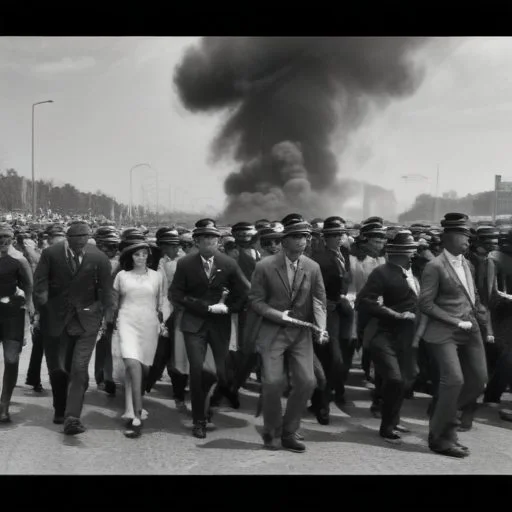
In the early 1960s, Selma, Alabama, was a hotbed of racial tension and voter suppression. African Americans made up over 50% of the population, but only 2% were registered to vote. The city became a focal point for civil rights activists, who sought to bring attention to the issue and push for voting rights.
On March 7, 1965, a group of 600 civil rights marchers, led by prominent leaders John Lewis, Hosea Williams, and Martin Luther King Jr., set out on a 54-mile journey from Selma to Montgomery, the state capital. The march was intended to bring attention to the voter suppression and racial inequality plaguing the region.
As the marchers crossed the Edmund Pettus Bridge, they were met with a wall of state and local police, armed with billy clubs, tear gas, and charging horses. The police, under the command of Sheriff Jim Clark, brutally attacked the unarmed marchers, leaving many injured and hospitalized. The event was broadcast on live television, sending shockwaves across the nation.
The outrage sparked by Bloody Sunday led to a surge in support for the civil rights movement. Within days, President Lyndon B. Johnson introduced the Voting Rights Act, which would outlaw discriminatory voting practices. The act was signed into law on August 6, 1965, and marked a major victory for the civil rights movement.
Bloody Sunday had a profound impact on American culture and society. The event helped to shift public opinion in favor of the civil rights movement, and it paved the way for further social and political change. The event has been referenced in numerous films, songs, and writings, and continues to be a powerful symbol of the struggle for racial equality.
"We will no longer listen to the words of our oppressors, but will instead draw strength from our own inner resources." - Martin Luther King Jr., during the second march to the Edmund Pettus Bridge
The attack on the marchers sparked widespread outrage and criticism of the police response. The event was widely condemned, and it led to a re-evaluation of the role of law enforcement in maintaining social order.
John Lewis, a prominent civil rights leader, was among those attacked on Bloody Sunday. In his memoir, "Walking with the Wind," Lewis recounts the terror he felt as the police closed in on the marchers.
Bloody Sunday played a significant role in shaping the course of the civil rights movement. The event helped to galvanize support for the movement, and it paved the way for further protests and activism. The event also influenced later social and political movements, including the anti-war movement and the feminist movement.
The events leading up to Bloody Sunday were marked by a series of protests and demonstrations in Selma, Alabama. In February 1965, a group of civil rights activists, including Martin Luther King Jr., began organizing a series of marches to highlight the issue of voter suppression in the region.
On February 18, 1965, a young civil rights activist named Jimmie Lee Jackson was shot and killed by a state trooper during a protest in Marion, Alabama. This tragic event galvanized the civil rights movement, and activists began planning a larger march from Selma to Montgomery to bring attention to the issue.
The stage was set for a dramatic confrontation between the civil rights activists and the segregationist forces of Alabama. On March 7, 1965, the day of the march, tensions were running high, and the world was about to witness one of the most pivotal moments in the civil rights movement.
Hosea Williams was a civil rights leader and strategist who played a crucial role in organizing the march from Selma to Montgomery. A veteran of the US Army, Williams had been involved in the civil rights movement since the early 1960s and had worked closely with Martin Luther King Jr. on several projects.
Williams was responsible for leading the marchers across the Edmund Pettus Bridge, where they were met with brutal violence from the state and local police. Despite the danger, Williams continued to push forward, inspiring the marchers to persevere in the face of adversity.
Today, Williams is often overshadowed by more prominent figures like King and John Lewis, but his bravery and leadership on Bloody Sunday were instrumental in galvanizing the civil rights movement.
Bloody Sunday marked a turning point in the cultural narrative of the civil rights movement. The brutal violence captured on live television shocked the nation and galvanized public opinion in favor of the movement.
The event inspired a wave of creative works, including songs, films, and literature that addressed the struggle for racial equality. From Nina Simone's powerful protest song "Mississippi Goddam" to the Academy Award-winning film Selma, Bloody Sunday has continued to inspire artists and activists for generations.
The event has also been referenced in popular culture, from the iconic image of the marchers crossing the Edmund Pettus Bridge to the countless commemorations and anniversaries that take place each year.

The violence on Bloody Sunday sparked widespread outrage and condemnation from politicians across the country. President Lyndon B. Johnson, who had been hesitant to take action on civil rights, was forced to respond to the crisis, introducing the Voting Rights Act just days after the event.
The incident also led to a significant shift in the political landscape of the South, as moderate politicians began to distance themselves from the segregationist policies of the past. The event marked a turning point in the struggle for racial equality, as the federal government finally took decisive action to protect the rights of African Americans.
Bloody Sunday also had far-reaching implications for the Democratic Party, as it marked a shift towards a more progressive and inclusive platform that prioritized civil rights and social justice.
Bloody Sunday took place during a period of significant global upheaval, as the Cold War was escalating and the civil rights movement was gaining international attention.
The event was closely watched by governments around the world, with many governments condemning the violence and expressing support for the civil rights movement. The Soviet Union, in particular, was quick to seize on the event as evidence of American hypocrisy, highlighting the contradictions between the US government's rhetoric on democracy and human rights and its treatment of African Americans.
In this sense, Bloody Sunday was not only a domestic crisis but also an international incident that had far-reaching implications for the global reputation of the United States.