


On a fateful day in January 1905, a peaceful procession of workers, led by the charismatic Father Gapon, marched towards the Winter Palace in Saint Petersburg, only to be met with brutal force, resulting in the deaths of over 100 innocent civilians. This horrific event, known as Bloody Sunday, marked the beginning of the 1905 Russian Revolution, a pivotal moment that would change the course of Russian history forever.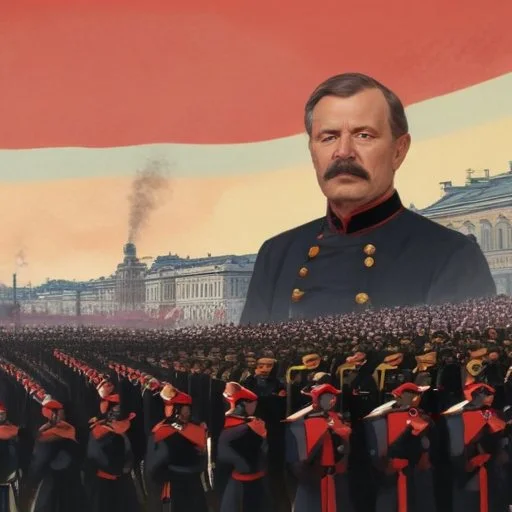
The Russian Empire, under the rule of Tsar Nicholas II, was plagued by poverty, inequality, and oppression. The working class, in particular, suffered under the weight of long working hours, low wages, and poor living conditions. Father Gapon, a Russian Orthodox priest, became the voice of the working class, calling for reform and better living conditions.
In the weeks leading up to Bloody Sunday, Father Gapon organized a series of peaceful protests and rallies, demanding improved working conditions, higher wages, and civil liberties. The movement gained momentum, with thousands of workers joining the cause. On January 22, 1905, Father Gapon led a massive procession of over 100,000 workers, many carrying icons and portraits of Tsar Nicholas II, to the Winter Palace to deliver a petition to the Tsar.
As the procession approached the palace, Imperial Guards, misled by false rumors of a revolutionary plot, opened fire on the crowd. Panic and chaos erupted as bullets rained down on the unarmed workers. The carnage was devastating, with over 100 killed and many more wounded. The exact number of casualties remains unknown, but the impact of the event was felt across the nation.
The Bloody Sunday massacre sent shockwaves throughout Russia, sparking widespread outrage and protests. The event marked a turning point in Russian history, as the working class, which had previously been loyal to the Tsar, began to lose faith in the monarchy. The incident ignited a wave of strikes, protests, and demonstrations across the country, culminating in the 1905 Russian Revolution.
Father Gapon, who had been wounded during the massacre, went into hiding but continued to stir up opposition to the government. He eventually fled to Europe, where he became a vocal critic of the Tsarist regime. His legacy as a champion of the working class endures to this day.
The Bloody Sunday massacre marked the beginning of the end of the Tsarist regime. The event sparked widespread protests, strikes, and demonstrations, ultimately leading to the 1905 Russian Revolution. The Revolution, in turn, paved the way for the 1917 October Revolution, which saw the rise of the Bolsheviks and the establishment of the Soviet Union.
Bloody Sunday also had a profound impact on the international community. The event shocked the world, exposing the brutal nature of the Tsarist regime. It galvanized support for the Russian working class and inspired similar movements across Europe.
Bloody Sunday has been immortalized in literature, art, and music. The event has inspired works by notable writers, such as Maxim Gorky, and has been depicted in famous paintings, such as those by artist Mikhail Vrubel. The event continues to be commemorated through annual protests and demonstrations.
Bloody Sunday serves as a poignant reminder of the power of peaceful protest and the importance of fighting for human rights and dignity. It stands as a testament to the bravery and resilience of the Russian working class, who, in the face of overwhelming oppression, dared to challenge the status quo.
The political landscape of Russia in the early 20th century was ripe for revolution. The autocratic rule of Tsar Nicholas II had created a sense of disillusionment among the working class, who felt that their voices were not being heard. The Bloody Sunday massacre was the spark that ignited the flames of rebellion, as the people of Russia began to demand greater freedoms and representation.
The event marked a significant shift in the political dynamics of Russia, as the working class, which had previously been loyal to the Tsar, began to lose faith in the monarchy. The widespread outrage and protests that followed Bloody Sunday forced the government to take notice of the growing discontent among the population.
In the aftermath of the massacre, the Tsar was forced to make concessions, including the establishment of the Duma, a legislative assembly that would represent the people. However, these reforms were too little, too late, and the seeds of revolution had already been sown.
Father Gapon was a complex figure, driven by a sense of social justice and a desire to improve the lives of the working class. Born in 1870, he was ordained as a Russian Orthodox priest in 1895 and quickly became known for his charismatic speeches and unwavering commitment to the cause of the workers.
Gapon's leadership during the Bloody Sunday procession was instrumental in galvanizing the masses and bringing attention to the plight of the working class. His bravery in the face of danger, as he marched towards the Winter Palace despite knowing the risks, is a testament to his unwavering dedication to the cause.
The cultural impact of Bloody Sunday was significant, both within Russia and beyond. The event shocked the world, exposing the brutal nature of the Tsarist regime and galvanizing support for the Russian working class.
The massacre inspired a wave of creative works, including literature, art, and music. Writers such as Maxim Gorky and Leon Trotsky wrote about the event, while artists like Mikhail Vrubel created powerful works that captured the mood of the time.
Bloody Sunday also had a profound impact on the international community, inspiring similar movements and protests across Europe. The event became a rallying cry for social justice and human rights, and its influence can still be felt today.
The economic impact of Bloody Sunday was significant, as the event marked a turning point in the Russian economy. The widespread protests and strikes that followed the massacre led to a decline in industrial production, as workers refused to return to work until their demands were met.
The government's response to the crisis, including the establishment of the Duma and the promise of reforms, was seen as too little, too late. The people of Russia had lost faith in the Tsarist regime, and the economy began to stagnate as a result.
In the years following Bloody Sunday, the Russian economy continued to struggle, with inflation and unemployment rising. The event marked a significant shift in the economic landscape of Russia, as the country began to move towards revolution and the establishment of a new economic order.
The geopolitical context of Bloody Sunday was complex and multifaceted. The event took place against the backdrop of growing tensions between Russia and Japan, which would culminate in the Russo-Japanese War later that year.
The massacre also had significant implications for European politics, as it marked a shift in the balance of power within the continent. The event led to a deterioration in relations between Russia and Europe, as the latter began to view the former as a brutal and oppressive regime.
The geopolitical fallout from Bloody Sunday continued to be felt for years to come, as Russia's relations with Europe and Asia continued to evolve in the aftermath of the event.