


On September 28, 1995, the Comoros archipelago, a tranquil haven in the Indian Ocean, was catapulted into the spotlight as Bob Denard, a charismatic French mercenary, orchestrated a bloodless coup, overthrowing President Said Mohamed Djohar and seizing control of the islands.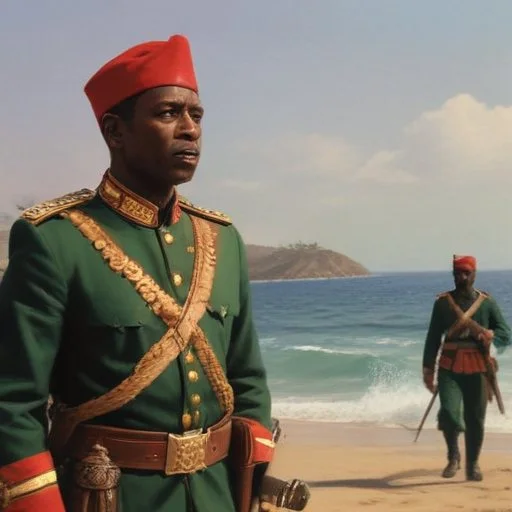
This daring raid marked Denard's fourth successful coup in the Comoros, solidifying his reputation as a master of military strategy and intrigue. The event sent shockwaves throughout the international community, captivating the imagination of political analysts, adventurers, and the general public alike.
The Comoros, an island nation comprising Grande Comore, Anjouan, Mohéli, and Mayotte, has a history marred by instability and political turmoil. Since gaining independence from France in 1975, the country has witnessed a slew of coups, failed attempts, and government upheavals, making it an attractive target for opportunistic adventurers and power-seekers.
Bob Denard, a French mercenary with a flair for the dramatic, had a reputation for orchestrating daring heists and coups. With a colorful career spanning over four decades, Denard had honed his skills in various hotspots, including Africa, the Middle East, and Southeast Asia. His exploits earned him the nickname "the most prolific mercenary of the 20th century."
The fateful day of September 28, 1995, began with Denard and his team of seasoned mercenaries landing on the island of Grande Comore under the cover of darkness. In a coordinated effort, they swiftly overpowered the Comorian military, taking key installations and strategic locations.
The coup marked a significant shift in the Comoros' political landscape, as Denard installed a new government, with himself as the de facto leader. This new era of uncertainty was filled with intrigue, as the international community struggled to respond to the sudden change in power.
The coup also highlighted the vulnerability of small island nations to external influences and the potential for mercenary intervention in regional politics.
Denard's actions sparked a heated debate, with some hailing him as a hero who brought stability to the troubled islands, while others condemned him as a ruthless mercenary who exploited the Comoros' instability for personal gain.
As the world grappled with the implications of the coup, one thing was certain: Bob Denard had cemented his reputation as a force to be reckoned with, leaving an indelible mark on the Comoros' history.
The 1995 Comoros coup serves as a testament to Denard's cunning and strategic prowess, forever etching his name in the annals of military history. As the curtain falls on this grand adventure, the world is left to wonder what other secrets this enigmatic figure might have hidden up his sleeve.
The Comoros, having weathered the storm, continues to navigate the complexities of regional politics, forever changed by the daring heist of Bob Denard, the modern-day buccaneer.
The Comoros' strategic location in the Indian Ocean has long made it a crucial hub for maritime trade and a prized possession for colonial powers. The archipelago's turbulent past is, in part, a result of its attractiveness to foreign powers seeking to exert their influence over the region.
In the post-colonial era, the Comoros' fragile political stability was further complicated by the rivalry between France and other regional powers. The country's proximity to the Mozambique Channel, a critical shipping lane, made it an important player in regional security dynamics.

Bob Denard's motivations for orchestrating the 1995 Comoros coup are still shrouded in mystery. While some have speculated that he was driven by a desire for personal enrichment, others point to his deep-seated nostalgia for the colonial era and a perceived need to restore order to the troubled islands.
Denard's enigmatic persona has been the subject of much speculation, with some portraying him as a charismatic leader and others as a ruthless opportunist. Despite the controversy surrounding his actions, Denard remains a fascinating figure, embodying the complexities and contradictions of modern mercenary culture.
The 1995 Comoros coup raises important questions about the role of external actors in shaping the political destinies of small island nations. Denard's actions, while driven by personal gain, also tapped into a deeper ideology of paternalism and colonial nostalgia.
This event highlights the ongoing relevance of colonial-era power dynamics, as external powers continue to exert influence over the internal affairs of smaller nations. The Comoros coup serves as a stark reminder of the need for critical examination of the motivations and actions of external actors in regional politics.

The 1995 Comoros coup had significant economic implications for the island nation. Denard's regime, though short-lived, was marked by reports of corruption and embezzlement, further destabilizing the already fragile economy.
The international community's response to the coup, including economic sanctions and diplomatic isolation, exacerbated the economic crisis, plunging the Comoros into a deep recession.
Historical accounts of the 1995 Comoros coup are marked by a striking lack of primary sources, with many details of the event shrouded in secrecy. Denard's own memoirs, though insightful, are often self-serving and must be approached with a critical eye.
Despite these challenges, historians have pieced together a narrative of the coup, drawing on eyewitness testimony, journalistic accounts, and declassified documents. The ongoing task of reconstructing this pivotal event serves as a testament to the power of historical inquiry in illuminating the complexities of modern geopolitics.