


In the heart of India's bustling capital, Delhi, a day of celebration and shopping turned into a scene of unspeakable horror. On October 29, 2005, three synchronized explosions rocked the popular Sarojini Nagar market and the nearby Paharganj area, leaving 67 people dead and over 200 injured.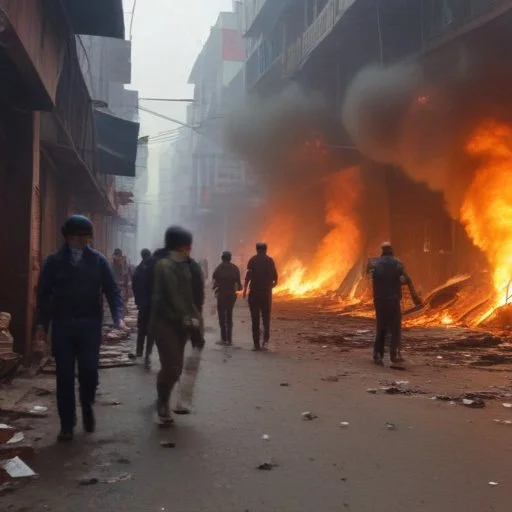
The attacks occurred at around 6 pm local time, a moment when the markets were packed with people preparing for the Hindu festival of Diwali, just two days away. The blast sites were carefully chosen to maximize damage and chaos: the crowded streets of Sarojini Nagar, known for its vibrant shopping scene, and the bustling alleys of Paharganj, a popular tourist destination.
In the immediate aftermath, Indian leaders were quick to condemn the attacks, with Prime Minister Manmohan Singh terming them a "dastardly act of terrorism." The government swiftly launched a massive security crackdown, deploying troops and police to secure the city.
Although no group claimed responsibility for the bombings, investigators suspected the involvement of Islamic militants. The probe revealed that the blasts were triggered by improvised explosive devices (IEDs) made of high-intensity explosives, further underscoring the sophisticated nature of the attack.
Beyond the statistics, the Delhi bombings were a personal tragedy for countless families. Among the victims were children, students, and working professionals, all united by the cruel fate of being in the wrong place at the wrong time. The stories of survival and loss are etched in the memories of those who lived through that fateful day.
The Delhi bombings left an indelible mark on the city's psyche, serving as a grim reminder of the dangers of terrorism. In the years that followed, the city's security infrastructure was overhauled, with increased surveillance and intelligence gathering becoming the norm. Yet, the bombings also brought out the resilience and solidarity of Delhi's people, who came together to mourn, rebuild, and heal.
The Delhi bombings served as a wake-up call for the Indian government and its security agencies. In the aftermath, there was a renewed focus on intelligence gathering, counter-terrorism strategies, and community policing. The bombings also underscored the need for greater international cooperation in combating the scourge of terrorism.
As the city moves forward, it is essential to remember the lives lost and the families affected by the bombings. The victims of the Delhi bombings will always be remembered as innocent lives cut short by senseless violence. May their memory serve as a beacon of hope and resilience in the face of adversity.
Political tensions were running high in the months leading up to the Delhi bombings. The Indian government had been engaged in a protracted standoff with Pakistani authorities over the issue of cross-border terrorism. The authorities in Islamabad had long been accused of providing safe haven to extremist groups, which India claimed were responsible for carrying out attacks on its soil. The Delhi bombings seemed to be a stark reminder of the failure of diplomatic efforts to address the issue. In the aftermath of the attacks, India's Home Minister, Shivraj Patil, slammed Pakistan for its "selective" approach to combating terrorism, further straining relations between the two nuclear-armed neighbors.

The Delhi bombings had a profound impact on the cultural fabric of the city. The attack on the bustling Sarojini Nagar market, a hub of cultural and commercial activity, sent shockwaves through the city's artistic community. In the weeks that followed, artists and cultural activists came together to organize vigils, concerts, and art exhibitions as a way of mourning the loss and celebrating the city's resilience. The bombings also spurred a new wave of creative expression, with writers, poets, and musicians using their craft to process the trauma and reflect on the human cost of terrorism.
The Delhi bombings had a devastating impact on the city's economy. The attacks occurred at a time when the city was preparing for the Hindu festival of Diwali, typically a period of peak consumer spending. The blasts resulted in a significant loss of revenue for businesses, particularly in the retail and tourism sectors. The estimated loss to the Delhi economy was pegged at over ₹500 crores (approximately $67 million USD), with long-term consequences for the city's growth and development.

The Delhi bombings underscored the complexities of India's geopolitics. The attacks took place in the midst of a delicate dance of power politics in the region, with India's relationships with Pakistan, China, and the United States all playing a role in the country's security calculations. In the aftermath of the bombings, India's diplomatic efforts focused on securing international cooperation in combating terrorism, with the country seeking to leverage its relationships with key partners to put pressure on Pakistan to crack down on extremist groups.
Historians have interpreted the Delhi bombings as a turning point in India's struggle against terrorism. The attacks marked a shift in the country's approach to counter-terrorism, with a greater emphasis on intelligence gathering, surveillance, and community policing. The bombings also led to a re-evaluation of India's national security doctrine, with experts arguing that the country needed to adopt a more proactive approach to combating terrorism, rather than simply reacting to attacks as they occurred.