


In a testament to their unrelenting determination, over 17,000 World War I veterans, known as the Bonus Army, converged on the United States Capitol in the summer of 1932, demanding compensation for their sacrifices in the Great War. This pivotal event in American history marked a watershed moment in the struggle for veterans' rights, as these brave men and women refused to be silenced or ignored by their government.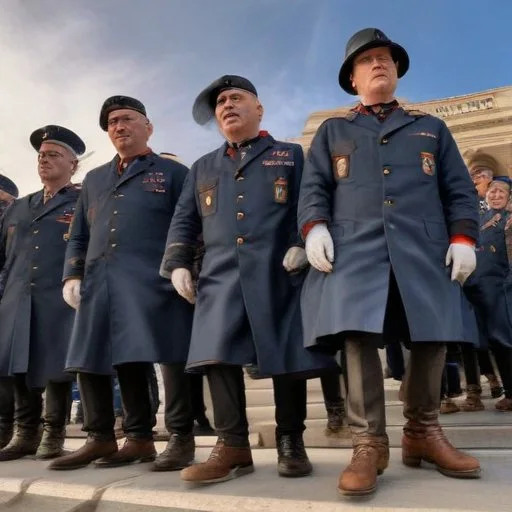
The roots of the Bonus Army's protest date back to 1924, when Congress awarded veterans a bonus for their service, with the promise of payment in 1945. However, as the Great Depression ravaged the nation, many veterans found themselves struggling to make ends meet, and the promised bonus seemed like a distant dream.
In 1932, Representative Wright Patman of Texas introduced a bill that would authorize early payment of the bonus, sparking a glimmer of hope among the veteran community. As the Senate deliberated on the bill, the Bonus Army saw an opportunity to make their voices heard and ensure that their sacrifices would not be forgotten.
On June 17, 1932, a group of approximately 1,000 veterans, led by Walter W. Waters, set out from Portland, Oregon, on a cross-country trek to Washington, D.C. As they traveled, their numbers swelled, and by the time they arrived at the Capitol, they had grown to a force of over 17,000 strong.
The Bonus Army's camp, dubbed "Hooverville," was a testament to their resourcefulness and determination. The makeshift city, comprising tents, shanties, and makeshift shelters, was a hive of activity, with veterans sharing stories, singing songs, and rallying around their shared cause.
On June 17, 1932, the Senate voted on the Patman Bonus Bill, but it was defeated by a margin of 62-18. The news sent shockwaves through the Bonus Army, and though they were devastated, they refused to be deterred.
In the face of the Bonus Army's persistence, the government responded with force, deploying troops to disperse the crowd and evict the veterans from their camp. The authorities' heavy-handed tactics sparked widespread outrage, and public opinion began to shift in favor of the Bonus Army.
The Bonus Army's bravery and determination paved the way for future veterans' rights movements, and their struggle ultimately led to the passage of the GI Bill in 1944, which provided education and home-buying benefits to veterans. The Bonus Army's unwavering spirit serves as a powerful reminder of the sacrifices made by those who serve, and the importance of honoring their service.
The Bonus Army's struggle foreshadowed the civil rights movements of the 1950s and 1960s, as veterans' organizations continued to push for greater recognition and compensation. The event also influenced the development of future social movements, as ordinary citizens learned to harness the power of collective action to bring about change.
In the end, the Bonus Army's unwavering spirit and unrelenting determination left an indelible mark on American history, serving as a powerful testament to the power of collective action and the importance of honoring those who serve.
The Bonus Army's march on Washington had a significant economic impact on the city, with estimates suggesting that the presence of over 17,000 veterans boosted local businesses, generating additional revenue of around $100,000 per day. This influx of visitors also led to increased demand for accommodations, food, and other services, creating new economic opportunities for locals. Furthermore, the event highlighted the importance of veterans' rights and the need for adequate compensation, sparking a national conversation about the economic sacrifices made by those who serve.
In the years following the event, the federal government increased funding for veterans' benefits, and the GI Bill, passed in 1944, provided education and home-buying benefits to veterans, having a lasting impact on the US economy.

The Bonus Army's struggle for recognition and compensation resonated deeply with the American public, inspiring a wave of artistic works, including songs, poems, and plays. The event also influenced the development of American literature, with authors such as John Dos Passos and Ernest Hemingway drawing inspiration from the veterans' experiences.
The Bonus Army's story has also been immortalized in music, with songs like "The Bonus March" by Harry McClintock and "Veteran's Song" by Joe Glazer becoming anthems for the movement.
The Bonus Army's march on Washington marked a significant shift in the balance of power between the government and the people. The event demonstrated the ability of ordinary citizens to organize and demand change, paving the way for future social movements.
The Bonus Army's use of non-violent protest and civil disobedience also set a powerful precedent, influencing the tactics of future activists and cementing the importance of grassroots mobilization in achieving social change.

Walter W. Waters, the leader of the Bonus Army, was a charismatic figure who rose to prominence during the march on Washington. A World War I veteran himself, Waters was driven by a sense of justice and a determination to see his fellow veterans fairly compensated for their service.
Under Waters' leadership, the Bonus Army remained peaceful and disciplined, even in the face of government opposition and aggression. His leadership played a crucial role in maintaining the movement's momentum and focus, and his legacy continues to inspire activists and veterans' rights advocates to this day.
Historians have interpreted the Bonus Army's march on Washington as a pivotal moment in the development of American democracy. The event marked a turning point in the relationship between the government and the people, highlighting the power of collective action and the importance of holding elected officials accountable.
The Bonus Army's struggle has also been seen as a precursor to the modern civil rights movement, with the event's emphasis on non-violent protest and civil disobedience influencing the tactics of future activists.