


The Siege of Badajoz is etched in the annals of history as a brutal and pivotal battle that marked a significant turning point in the Peninsular War. This grueling 21-day siege, which ended with a frenzied assault, ultimately led to the British forces, under the command of the Duke of Wellington, claiming the strategic fortress of Badajoz as their own.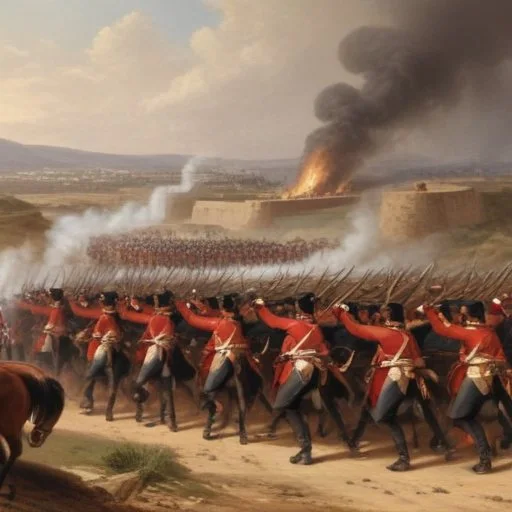
Wellington, a seasoned military strategist, knew that a conventional siege would be a costly and time-consuming affair. He devised a plan to breach the fortress walls by digging trenches and parallels, while simultaneously bombarding the defenses with artillery fire. The British troops worked tirelessly, often under the cover of darkness, to complete the trenches, which would eventually allow them to launch a surprise assault.
The final assault, which took place on the night of April 6, 1812, was a chaotic and bloody melee. British troops poured over the fortress walls, while the French defenders unleashed a hail of artillery fire and musket volleys. The battle raged on for hours, with both sides suffering heavy losses, before the British finally gained the upper hand.
The British emerged victorious, but at a terrible cost. The breach was a bloodbath, with over 5,000 casualties on both sides. The city of Badajoz lay in ruins, its streets littered with the bodies of the fallen. The French defenders, who had fought valiantly, were either killed or taken prisoner. The British, though triumphant, were left to ponder the devastating consequences of their hard-won victory.
The fall of Badajoz marked a significant shift in the balance of power in the Peninsular War. The British, having secured a crucial strategic stronghold, now held the upper hand against Napoleon's armies. This victory paved the way for further advances into Spain and eventually led to the defeat of the French forces.
The Siege of Badajoz will forever be remembered as a testament to the bravery and tenacity of the British troops, who fought against overwhelming odds to claim a vital victory. This pivotal battle also highlights the military genius of the Duke of Wellington, whose strategic leadership played a crucial role in shaping the outcome of the war.
"Nothing except a battle lost can be half so melancholy as a battle won." - The Duke of Wellington
The Duke of Wellington, born Arthur Wellesley, was a seasoned military commander who played a crucial role in the Peninsular War. His tactical prowess and strategic thinking were instrumental in the British victory at Badajoz. Wellington's experience in India and his knowledge of siege warfare helped him devise a plan to breach the fortress walls.
He was known for his attention to detail, and his ability to adapt to changing circumstances on the battlefield. The Duke's leadership style was characterized by his ability to inspire confidence in his troops and to make difficult decisions under pressure.
Wellington's victory at Badajoz cemented his reputation as a brilliant military strategist, and he went on to play a crucial role in the defeat of Napoleon's armies. He was later hailed as a hero and honored with the title of Duke of Wellington.
The Siege of Badajoz was not an isolated event, but rather a part of a larger conflict that was shaping the course of European history. The Peninsular War was a key theater in the Napoleonic Wars, and the outcome of the siege had significant implications for the balance of power in Europe.
The French occupation of Spain and Portugal had created a power vacuum, and the British were keen to fill it. The capture of Badajoz was a crucial step in securing a foothold in southern Spain and Portugal, and ultimately, in defeating Napoleon's armies.
The siege also had implications for the Spanish and Portuguese resistance movements, which were fighting against French occupation. The British victory at Badajoz provided a much-needed boost to these movements, and helped to galvanize opposition to French rule.
Historians have long debated the significance of the Siege of Badajoz, with some viewing it as a brutal and unnecessary slaughter, while others see it as a crucial turning point in the Peninsular War.
Some historians have criticized the brutality of the siege, pointing out that the French defenders were greatly outnumbered and outgunned. They argue that the British attack was disproportionate and excessive, leading to unnecessary bloodshed.
Others, however, see the siege as a necessary evil, arguing that the capture of Badajoz was a crucial step in securing a British victory in the war. They point out that the French occupation of Spain and Portugal had to be resisted, and that the siege was a key part of that resistance.
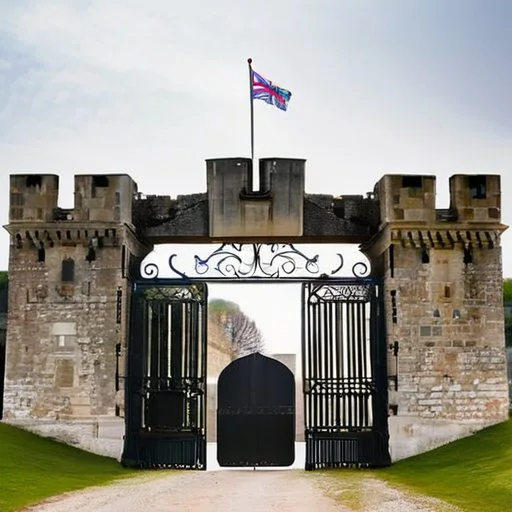
Archaeological excavations at Badajoz have uncovered evidence of the brutal fighting that took place during the siege. The excavation of trenches, bastions, and other fortifications has provided valuable insights into the layout and defenses of the fortress.
Artifacts found during the excavations include musket balls, cannonballs, and other military equipment. These finds have helped historians to reconstruct the events of the siege and to better understand the experiences of the soldiers who fought there.
The excavations have also revealed evidence of the civilian population of Badajoz, including pottery, coins, and other domestic artifacts. These finds have provided a glimpse into the daily lives of the people who lived in the city during the siege.
The Siege of Badajoz had significant economic implications for the region. The destruction of the city and the disruption of trade caused widespread poverty and unemployment.
The British occupation of the city also led to the imposition of new taxes and tariffs, which further exacerbated the economic problems of the region. The local economy suffered from the loss of agricultural productivity, as fields were abandoned and crops were ruined.
On the other hand, the British victory at Badajoz led to increased investment in the region, as the British government sought to rebuild and restore the city. This led to the creation of new jobs and economic opportunities, which helped to stimulate economic growth in the region.