


On a fateful day in 1977, Labour MP Tam Dalyell sparked a lively debate in the British House of Commons with a question that would become synonymous with the complexities of devolution in the United Kingdom. Dalyell's query, now famously known as the West Lothian question, revolved around the paradox of Scottish and Welsh MPs voting on English matters, while English MPs had no reciprocal say in Scottish and Welsh affairs.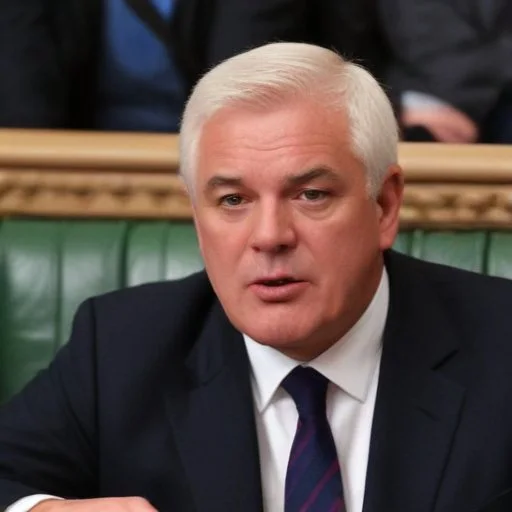
The roots of the West Lothian question can be traced back to the late 1960s, when the UK government began to consider devolving power to Scotland and Wales. The Kilbrandon Commission, established in 1969, was tasked with exploring ways to reform the UK's constitutional arrangements. The commission's report, published in 1973, recommended the creation of elected assemblies in Scotland and Wales, which would have a degree of autonomy in matters such as education, health, and local government.
Tam Dalyell, a Labour MP for West Lothian, was a vocal critic of devolution. He feared that the creation of separate assemblies would lead to a fractured UK, with different parts of the country pulling in different directions. Dalyell's question, posed during a debate on devolution in 1977, was a masterstroke of political strategy. By highlighting the potential anomaly of Scottish and Welsh MPs influencing English affairs, while English MPs had no say in their own devolved matters, Dalyell struck at the heart of the devolution debate.
The West Lothian question had far-reaching implications for UK politics. It highlighted the need for a more nuanced approach to devolution, one that addressed the concerns of all parts of the UK. The question also sparked a broader debate about the nature of the UK's constitutional arrangements, leading to calls for a more federal system of government. Ultimately, the West Lothian question contributed to the passing of the Scotland Act 1998 and the Government of Wales Act 1998, which established the Scottish Parliament and National Assembly for Wales.
The West Lothian question tapped into deeper cultural and social anxieties about national identity and the future of the UK. It raised questions about the nature of Britishness and what it means to be Scottish, Welsh, or English. The question also had significant implications for the Labour Party, which has traditionally been strong in Scotland and Wales. Dalyell's question forced Labour to re-examine its stance on devolution, leading to a more nuanced approach that acknowledged the diversity of the UK's constituent parts.
The West Lothian question remains a contentious issue in UK politics. Some argue that the anomaly highlighted by Dalyell is aprice worth paying for the benefits of devolution. Others, however, see it as a fundamental flaw in the UK's constitutional arrangements, one that undermines the integrity of the House of Commons. The question continues to pose a challenge to politicians and policymakers, who must balance the competing demands of different parts of the UK.
As Dalyell himself once said, "The West Lothian question is a matter of great importance, and one that will continue to exercise the minds of politicians and academics for generations to come."
The West Lothian question has parallels with other devolution debates around the world. In Canada, for example, the Quebec question has long been a source of tension between the federal government and the province of Quebec. Similarly, in Spain, the Catalan question has led to calls for greater autonomy and even independence for the region. The West Lothian question serves as a reminder that devolution is a complex and multifaceted issue, one that requires careful consideration and compromise.
Tam Dalyell's upbringing in his Scottish constituency of West Lothian played a significant role in shaping his views on devolution. Born into a family of Scottish landowners, Dalyell was deeply rooted in the local community and understood the nuances of Scottish politics. His experiences as a local MP also gave him a unique perspective on the needs and concerns of his constituents, which ultimately informed his questioning of the devolution process.
Dalyell's background in journalism and broadcasting also influenced his approach to politics. As a former BBC journalist, he knew how to craft a compelling narrative and frame a question in a way that would resonate with the public. This skill was evident in the way he posed the West Lothian question, which struck a chord with many and sparked a national debate.

The West Lothian question tapped into a deeper sense of national identity and belonging in the UK. As the country grappled with the implications of devolution, questions arose about what it meant to be Scottish, Welsh, or English. The debate sparked a wider conversation about the nature of Britishness and the role of the UK's constituent parts in the national narrative.
The question also had significant cultural implications for the Labour Party, which had traditionally been strong in Scotland and Wales. Dalyell's questioning forced the party to re-examine its stance on devolution and to acknowledge the diversity of the UK's constituent parts. This, in turn, led to a more nuanced approach to devolution that recognized the importance of regional identities within the UK.
The West Lothian question has parallels with other devolution debates around the world. In Canada, for example, the Quebec question has long been a source of tension between the federal government and the province of Quebec. Similarly, in Spain, the Catalan question has led to calls for greater autonomy and even independence for the region.
Like the West Lothian question, these debates revolve around the balance of power between national governments and regional entities. They highlight the challenges of devolution in multinational states, where the needs and aspirations of different regions must be reconciled with the interests of the nation as a whole.

The West Lothian question emerged against a backdrop of seismic changes in global politics. In the 1960s and 1970s, the UK was grappling with the consequences of decolonization, the rise of the European Union, and the decline of the British Empire. This period of transformation created an atmosphere of uncertainty and flux, in which the question of devolution took on a new significance.
The question also spoke to deeper anxieties about the UK's role in the world and its relationships with other nations. As the country navigated this period of change, the West Lothian question served as a catalyst for a wider debate about the UK's constitutional arrangements and its place in the world.
Historians have long grappled with the significance of the West Lothian question, debating its impact on the trajectory of UK politics. Some have seen it as a turning point in the devolution debate, forcing politicians to confront the contradictions of UK constitutional arrangements. Others have viewed it as a symptom of deeper political and cultural trends, such as the rise of nationalism and the decline of the UK's unitary state.
Regardless, the West Lothian question remains an important episode in the history of UK devolution, one that continues to shape our understanding of the complex relationships between the UK's constituent parts.