


It's a moment etched in the annals of British political history – a nail-biting, edge-of-the-seat drama that saw the fate of a government hang precariously in the balance. On that fateful day in 1979, the British House of Commons passed a vote of no confidence against James Callaghan's government by a single, solitary vote, sending shockwaves through the nation and paving the way for a general election.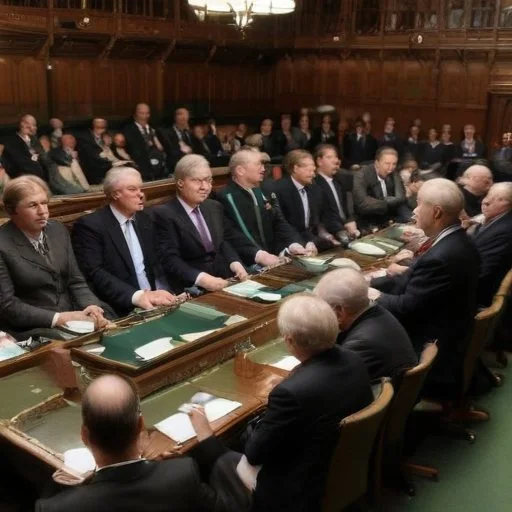
As the clock ticked closer to the vote, the usually staid corridors of Westminster reverberated with an air of electric anticipation. MPs from all parties gathered in the House of Commons, their faces set with determination, their minds made up. The stakes were high, the outcome far from certain. Would the government survive, or would it fall, plunging the country into a period of political turmoil?
At the heart of this drama was James Callaghan, the Labour Prime Minister who had been leading the country since 1976. A stalwart of the Labour Party, Callaghan had navigated the treacherous waters of British politics with aplomb, earning the respect of his peers and the admiration of the public. But on this day, his leadership was under attack, and his government's very survival hung in the balance.
Opposite Callaghan stood Margaret Thatcher, the leader of the Conservative Party, her eyes fixed intently on the prize of power. A fiercely intelligent and formidable politician, Thatcher had been gaining momentum in the polls, her party's fortunes on the rise. This was her chance to strike, to bring down the government and claim the top spot for herself.
The fall of the Callaghan government marked a turning point in British political history, paving the way for a new era of Conservative rule under Margaret Thatcher. The election that followed would see the Tories sweep to power, ushering in a decade of free-market reforms and economic upheaval.
But the impact of that single vote went far beyond the confines of Westminster. It marked a shift in the nation's mood, a changing of the guard, as the post-war consensus gave way to a new era of political and economic uncertainty.
In the aftermath of the vote, Callaghan famously remarked, "I'm not going to make a great fuss about it. I shall simply indicate that we shall take our leave of the House at the time that is most convenient to us." It was a sign of the statesman's dignity, even in defeat.
The events of that day in March 1979 continue to shape British politics to this day. They serve as a reminder of the cut-and-thrust world of Westminster, where allegiances can shift in an instant, and the fate of a government can hang by a thread.
As we look back on that dramatic day, we are reminded of the power of democracy, of the will of the people, and the importance of holding those in power to account. It's a lesson that resonates just as strongly today, as we navigate the complexities of modern politics.
James Callaghan's ascent to the Prime Ministership was a testament to his steadfast dedication to the Labour Party. Born in 1912, Callaghan's early life was marked by financial struggles, which instilled in him a strong sense of social justice. He began his political career as a trade union official, eventually becoming a Member of Parliament in 1945.
Throughout his tenure, Callaghan demonstrated a unique ability to navigate the complexities of British politics, earning the respect of his peers and the admiration of the public. His commitment to social welfare reform and his leadership during the 1976 sterling crisis cemented his position as a stalwart of the Labour Party.

The fall of the Callaghan government marked a significant shift in the nation's economic trajectory. The subsequent election saw Margaret Thatcher's Conservative Party sweep to power, ushering in a decade of free-market reforms and austerity measures.
The reforms aimed to curb inflation, reduce government spending, and promote economic growth. However, they also led to significant job losses, particularly in the manufacturing sector, and increased income inequality. The economic landscape of Britain was forever changed, as the country transitioned from a mixed economy to a more neoliberal model.
The no-confidence motion was a strategic move by the Conservative Party to capitalize on the government's weakened state. The party sensed an opportunity to strike, given the divisions within the Labour Party and the unpopularity of the government's economic policies.
A crucial factor in the outcome was the decision by the Scottish National Party and the Liberal Party to support the motion. This tactful maneuvering by the opposition parties ultimately sealed the fate of the Callaghan government.
The 1970s was a tumultuous period in British history, marked by widespread industrial unrest, economic stagnation, and a decline in the country's global influence. The government's handling of the 1976 sterling crisis, the 1978-79 Winter of Discontent, and the rise of nationalism in Scotland and Wales created an atmosphere of uncertainty and discontent.
In this context, the no-confidence vote was the culmination of years of political and economic turmoil. The election that followed would see a dramatic shift in the political landscape, as the British public opted for a new direction.
The fall of the Callaghan government signaled the demise of the post-war consensus, which had dominated British politics since the 1940s. This shift marked a significant cultural change, as the country transitioned from a collectivist, state-led economy to a more individualistic, free-market approach.
The event also reflected a growing disillusionment with the traditional party system, as voters began to seek alternative solutions to the country's problems. This cultural shift paved the way for a more polarized and ideologically driven political landscape.