


Bulgaria's decision to sign the Armistice of Salonica on September 29, 1918, marked a pivotal moment in World War I, as it effectively ended the country's participation in the conflict. This significant event had a profound impact on the war's trajectory, ultimately contributing to the defeat of the Central Powers.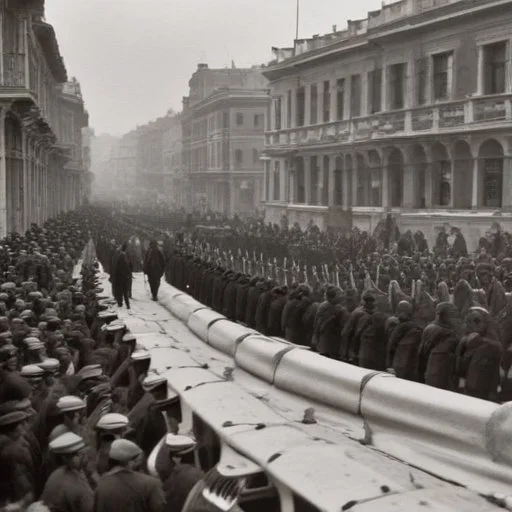
In the years leading up to the armistice, Bulgaria had suffered greatly, with its economy in shambles, its military depleted, and its people weary of the war effort. The country's initial enthusiasm for the conflict had given way to disillusionment and despair, as the harsh realities of war set in.
Key figures, such as Prime Minister Alexander Malinov and Tsar Ferdinand, had long recognized the futility of Bulgaria's continued involvement in the war. They sought a way out, cognizant that their country's very survival depended on it.
The armistice was negotiated at the city of Salonica, in what is now Greece. The terms of the agreement were far from favorable to Bulgaria, with the Allies demanding significant concessions. These included the withdrawal of Bulgarian troops from occupied territories, the demobilization of its army, and the occupation of key strategic locations by Allied forces.
Despite these harsh conditions, Bulgaria had little choice but to accept. The alternative – continued resistance in the face of overwhelming Allied power – would have been catastrophic for the nation.
The Armistice of Salonica marked a significant turning point in World War I. With Bulgaria's withdrawal, the remaining Central Powers – Germany, Austria-Hungary, and the Ottoman Empire – were left to fend for themselves against the Allied forces.
The Allies, buoyed by this victory, were able to redirect their efforts towards the Western Front, ultimately leading to the surrender of Germany and the end of the war.
The Armistice of Salonica had far-reaching consequences for Bulgaria, the war, and the world. It marked the beginning of a new era of international relations, with the victory of the Allies paving the way for the rise of the United States and the League of Nations.
In Bulgaria, the armistice led to a period of rebuilding and reconstruction, as the country sought to recover from the devastating effects of the war.
As we reflect on this momentous event, we are reminded of the devastating consequences of war and the importance of diplomacy in resolving conflicts. The Armistice of Salonica serves as a powerful reminder of the need for nations to work together towards a more peaceful and harmonious world.
Bulgaria's Prime Minister, Alexander Malinov, was a key figure in the country's decision to sign the Armistice of Salonica. A seasoned politician with a strong sense of pragmatism, Malinov recognized the futility of Bulgaria's continued involvement in World War I. He worked tirelessly behind the scenes to negotiate a favorable deal with the Allies, ultimately paving the way for the armistice.
Malinov's leadership during this critical period was instrumental in preventing Bulgaria from further devastating its economy and suffering more human losses. His willingness to accept the harsh conditions imposed by the Allies was a testament to his commitment to the well-being of the Bulgarian people.
In the aftermath of the armistice, Malinov's reputation as a statesman was cemented. He would go on to play a crucial role in Bulgaria's post-war reconstruction, guiding the country towards a path of recovery and growth.

The Armistice of Salonica was negotiated at a critical juncture in World War I, with the Allies seeking to capitalize on their recent gains on the Western Front. The Bulgarian withdrawal created a power vacuum in the Balkans, which the Allies were quick to exploit.
The Allies' strategic interests in the region were twofold. Firstly, they sought to prevent the expansion of German and Austro-Hungarian influence in the Balkans. Secondly, they aimed to secure key strategic locations, such as the port city of Salonica, to facilitate the transportation of troops and supplies.
The armistice negotiations were led by General Louis Franchet d'Espèrey, a seasoned French military commander with extensive experience in the Balkans. His diplomatic prowess and military acumen proved instrumental in securing a favorable deal for the Allies.
The economic impact of the Armistice of Salonica was felt far beyond Bulgaria's borders. The country's withdrawal from the war effort led to a significant decline in the value of the Bulgarian lev, sparking a period of hyperinflation.
The Allied occupation of key strategic locations, including the port city of Salonica, disrupted trade routes and further exacerbated Bulgaria's economic woes. The country's agricultural sector, which had been a mainstay of its economy, was particularly hard hit.
In the aftermath of the armistice, the Bulgarian government was forced to implement a series of austerity measures to stabilize the economy. These measures included drastic cuts to public spending, increased taxation, and the implementation of strict currency controls.

The Armistice of Salonica marked a significant turning point in the political landscape of Bulgaria. The country's withdrawal from the war effort led to a period of political upheaval, as different factions vied for power.
The armistice negotiations had been led by Prime Minister Alexander Malinov, who was seen as a pragmatist willing to make difficult decisions to ensure Bulgaria's survival. However, his government faced opposition from hardline nationalists who felt that the armistice was a betrayal of Bulgaria's interests.
The post-armistice period was marked by a series of political crises, as different factions struggled to assert their dominance. Ultimately, the Agrarian Union, a peasant-based party, emerged as the dominant political force in Bulgaria, paving the way for a period of agrarian-led reform.
The Armistice of Salonica had a profound impact on Bulgarian culture, as the country struggled to come to terms with its defeat. The war had exacted a heavy toll on Bulgaria's artists, writers, and intellectuals, many of whom had lost their lives or been forced into exile.
In the aftermath of the armistice, there was a sense of disillusionment and despair that pervaded Bulgarian culture. Many artists and writers felt that their country had been betrayed by its leaders, and that the war had been a senseless slaughter.
Despite this, the armistice also created opportunities for cultural renewal and rebirth. The post-war period saw a surge in creative output, as Bulgarian artists and writers sought to rebuild their shattered country and create a new sense of national identity.