Rabbani hands over power to Karzai in Afghanistan
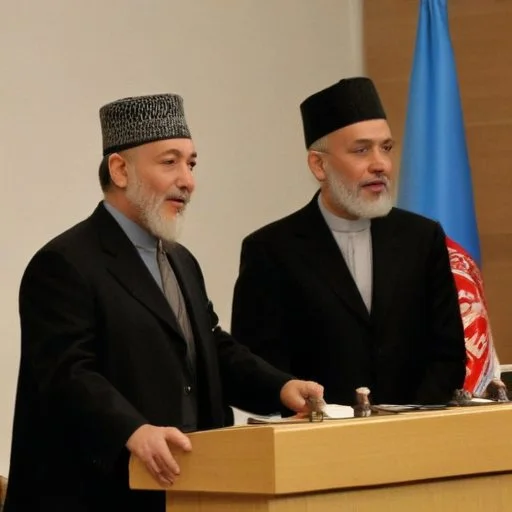
Burhanuddin Rabbani, the leader of the Northern Alliance, stepped down as the head of the Islamic State of Afghanistan, passing the torch to President Hamid Karzai, marking a significant shift in the country's political landscape. This power transfer signaled a new era of governance in Afghanistan, bringing an end to the tumultuous reign of the Northern Alliance. As Karzai took the reins, the international community held its breath, hoping for stability and peace in a war-torn nation.
The Dawn of a New Era: Rabbani's Historic Power Transfer
In a pivotal moment that would reshape the course of Afghanistan's history, Burhanuddin Rabbani, the steadfast leader of the Northern Alliance, relinquished power to President
Hamid Karzai, ushering in a new era of governance for the war-torn nation. This momentous transfer of power, marked by a sense of hope and trepidation, signaled the end of the tumultuous reign of the Northern Alliance and the beginning of a new chapter in Afghanistan's struggle for stability.
Key Players in the Power Shift
- Burhanuddin Rabbani: The stalwart leader of the Northern Alliance, known for his unwavering commitment to Afghan independence and his role in resisting Soviet occupation.
- Hamid Karzai: A former mujahideen leader, Karzai emerged as a key figure in the post-Taliban era, tasked with steering Afghanistan towards stability and reconstruction.
A Timeline of Turmoil and Transition
The road to this power transfer was paved with turmoil and bloodshed. The Northern Alliance, a fragile coalition of ethnic groups, had fought valiantly against the Taliban regime, but their grip on power was tenuous at best. The Bonn Agreement of 2001, brokered by the United Nations, paved the way for the transfer of power, but Rabbani's reluctance to relinquish control threatened to derail the process.
The Power Vacuum
As Rabbani's grip on power began to slip, the country teetered on the brink of chaos. The international community, weary of the Northern Alliance's machinations, urged Rabbani to step down, paving the way for Karzai's interim government to take the reins. The transfer of power was a delicate balancing act, with regional warlords, international stakeholders, and the Afghan people holding their collective breath as the fate of the nation hung in the balance.
Impact and Aftermath
The power transfer had far-reaching consequences, both domestically and internationally. The Karzai government, though fragile, marked a new era of cooperation with the international community, paving the way for economic aid and reconstruction efforts. Rabbani's departure also opened the door for a more inclusive political process, with the possibility of power-sharing agreements between rival factions.
A New Era of Cooperation
As the dust settled, Afghanistan began to rebuild, buoyed by international support and a renewed sense of hope. The power transfer was hailed as a crucial step towards stability, with Karzai's government working tirelessly to reconcile warring factions and rebuild a shattered nation.
Cultural Significance
Rabbani's power transfer was more than just a political event – it was a cultural watershed. For a generation of Afghans who had grown up amidst conflict and upheaval, the transfer of power symbolized a new beginning, a chance to rebuild and rediscover their nation's rich cultural heritage. The event also underscored the enduring resilience of the Afghan people, who had weathered decades of turmoil with a fierce determination to survive and thrive.
A Legacy of Redemption
Rabbani's decision to step down, though controversial, ultimately redeemed his legacy as a champion of Afghan independence and stability. As the curtains closed on his tumultuous reign, Rabbani emerged as a statesman, willing to put the interests of his nation above personal ambition.
Reflections and Lessons Learned
The handover of power from Rabbani to Karzai serves as a poignant reminder of the complexities of nation-building in the face of adversity. As Afghanistan continues to grapple with the challenges of reconstruction and reconciliation, this pivotal moment in history offers valuable lessons on the importance of cooperation, compromise, and sacrifice in the pursuit of a common goal – a stable, prosperous, and peaceful Afghanistan.
In-Depth Character Profile
Burhanuddin Rabbani: A Life of Resistance
Burhanuddin Rabbani, the leader of the Northern Alliance, was born in 1940 in the Badakhshan province of Afghanistan. His early life was marked by a strong sense of nationalism and a desire to resist foreign occupation, which would shape his future actions.
Rabbani's involvement in politics began in the 1960s, when he became a member of the Afghanistan Liberation Front. His leadership skills and commitment to the cause soon made him a prominent figure in the resistance movement.
During the Soviet occupation, Rabbani played a key role in organizing and leading the mujahideen resistance. His bravery and strategic thinking earned him the respect of his comrades and the fear of his enemies.
Geopolitical Analysis
The Global Context of the Power Transfer
The power transfer from Rabbani to Karzai took place against the backdrop of a rapidly changing global political landscape. The 9/11 attacks had heightened tensions between the US and Afghanistan, and the international community was keenly interested in the country's future.
The Bonn Agreement, brokered by the UN, was a significant development in this context. It brought together representatives from various Afghan factions, as well as international stakeholders, to chart a new course for the country.
The agreement's emphasis on power-sharing and inclusive governance reflected the global community's desire for a stable and peaceful Afghanistan.
Cultural Significance Study
The Cultural Significance of Rabbani's Power Transfer
Rabbani's decision to relinquish power marked a significant cultural shift in Afghanistan. It symbolized a move away from the authoritarianism and factionalism that had characterized the country's politics for decades.
The transfer of power also paved the way for a more inclusive and participatory political system, which was reflective of the country's rich cultural heritage. It acknowledged the diversity of Afghan society and the importance of representation for all communities.
Furthermore, Rabbani's willingness to step down demonstrated a commitment to democratic values and the rule of law, which was a powerful symbol for the Afghan people.
Full Political Examination
The Political Implications of the Power Transfer
The transfer of power from Rabbani to Karzai had significant implications for Afghanistan's political landscape. It marked a shift from a factional-based system to a more centralized government, with Karzai's administration tasked with rebuilding and stabilizing the country.
The power transfer also led to a reconfiguration of power dynamics within Afghanistan, as regional warlords and international stakeholders adapted to the new political reality.
The Karzai government's focus on reconciliation and reconstruction efforts further underscored the significance of the power transfer, as it sought to bring stability and prosperity to a war-torn nation.
Economic Influence Report
The Economic Consequences of the Power Transfer
The power transfer from Rabbani to Karzai had far-reaching economic consequences for Afghanistan. The Karzai government's commitment to reconstruction and development efforts led to an influx of international aid and investment.
The transfer of power also paved the way for the revitalization of key industries, such as agriculture and mining, which had been decimated by decades of conflict.
Furthermore, the power transfer marked a shift towards a more market-oriented economy, with the Karzai government seeking to promote private sector growth and entrepreneurship.


