


Burma's military junta, notorious for its iron grip on power, took a drastic step in 1989 by placing Aung San Suu Kyi, the charismatic leader of the National League for Democracy (NLD), under house arrest. This bold move would galvanize the international community, cement Suu Kyi's status as a beacon of hope for democracy, and ignite a fire of resistance against the oppressive regime.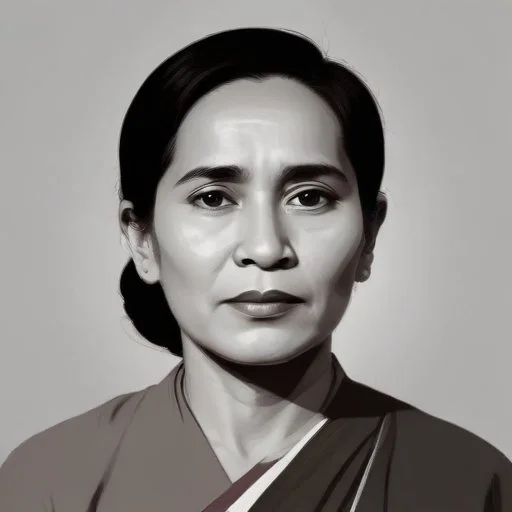
The seeds of dissatisfaction with Burma's military government were sown in 1962, when General Ne Win seized control of the country in a coup. Over the years, the regime's grip on power tightened, and dissent was brutally crushed. Amidst this repressive atmosphere, Aung San Suu Kyi emerged as a powerful symbol of resistance, drawing inspiration from her father, Aung San, a national hero who fought for Burma's independence.
Suu Kyi's electrifying speech at the Shwedagon Pagoda in August 1988, where she called for free elections and an end to military rule, sparked massive protests across the country. The junta, sensing its authority being challenged, responded with brutal force, killing thousands of protesters. Undeterred, Suu Kyi continued to mobilize the masses, prompting the junta to silence her by placing her under house arrest.
Suu Kyi's unwavering commitment to democracy and human rights earned her numerous accolades, including the Nobel Peace Prize in 1991. During her house arrest, she remained resolute, using her confinement as an opportunity to write and inspire the Burmese people. Her defiance in the face of oppression inspired a generation of activists and democracy advocates worldwide.
The junta's brazen move sparked widespread international condemnation. World leaders, human rights organizations, and NGOs decried the junta's actions, demanding Suu Kyi's release and calling for democratic reforms in Burma. The UN General Assembly passed several resolutions condemning the regime's human rights abuses, further isolating the junta.
Suu Kyi's house arrest marked a significant turning point in the struggle for democracy in Burma. It cemented her status as a symbol of resistance against oppressive regimes, galvanized the international community, and paved the way for future democratic reforms. Her bravery and conviction inspired countless others to take up the mantle of democracy, ultimately contributing to the country's transition towards democracy.
Suu Kyi's house arrest and subsequent release laid the groundwork for Burma's democratic transition. Her leadership and dedication to democracy paved the way for the country's first free elections in 2015, which saw the NLD emerge victorious. Today, Suu Kyi serves as State Counsellor, leading Burma's ongoing struggle for full democracy and human rights.
"The quintessential revolution is that of the spirit." - Aung San Suu Kyi
"It is not power that corrupts, but fear. Fear of losing power corrupts those who wield it." - Aung San Suu Kyi
Burma's ruling junta may have silenced Aung San Suu Kyi's voice, but her spirit and defiance in the face of oppression have inspired a generation of democracy advocates, cementing her status as an icon of resistance against oppressive regimes.
The historiographical significance of Aung San Suu Kyi's house arrest lies in its representation of the symbiotic relationship between democracy and human rights. Historians have long debated the role of charismatic leaders in shaping democratic movements, and Suu Kyi's story serves as a powerful case study. Her defiance in the face of oppression has inspired a generation of scholars to reexamine the intersection of human rights and democratic governance.
Furthermore, Suu Kyi's experience highlights the tension between authoritarian regimes and democratic aspirations. This dichotomy has been a recurring theme throughout history, from the ancient Greeks to modern-day struggles for democracy. By examining Suu Kyi's story through a historiographical lens, scholars can gain a deeper understanding of the complexities of democratic transition and the enduring power of human rights discourse.

The political implications of Aung San Suu Kyi's house arrest were far-reaching, with the move cementing the junta's reputation as a repressive regime. The international community's condemnation of the junta's actions marked a significant shift in global politics, as the world began to recognize the importance of democratic governance and human rights.
The event also underscored the critical role of opposition leaders in democratization processes. Suu Kyi's unwavering commitment to democracy and human rights inspired a new generation of political activists, who saw her as a beacon of hope in the face of oppression. Her leadership style, which emphasized nonviolent resistance and grassroots mobilization, has been studied and emulated by democracy advocates worldwide.
Aung San Suu Kyi's personal characteristics have been instrumental in shaping her role as a democratic icon. Her courage, resilience, and unwavering commitment to human rights have inspired countless individuals to join the struggle for democracy. Suu Kyi's ability to connect with the Burmese people, drawing on her father's legacy and her own experiences as a mother and a daughter, has been a key factor in her enduring popularity.
Moreover, Suu Kyi's leadership style is marked by a unique blend of pragmatism and idealism. Her willingness to engage in dialogue with the junta, even in the face of intense repression, has been seen as a testament to her commitment to finding peaceful solutions. This nuanced approach has earned her the respect of world leaders and democracy advocates alike, solidifying her position as a champion of human rights and democratic governance.

Aung San Suu Kyi's house arrest has had a profound impact on Burmese culture, galvanizing a sense of national identity and inspiring a new generation of artists, writers, and musicians. The event sparked a wave of creative expression, as Burmese citizens sought to channel their frustrations and hopes into art, music, and literature.
The cultural significance of Suu Kyi's struggle extends beyond Burma's borders, influencing democratic movements and inspiring social change worldwide. Her story has been immortalized in films, books, and songs, ensuring that her legacy will continue to inspire future generations of democracy advocates and human rights defenders.
The geopolitical context of Aung San Suu Kyi's house arrest was marked by a complex web of regional and international factors. The end of the Cold War had created a power vacuum in Southeast Asia, which the Burmese junta sought to exploit. The junta's brutal suppression of the 1988 protests and Suu Kyi's subsequent house arrest were calculated to maintain control and prevent the spread of democratic ideals.
The international community's response to Suu Kyi's house arrest was shaped by a newfound emphasis on human rights and democratic governance. The UN's condemnation of the junta's actions marked a significant shift in global politics, as the world began to prioritize democracy and human rights over Cold War-era strategic interests.