


On a fateful night in February 1990, the boxing world witnessed one of the greatest upsets in history as James "Buster" Douglas, a behemoth underdog, defeated the feared Mike Tyson to claim the heavyweight title of the world. The astonishing victory marked a monumental turnaround, as Douglas overcame staggering odds of 421 to 1 to dethrone Tyson in ten thrilling rounds at the Tokyo Dome.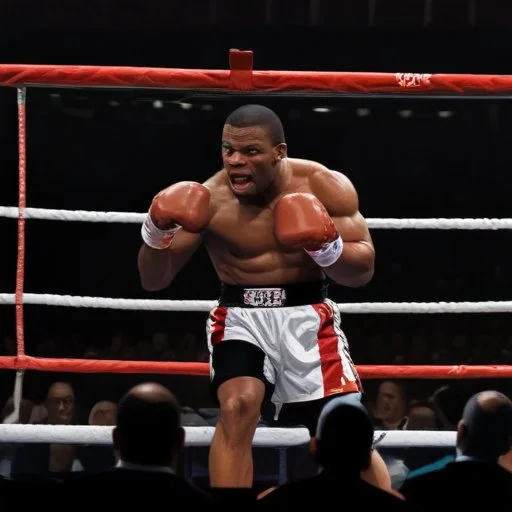
The evening of February 11, 1990, will forever be etched in the annals of boxing lore. As the bell rang, signaling the start of the fight, Tyson, the undisputed heavyweight champion, was favored to win by a landslide. Douglas, a relatively unknown challenger, was written off by pundits and fans alike. But the Ohio native had other plans.
Douglas, fueled by a fierce determination and an unyielding belief in himself, weathered Tyson's early onslaught and began to take control. Landing several devastating blows, he sent Tyson reeling, leaving the champion stunned and bewildered. As the rounds progressed, Douglas' confidence grew, and Tyson's aura of invincibility began to crumble.
The defining moment arrived in the tenth round, as Douglas unleashed a flurry of punches that sent Tyson crashing to the canvas. The crowd erupted in pandemonium as the referee counted Tyson out, declaring Douglas the new heavyweight champion of the world.
The magnitude of Douglas' achievement cannot be overstated. He had accomplished what 25 other fighters before him had failed to do – defeat Mike Tyson. The upset sent shockwaves throughout the sporting world, as fans and pundits struggled to comprehend the enormity of Douglas' feat.
Douglas' stunning victory marked a watershed moment in boxing history. It was the first time a significant underdog had overcome such seemingly insurmountable odds to dethrone a dominant champion. The upset also signaled the beginning of the end of Tyson's reign, as the once-formidable champion never quite regained his footing.
In the aftermath of the fight, Douglas revealed that he had been fueled by the memory of his father, William "Dynamite" Douglas, a former boxer who had died just 23 days prior to the bout. Douglas' trainer, John Russell, attributed the victory to his fighter's unyielding dedication and resilience.
The upset had far-reaching consequences beyond the realm of boxing. It inspired a generation of underdogs and fueled the imagination of sports fans worldwide. Douglas' triumph also resonated deeply with the people of Tokyo, who welcomed the new champion with open arms.
The Douglas-Tyson fight paved the way for future upsets in boxing, as fighters began to realize that even the most seemingly invincible champions were vulnerable to defeat. The bout also led to a renewed focus on the importance of mental preparation and conditioning, as fighters sought to emulate Douglas' remarkable turnaround.
In conclusion, the Miracle in Tokyo will forever be remembered as one of the greatest upsets in boxing history. James "Buster" Douglas' courageous performance inspired a generation of fighters and left an indelible mark on the sport. As the years pass, the significance of that fateful night will only continue to grow, cementing Douglas' place as one of the greatest underdog stories of all time.
The build-up to the fight was filled with drama and controversy. Tyson's team had reportedly offered Douglas a rematch clause, which would have given Tyson an automatic rematch in the event of a loss. Douglas, however, refused to sign the contract, citing his desire to be recognized as the undisputed champion. This move would later prove to be a wise decision, as it allowed Douglas to capitalize on his victory and secure a lucrative rematch.
In the weeks leading up to the fight, Douglas' trainer, John Russell, implemented a rigorous training regime that focused on building his fighter's endurance and stamina. Russell believed that Tyson's aggressive style would leave him vulnerable to exhaustion, and he was determined to exploit this weakness. Douglas' training camp was intense, with the fighter often logging over 100 rounds of sparring per week.

James "Buster" Douglas was born on April 7, 1960, in Columbus, Ohio. Growing up in a family of boxers, Douglas was naturally drawn to the sport from a young age. His father, William "Dynamite" Douglas, was a former boxer who had fought against some of the greatest fighters of his era. Douglas' amateur career was marked by success, with the fighter winning the 1981 National Golden Gloves championship.
Despite his promising start, Douglas' professional career was slow to take off. He suffered several early losses, which led many to question his ability to compete at the highest level. However, Douglas persevered, and his determination and resilience eventually paid off.
The Miracle in Tokyo had far-reaching cultural implications that extended beyond the world of boxing. The fight became a symbol of hope and inspiration for underdogs everywhere, and Douglas' victory was celebrated by people from all walks of life. In Japan, Douglas was hailed as a hero, and his victory was seen as a testament to the power of determination and hard work.
The fight also had significant cultural implications in the United States, particularly in the African American community. Douglas' victory was seen as a symbol of black excellence and pride, and it inspired a new generation of boxers and athletes.
The economic impact of the Miracle in Tokyo was significant, with the fight generating millions of dollars in revenue. The event was a major commercial success, with over 50,000 fans attending the fight at the Tokyo Dome. The pay-per-view numbers were also staggering, with over 1.5 million households tuning in to watch the fight.
The victory also had a profound impact on Douglas' personal finances. The fighter's purse for the fight was a reported $1 million, a significant increase from his previous fights. The victory also opened up new endorsement opportunities for Douglas, who became an overnight sensation.
The contract for the fight is an interesting artifact that provides insight into the mindsets of the two fighters and their teams. The contract, which was signed on January 10, 1990, reveals that Tyson's team was confident of victory, with the champion reportedly earning a guaranteed $6 million purse, regardless of the outcome. Douglas, on the other hand, was to earn a significantly lower purse of $1 million, although this amount would increase significantly if he were to win.
The post-fight press conference transcript is another fascinating artifact that provides insight into the emotions and reactions of the two fighters in the immediate aftermath of the fight. Douglas' comments, in particular, are revealing, as they highlight his sense of pride and accomplishment.