


Patrick Morrow, a Canadian mountaineer, etched his name in the annals of history by becoming the first person to conquer the Seven Summits, the highest peaks on each continent. This monumental achievement not only showcased his physical prowess but also his unwavering determination to push the boundaries of human endurance.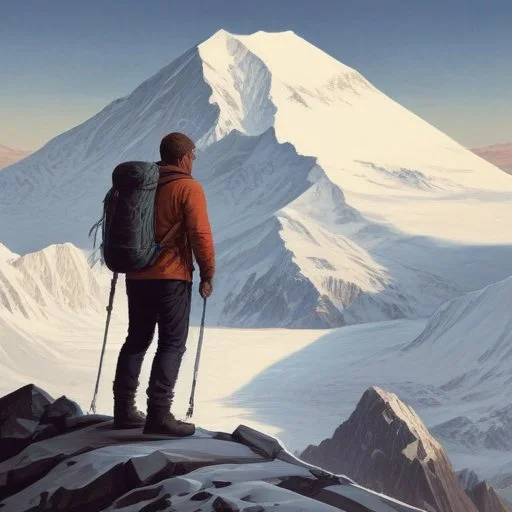
The Seven Summits are the highest peaks on each of the seven continents, a challenge that has captivated mountaineers for decades. The summits include:
Patrick Morrow's journey to conquer the Seven Summits was not just about reaching the summit; it was a journey of self-discovery, perseverance, and overcoming personal demons. Morrow's quest was driven by a desire to push beyond his limitations and test the human spirit.
In an interview, Morrow reflected on his journey, saying, "The Seven Summits challenge is not just about climbing mountains; it's about understanding yourself, your strengths, and your weaknesses."
Morrow's quest to conquer the Seven Summits spanned several years, with his first summit being Mount Everest in 1982. He went on to climb the remaining six summits, with his final conquest being Carstensz Pyramid in 1986.
Morrow's achievement had a profound impact on the mountaineering community, inspiring a new generation of climbers to take on the Seven Summits challenge. His feat also raised awareness about the importance of preserving the natural environment and promoting sustainable tourism.
Morrow's achievement paved the way for future generations of mountaineers, with many attempting to replicate his feat. His conquest of the Seven Summits also led to the development of new climbing routes, techniques, and technologies.
Morrow's achievement serves as a testament to the human spirit, inspiring people from all walks of life to push beyond their limits and pursue their passions. His story is a reminder that with determination, perseverance, and hard work, anything is possible.
In conclusion, Patrick Morrow's conquest of the Seven Summits is a remarkable achievement that continues to inspire and motivate people around the world. His unwavering dedication to his craft and his unrelenting passion for mountaineering have left an indelible mark on the world of adventure and exploration.
Patrick Morrow was born on February 18, 1952, in Innisfail, Alberta, Canada. Growing up in a family of outdoor enthusiasts, Morrow developed a passion for nature and adventure from a young age. He began climbing in his teenage years and went on to study environmental science at the University of Calgary.
Morrow's determination and perseverance were instilled in him by his parents, who encouraged him to pursue his dreams despite the risks involved. His father, a World War II veteran, always told him that "the greatest glory in living lies not in never falling, but in rising every time we fall."
Throughout his climbing career, Morrow has been driven by a desire to push beyond his limits and test the human spirit. His achievement has inspired countless people around the world, and he continues to be an icon in the mountaineering community.

The Seven Summits challenge has become a cultural phenomenon, inspiring people from all walks of life to take on the challenge. The concept of climbing the highest peaks on each continent has become a symbol of human achievement and adventure.
The Seven Summits have also become a cultural icon, representing the pursuit of excellence and the human desire to push beyond one's limits. The challenge has been featured in numerous films, books, and documentaries, further solidifying its place in popular culture.
In addition, the Seven Summits have become a powerful symbol of national pride, with many countries boasting their own summits as part of the challenge.
The conquest of the Seven Summits was made possible by significant technological advancements in mountaineering equipment and gear. The development of lightweight and durable materials, such as Kevlar and carbon fiber, allowed climbers to carry lighter loads and withstand harsh weather conditions.
Advances in clothing and footwear technology also played a crucial role, enabling climbers to stay warm and dry in extreme temperatures. The introduction of crampons, ice axes, and other specialized equipment further increased the chances of success.
In addition, the development of communication technology, such as satellite phones and GPS devices, allowed climbers to stay in touch with their teams and navigate the treacherous terrain with greater ease.

The Seven Summits challenge has had a significant environmental impact, with climbers leaving behind a trail of waste and debris on the mountains. The increasing number of climbers attempting the challenge has led to concerns about overcrowding, litter, and human waste on the mountains.
In recent years, efforts have been made to promote sustainable tourism and reduce the environmental impact of climbing expeditions. Climbers are now encouraged to follow "leave no trace" principles, taking all waste and trash with them when they descend from the mountains.
In addition, initiatives have been launched to clean up existing waste and debris on the mountains, promoting a culture of environmental responsibility among climbers.
The Seven Summits challenge has had a profound impact on social dynamics, inspiring people to push beyond their limits and challenge traditional norms. The challenge has become a symbol of empowerment, particularly for women and minorities who have historically been excluded from mountaineering.
The conquest of the Seven Summits has also highlighted issues of inequality and access, with many climbers from developing countries facing significant barriers to participation. Efforts have been made to increase diversity and inclusion in the climbing community, promoting greater access to training and resources.
In addition, the Seven Summits have become a powerful tool for social change, with climbers using their platforms to raise awareness about environmental and social issues.