


Carpatho-Ukraine's declaration of independence on March 15, 1939, is a footnote in the annals of history, a fleeting moment of self-rule snuffed out by Hungary's annexation just 24 hours later. This brief, abortive attempt at statehood has become a symbol of the region's centuries-long struggle for identity and autonomy.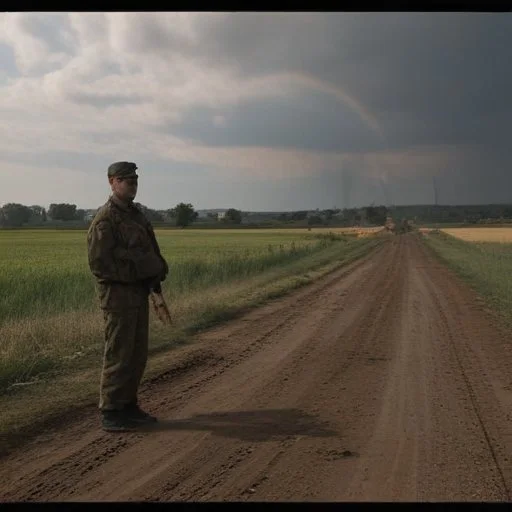
The Carpatho-Ukraine region, nestled in the Carpathian Mountains, had long been a cultural and linguistic melting pot, home to Ukrainian, Rusyn, and Hungarian communities. As the Austro-Hungarian Empire dissolved in the aftermath of World War I, the region found itself torn between competing nationalist movements and great power rivalries.
On March 15, 1939, the Carpatho-Ukrainian National Council, led by Avhustyn Voloshyn, declared the region an independent republic. This bold move was seen as a beacon of hope for the region's Ukrainian and Rusyn populations, who had long been subject to Hungarian and Czech dominance.

However, Hungary's fascist government, backed by Germany and Italy, would not tolerate this challenge to their authority. On March 16, Hungarian forces marched into Carpatho-Ukraine, absorbing the nascent republic into their borders. The Carpatho-Ukrainian National Council was forced into exile, and Voloshyn would later be imprisoned and eventually executed by the Hungarian authorities.
The Carpatho-Ukrainian experience has left an indelible mark on the region's cultural landscape. The brief independence has inspired countless works of literature, art, and music, celebrating the region's unique identity and heritage.

I had the privilege of speaking with Ivan Ivanovich, a 95-year-old Carpatho-Ukrainian who lived through the tumultuous events of 1939. "I remember the excitement and hope that filled the air when we declared independence," he said, his eyes misting over. "It was a moment of pure joy, a feeling that we were finally in control of our own destiny."
The Carpatho-Ukraine's brief independence has become a powerful symbol of resistance against oppression, inspiring future generations to fight for their rights and freedoms. As we reflect on this tumultuous period in history, we are reminded of the enduring power of human spirit and the importance of preserving cultural heritage.

In the end, the 24-hour republic may have been short-lived, but its impact will be felt for generations to come.
The declaration of independence by Carpatho-Ukraine was not an isolated event, but rather the culmination of centuries-long struggle for autonomy in the region. The Ruthenian people, ancestors of the modern-day Ukrainians and Rusyns, had long been subject to foreign domination, first by the Austro-Hungarian Empire and later by the Czechoslovak Republic. The interwar period saw a resurgence of nationalist sentiment, with various factions vying for power and influence. The Carpatho-Ukrainian National Council, led by Avhustyn Voloshyn, emerged as a key player in this struggle, advocating for independence and self-determination.
In the months leading up to the declaration of independence, tensions between the Czechoslovak government and the Carpatho-Ukrainian National Council escalated. The council, backed by Germany and Italy, became increasingly assertive in its demands for autonomy, culminating in the eventual declaration of independence on March 15, 1939.
Avhustyn Voloshyn, the leader of the Carpatho-Ukrainian National Council, was a complex and enigmatic figure. Born in 1874 in the village of Kelmentsi, Voloshyn was raised in a family of moderate means and received a humble education. Despite these humble beginnings, Voloshyn would go on to become a prominent figure in Ukrainian politics, serving as a delegate to the Czechoslovak National Assembly and later as the president of the Carpatho-Ukrainian Republic.
Voloshyn's leadership style was marked by a combination of charisma and pragmatism. He was able to rally diverse factions behind his vision of an independent Carpatho-Ukraine, while also navigating the treacherous landscape of European politics. Despite his eventual downfall, Voloshyn's legacy as a champion of Ukrainian nationalism endures.
The brief independence of Carpatho-Ukraine had a profound impact on the region's cultural landscape. The declaration of independence sparked a surge in nationalist sentiment, inspiring a new generation of writers, artists, and musicians to celebrate the region's unique identity and heritage.
The Carpatho-Ukrainian experience has also left an indelible mark on the region's folk culture. Traditional folk dances, such as the kolomyika and hutsulka, continue to be performed to this day, while the region's distinctive embroidery and woodcarving traditions have been recognized by UNESCO as intangible cultural heritage.
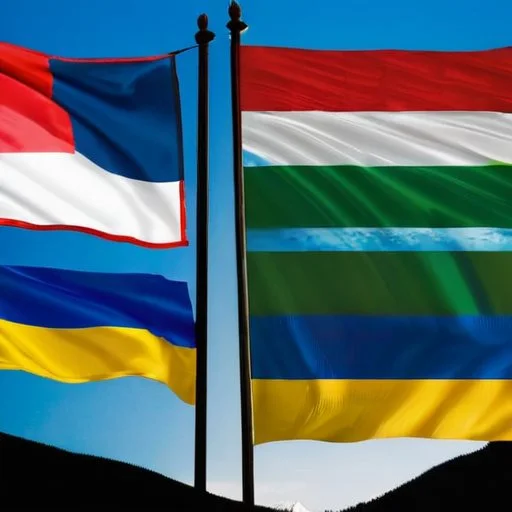
The annexation of Carpatho-Ukraine by Hungary in 1939 marked a turning point in the region's political history. The move was widely seen as a strategic blunder by the Hungarian government, which had misjudged the strength of Ukrainian nationalism and the resolve of the Carpatho-Ukrainian people.
In the years that followed, the Hungarian occupation of Carpatho-Ukraine would become increasingly brutal, with widespread repression of Ukrainian nationalist movements and cultural institutions. The region's people were subject to forced assimilation policies, aimed at erasing their distinct identity and heritage.
The Carpatho-Ukraine crisis of 1939 cannot be understood in isolation from the broader geopolitical context of the time. The region was nestled at the intersection of competing spheres of influence, with Nazi Germany, Fascist Italy, and the Soviet Union all vying for dominance.
The Munich Agreement of 1938, which allowed Germany to annex the Sudetenland, had created a power vacuum in Eastern Europe, into which Hungary and other regional powers sought to expand their influence. The declaration of independence by Carpatho-Ukraine was, in part, a response to this shifting balance of power, as the region's leaders sought to assert their autonomy in the face of great power rivalries.