


On a fateful day in 2000, a catastrophic landslide struck the small town of Log pod Mangartom, nestled in the Julian Alps of Slovenia, claiming seven lives and leaving millions of Slovenian tolars in damages. This devastating event would go down in history as one of the worst catastrophes to hit Slovenia in over a century.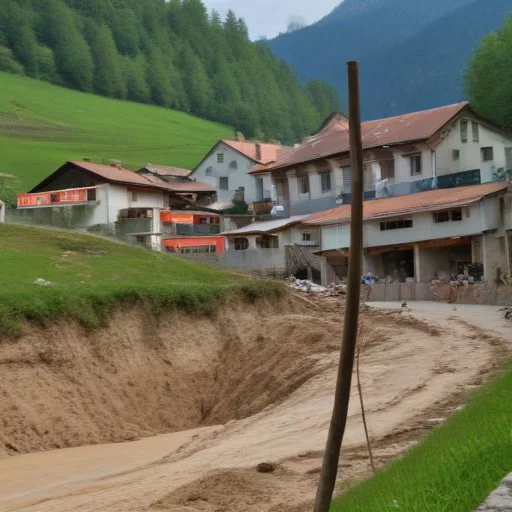
Torrential rains had been pouring down on Log pod Mangartom for days, but no one could have predicted the scale of the disaster that was to come. On that day, the heavy rainfall caused a massive landslide, burying homes and businesses under a colossal wall of mud and debris.
In the immediate aftermath of the landslide, the town was left in a state of chaos. Emergency responders and rescue teams struggled to navigate the treacherous terrain, working tirelessly to search for survivors and provide aid to those affected. The full extent of the damage was staggering – entire streets were destroyed, and countless families were left without homes or livelihoods.
In the months and years that followed, the people of Log pod Mangartom came together to rebuild and recover. The Slovenian government and international organizations provided vital support, including financial aid and expertise. Slowly but surely, the town began to rise from the ashes, with new homes, businesses, and infrastructure taking shape.
The catastrophic landslide of Log pod Mangartom had a profound impact on Slovenia as a whole. It led to a re-evaluation of disaster preparedness and response strategies, with a renewed focus on mitigating the risks of natural disasters. The event also brought the community closer together, fostering a sense of resilience and solidarity that would be felt for generations to come.
The seven lives lost in the landslide will never be forgotten. Their memory lives on in the hearts of those who knew them, and in the town's collective memory. A memorial was erected in their honor, serving as a poignant reminder of the devastating consequences of natural disasters.
The landslide of Log pod Mangartom serves as a stark reminder of the importance of disaster preparedness and response. It highlights the need for communities to come together in the face of tragedy, and for governments to prioritize the safety and well-being of their citizens. As we look back on this devastating event, we can draw valuable lessons for the future, ensuring that such tragedies are never forgotten.
The landslide of Log pod Mangartom had a profound impact on the cultural fabric of Slovenia. The disaster struck at the heart of the country's identity, affecting not only the physical landscape but also the national psyche. In the aftermath, the Slovenian government launched a series of cultural initiatives aimed at promoting resilience and community spirit.
The disaster also inspired a wave of artistic responses, with local artists, writers, and musicians creating works that reflected on the tragedy and its aftermath. These creative expressions played a significant role in processing the collective grief and fostering a sense of solidarity among the Slovenian people.

The economic impact of the landslide was staggering, with damages estimated to be in the millions of Slovenian tolars. The disaster affected not only the local economy but also had far-reaching consequences for the country's infrastructure and development.
In the aftermath, the Slovenian government was forced to divert significant resources to address the disaster's economic consequences. This included investing in reconstruction efforts, providing financial aid to affected families, and implementing measures to mitigate the risk of future disasters.
The landslide also had a significant impact on the country's tourism industry, with many visitors canceling their plans in the wake of the disaster. This had a ripple effect on local businesses, many of which were forced to close or significantly scale back their operations.
The landslide of Log pod Mangartom occurred during a period of significant geopolitical change in Slovenia. The country was in the midst of transitioning from a socialist to a capitalist economy, and the disaster added to the sense of uncertainty and instability.
The Slovenian government's response to the disaster was closely watched by the international community, with many countries offering aid and assistance in the aftermath. This international cooperation played a significant role in shaping Slovenia's foreign policy and diplomatic relations in the years that followed.

The landslide of Log pod Mangartom had a profound impact on the social dynamics of the affected community. The disaster brought together people from all walks of life, as they worked together to respond to the crisis and rebuild their town.
The disaster also highlighted existing social and economic inequalities in the region, with marginalized communities often being the most affected by the disaster. In the aftermath, there were calls for greater social justice and equality, as well as increased investment in social services and infrastructure.
The landslide of Log pod Mangartom raised important questions about the role of human agency in the face of natural disasters. The disaster forced Slovenians to confront their own relationship with nature and the environment, and to re-evaluate their priorities and values.
In the aftermath, there were intense debates about the ethics of reconstruction, with some arguing that the focus should be on rebuilding and revitalizing the local economy, while others advocated for a more sustainable and environmentally-friendly approach.