


In a momentous occasion, Catholic Monarchs Ferdinand and Isabella rode into the majestic city of Granada, marking the end of the Granada War and an era of Muslim rule that spanned over eight centuries in Spain. This victorious entrance, on January 2, 1492, cemented the royal couple's reputation as unifiers of a fragmented Spain, paving the way for a new era of Christian dominance.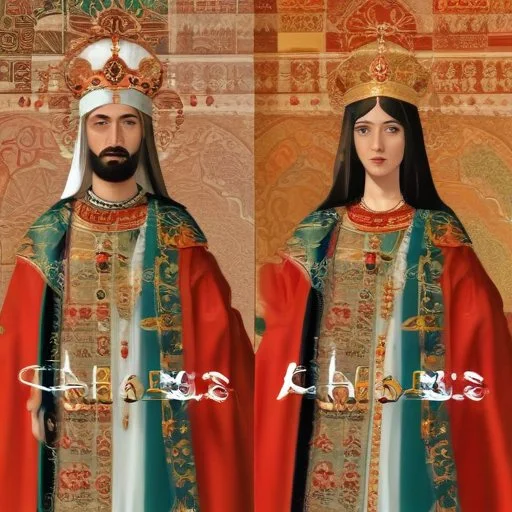
The Granada War, which lasted from 1482 to 1492, was a protracted and brutal conflict that witnessed the Catholic Monarchs' determination to expel the Moors from the Iberian Peninsula. The war was marked by sieges, battles, and skirmishes, with the city of Granada being the last stronghold of the Nasrid dynasty, the last Muslim kingdom in Spain.
The Catholic Monarchs' journey to Granada was a long and arduous one. They had been waging war against the Moors for over a decade, capturing key cities and strongholds along the way. In 1491, they laid siege to Granada, which lasted for nearly a year before the city finally surrendered.
The city of Granada, with its breathtaking Alhambra palace, was a prized possession for both the Spanish and the Moors. The palace, built in the 14th century, was a testament to Moorish architecture and engineering. The Catholic Monarchs' victory was not just a military triumph but also a cultural one, as they claimed the Alhambra as their own, incorporating it into the Spanish crown.
The fall of Granada marked the beginning of a new era in Spanish history. The Catholic Monarchs' victory led to the expulsion of the Moors and the Jews from Spain, a move that would have far-reaching consequences for the country's cultural and social fabric. The Reconquista, a centuries-long process of Christian reconquest, had finally come to an end.
Ferdinand and Isabella's conquest of Granada cemented their status as unifiers of Spain, earning them the epithet "Catholic Monarchs." Their legacy extended beyond the borders of Spain, as they sponsored voyages of discovery, including Christopher Columbus's famous journey to the Americas in 1492.
The fall of Granada marked the beginning of a new era of exploration and expansion for Spain. The Catholic Monarchs' victory gave them the resources and confidence to embark on ambitious projects, including the discovery of the New World. This, in turn, led to the establishment of Spanish colonies in the Americas, which would shape the course of world history.
The Alhambra, with its stunning architecture and breathtaking gardens, remained a symbol of Moorish ingenuity and creativity. However, with the Catholic Monarchs' victory, it became a symbol of Spanish triumph and dominance. The palace would go on to become a royal residence, a testament to the royal couple's power and influence.
The Catholic Monarchs' conquest of Granada left an indelible mark on Spanish history, shaping the country's identity, culture, and politics for centuries to come. Their legacy continues to inspire and fascinate, a testament to the enduring power of human ambition and determination.
Ferdinand II of Aragon, also known as Ferdinand the Catholic, was the King of Aragon from 1479 until his death in 1516. He was a skilled military strategist and a shrewd politician who played a crucial role in uniting Spain under a single crown. Ferdinand was born in 1452 in Sos, Aragon, and married Isabella of Castile in 1469, forming an alliance that would shape the future of Spain.
Isabella of Castile, also known as Isabella the Catholic, was the Queen of Castile from 1474 until her death in 1504. She was a strong-willed and intelligent leader who played a key role in the Reconquista, the centuries-long process of Christian reconquest of the Iberian Peninsula. Isabella was born in 1451 in Madrigal de las Altas Torres, Castile, and was known for her piety and her support of the Catholic Church.

The fall of Granada had a profound impact on Spanish culture, as it marked the end of Muslim rule and the beginning of a new era of Christian dominance. The Alhambra, a stunning palace built in the 14th century, became a symbol of Spanish triumph and power.
The Catholic Monarchs' victory also led to the expulsion of the Moors and the Jews from Spain, a move that would have far-reaching consequences for the country's cultural and social fabric. The Reconquista had finally come to an end, and a new era of Spanish identity and culture began to take shape.
The Granada War and the fall of Granada took place within the context of a broader geopolitical landscape. The Ottoman Empire, a powerful Muslim state, was expanding its territories in Eastern Europe and the Middle East, while the Catholic Church was seeking to consolidate its power and influence in Western Europe.
The Catholic Monarchs' victory in Granada was seen as a major triumph for Christendom, and it marked a turning point in the balance of power between Christian and Muslim states in the region.

Historians have long debated the significance of the fall of Granada and the legacy of the Catholic Monarchs. Some have portrayed Ferdinand and Isabella as heroes who united Spain and brought an end to Muslim rule, while others have criticized them for their role in the expulsion of the Moors and the Jews.
More recent scholarship has highlighted the complexity of the Reconquista and the Granada War, emphasizing the role of diplomacy, politics, and cultural exchange in shaping the course of Spanish history.
The Capitulations of Granada, a treaty signed in 1491, marked the terms of the city's surrender to the Catholic Monarchs. The treaty guaranteed the rights of the Moorish population, including their freedom to practice their religion and maintain their cultural traditions.
The treaty is a valuable historical document, providing insights into the politics and diplomacy of the time. It is also a testament to the complexity of the relationship between the Catholic Monarchs and the Moorish kingdom of Granada.