


In a momentous ceremony held in Berkeley, California, renowned physicist Ernest Lawrence received the 1939 Nobel Prize in Physics, bestowed upon him by Sweden's consul general in San Francisco. This prestigious honor recognized Lawrence's groundbreaking invention and development of the cyclotron, a revolutionary device that accelerated charged particles to unprecedented high energies, propelling the field of nuclear physics forward.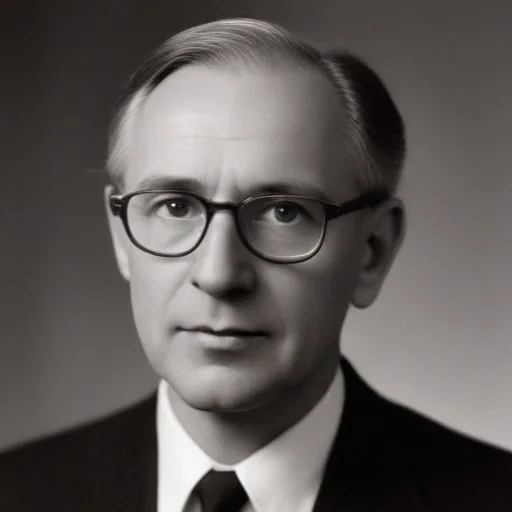
Lawrence's pioneering work on the cyclotron opened doors to far-reaching implications in various disciplines, including medicine, materials science, and more. The cyclotron's ability to produce high-energy particles enabled scientists to study subatomic structures, leading to a deeper understanding of the fundamental laws governing our universe.
Ernest Lawrence's Nobel Prize in Physics was a crowning achievement in a career marked by numerous accolades. Among his notable honors are the Elliott Cresson Medal (1937), the Hughes Medal (1937), and the Franklin Medal (1947).
Lawrence's contributions to the field of physics were not limited to his work on the cyclotron. He played a pivotal role in the development of the Manhattan Project, and his laboratory at the University of California, Berkeley, became a hub for cutting-edge research in nuclear physics.
Despite his numerous achievements, Ernest Lawrence remained humble and dedicated to his work. In his Nobel Prize acceptance speech, he credited his team of researchers, stating, "I stand here today, not as an individual, but as a representative of a group of devoted scientists who have worked together in the pursuit of knowledge."
The 1939 Nobel Prize in Physics ceremony marked a significant cultural milestone, as it recognized the contributions of an American scientist in a field traditionally dominated by European researchers. Lawrence's achievement served as a testament to the growing importance of American scientific contributions on the global stage.
Ernest Lawrence's Nobel Prize in Physics solidified his position as a pioneer in the field of nuclear physics. His work on the cyclotron paved the way for future breakthroughs, inspiring generations of scientists to explore new frontiers in physics and beyond.
Today, Lawrence's legacy extends far beyond the cyclotron, as his work continues to influence research in medicine, materials science, and physics, shaping our understanding of the world and the universe around us.
Ernest Lawrence, the son of a South Dakota superintendent, was born in 1901. From an early age, he demonstrated a keen interest in science and mathematics, which led him to pursue higher education at the University of South Dakota and later at the University of Minnesota.
Lawrence's fascination with physics grew under the guidance of notable physicists, including John Van Vleck and Niels Bohr. His research on the cyclotron was motivated by a desire to accelerate particles to high energies, thereby enabling the study of subatomic structures.
Despite his numerous achievements, Lawrence remained humble and dedicated to his work. He credited his team of researchers for their contributions to the development of the cyclotron, exemplifying his selfless approach to scientific discovery.

Ernest Lawrence's Nobel Prize in Physics marked a significant cultural milestone, as it recognized the contributions of an American scientist in a field traditionally dominated by European researchers.
This achievement served as a testament to the growing importance of American scientific contributions on the global stage, boosting national pride and inspiring a new generation of scientists.
The 1939 ceremony also highlighted the increasingly global nature of scientific collaboration, as physicists from diverse backgrounds came together to recognize Lawrence's groundbreaking work.
The development of the cyclotron had far-reaching implications for various fields, including medicine, materials science, and nuclear physics.
In medicine, the cyclotron enabled the production of radioisotopes for diagnostic and therapeutic purposes, leading to significant advances in cancer treatment and medical research.
In materials science, the cyclotron facilitated the creation of new materials with unique properties, such as superconductors and semiconductors, which have since become integral components in modern technology.
The cyclotron's ability to accelerate particles to high energies enabled scientists to study subatomic structures, leading to a deeper understanding of the fundamental laws governing our universe.
The device facilitated groundbreaking research in nuclear physics, including the discovery of new elements and the investigation of nuclear reactions.
The cyclotron's contributions to science paved the way for future breakthroughs, inspiring generations of scientists to explore new frontiers in physics and beyond.
Ernest Lawrence's Nobel Prize in Physics marked a pivotal moment in the history of nuclear physics, solidifying his position as a pioneer in the field.
Lawrence's work on the cyclotron built upon the foundational research of earlier scientists, such as Ernest Rutherford and Niels Bohr, and paved the way for future breakthroughs in nuclear physics.
Historians of science have come to recognize the cyclotron as a seminal innovation, one that transformed our understanding of the atomic nucleus and enabled significant advances in medicine, materials science, and physics.