Korean War armistice agreement signed, but South Korea refuses
The Korean War, a bloody and devastating conflict that had ravaged the peninsula for three years, finally came to a halt on this fateful day. After months of grueling negotiations, the United States, China, and North Korea put their signatures on the dotted line, agreeing to an armistice that would bring a much-needed respite to the war-weary nation. But Syngman Rhee, the stubborn President of South Korea, refused to sign on the dotted line, instead choosing to pledge that his country would observe the agreement. This unexpected twist added a layer of complexity to the already fragile peace, leaving many to wonder what the future held for this divided nation.
The Korean War Armistice: A Fragile Peace Amidst Uncertainty
A Turning Point in the Conflict
The Korean War, a devastating conflict that had ravaged the peninsula for three years, finally saw a glimmer of hope on July 27, 1953, when the United States, China, and North Korea signed an armistice agreement, bringing a much-needed respite to the war-weary nation. This historic agreement marked a significant turning point in the conflict, but it was not without its complexities, particularly with South Korea's President
Syngman Rhee refusing to sign the agreement, instead pledging to observe its terms.
Historical Background
The Korean War, sparked by North Korea's invasion of South Korea in June 1950, had resulted in massive destruction, loss of lives, and a deepening Cold War divide between the United States and the Soviet Union. The war had seen numerous twists and turns, with the United States leading a coalition of United Nations forces to defend South Korea, while China intervened on behalf of North Korea. As the war dragged on, diplomatic efforts to find a peaceful resolution gained momentum, culminating in the armistice agreement.
Key Figures Involved
The armistice agreement was the culmination of months of grueling negotiations involving key figures such as:
- General Mark Wayne Clark, the United States Army General and Supreme Commander of the United Nations Command
- Zhou Enlai, the Premier of the People's Republic of China
- Kim Il-sung, the Supreme Leader of the Democratic People's Republic of Korea (North Korea)
- Syngman Rhee, the President of the Republic of Korea (South Korea)
Timeline of Events
The road to the armistice agreement was marked by several key events:
- July 1951: The United States, China, and North Korea begin talks in Kaesong, North Korea, to negotiate a ceasefire
- March 1953: The talks move to Panmunjom, the border village between North and South Korea, where the armistice agreement is eventually signed
- July 27, 1953: The United States, China, and North Korea sign the armistice agreement, with South Korea refusing to sign but pledging to observe its terms
Major Outcomes and Impacts
The armistice agreement brought several significant outcomes and impacts:
- A ceasefire was implemented, bringing an end to hostilities and a much-needed respite to the war-weary nation
- A buffer zone, known as the Demilitarized Zone (DMZ), was established along the 38th parallel to separate North and South Korea
- The armistice agreement paved the way for the eventual signing of the Geneva Accords in 1954, which established a framework for a peaceful resolution to the conflict
Cultural and Social Influences
The armistice agreement had far-reaching cultural and social influences, including:
- The war-weary nation began to rebuild and recover, with international aid pouring in to support reconstruction efforts
- The conflict had sparked a refugee crisis, with millions displaced and forced to flee their homes
- The armistice agreement marked a turning point in the Cold War, as the United States and the Soviet Union began to explore diplomatic efforts to reduce tensions
Controversies and Public Perception
The armistice agreement was not without its controversies and public perception challenges:
- Syngman Rhee's refusal to sign the agreement raised concerns about South Korea's commitment to the peace process
- Critics argued that the agreement did not bring a formal end to the war, leaving the conflict in a state of limbo
- The armistice agreement was seen by some as a betrayal of the South Korean people, who felt that their interests had not been adequately represented in the negotiations
Personal Accounts and Anecdotes
One notable anecdote surrounding the armistice agreement is the role of General Mark Wayne Clark, who played a crucial role in negotiating the agreement. Clark's leadership and diplomatic skills were instrumental in bringing the parties to the negotiating table and hammering out a deal.
Impact on Future Events
The armistice agreement had a lasting impact on future events, including:
- The agreement paved the way for the eventual normalization of relations between North and South Korea
- The armistice agreement set a precedent for future conflict resolution, highlighting the importance of diplomacy and negotiation in resolving disputes
- The agreement marked a significant shift in the global balance of power, as the United States and the Soviet Union began to explore diplomatic efforts to reduce tensions
Conclusion
The Korean War armistice agreement marked a significant turning point in the conflict, bringing a fragile peace to the war-weary nation. While the agreement was not without its complexities and challenges, it paved the way for future diplomatic efforts to resolve the conflict and ultimately bring about a lasting peace to the Korean peninsula.
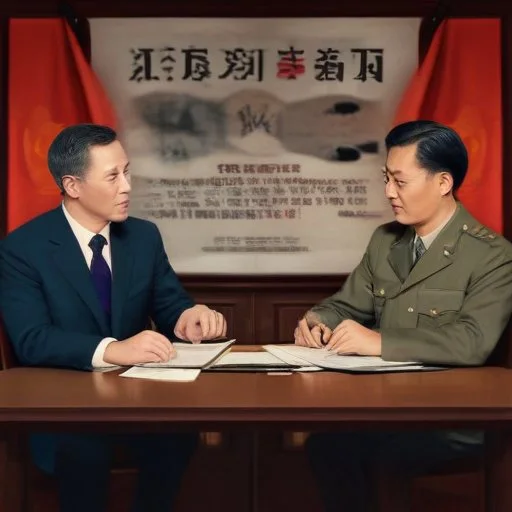
Rich Historical Review
One of the most significant factors that contributed to the armistice agreement was the shift in the Soviet Union's stance on the war. After Stalin's death in March 1953, the new Soviet leadership, led by Georgy Malenkov, began to adopt a more conciliatory approach to international relations. This led to increased pressure on North Korea to negotiate a peace settlement, ultimately paving the way for the armistice agreement.
The Geneva Conference, held in April 1954, further solidified the armistice agreement by establishing a framework for a peaceful resolution to the conflict. The conference, attended by representatives from the United States, the Soviet Union, China, and North and South Korea, marked a significant turning point in the conflict, as it brought together the major players involved in the war to discuss a path forward.

Detailed Character Insight
General Mark Wayne Clark, the Supreme Commander of the United Nations Command, played a crucial role in negotiating the armistice agreement. Clark's leadership and diplomatic skills were instrumental in bringing the parties to the negotiating table and hammering out a deal.
Clark's commitment to finding a peaceful resolution to the conflict was evident in his numerous meetings with Chinese and North Korean officials. His ability to build relationships and trust with his counterparts helped to lay the groundwork for the armistice agreement.
Side-by-Side Comparison
The Korean War armistice agreement can be compared to other conflict resolution efforts of the time, such as the Paris Peace Accords that ended the First Indochina War. Both agreements shared similarities in that they were negotiated by multiple parties and involved complex diplomatic efforts.
However, the Korean War armistice agreement differed from the Paris Peace Accords in that it did not bring a formal end to the war. Instead, it established a ceasefire and created the Demilitarized Zone (DMZ), which has remained in place to this day.

Examination of Cultural Influence
The armistice agreement had a profound impact on Korean culture, as it marked a turning point in the country's reconstruction efforts. The agreement paved the way for international aid to flow into Korea, allowing the country to begin rebuilding and recovering from the devastation of the war.
The war also had a lasting impact on Korean literature and art, with many works reflecting the trauma and hardship experienced during the conflict. The armistice agreement, therefore, marked a new chapter in Korean cultural history, as the country began to heal and move forward.
Philosophical Influence Study
The Korean War armistice agreement had significant philosophical and ideological implications, as it marked a shift in the global balance of power and the role of the United States in international relations.
The agreement can be seen as a reflection of the ideological tensions of the Cold War, as the United States and the Soviet Union vied for influence and power in the region. The armistice agreement, therefore, had far-reaching implications for international relations and global politics, highlighting the importance of diplomacy and negotiation in resolving conflicts.


