


On May 2, 2008, the long-dormant Chaiten Volcano in southern Chile roared back to life, spewing forth a torrent of molten lava, ash, and smoke, forcing the evacuation of over 4,500 people from the surrounding areas.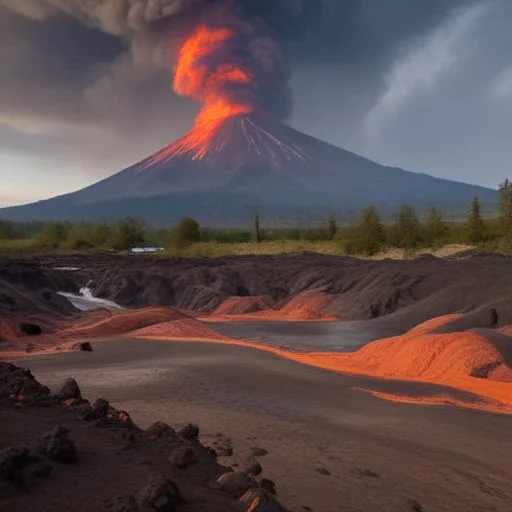
This catastrophic event marked the beginning of a new era of volcanic activity in the region, and its effects were felt far beyond the Chilean borders.
Chaiten Volcano, located in the Los Lagos Region of Chile, had been dormant for over 9,000 years, earning it the reputation of being one of the oldest inactive volcanoes in the region.
However, geologists had long predicted that the volcano was due for an awakening, and their warnings proved prophetic in the spring of 2008.
The first signs of trouble appeared on April 30, 2008, when a series of earthquakes struck the region, signaling the volcano's awakening.
Two days later, on May 2, the volcano erupted in a spectacular display of fire and fury, sending a plume of ash and smoke 10 km into the atmosphere.
The Chilean authorities responded swiftly, evacuating over 4,500 people from the affected areas, including the towns of Chaiten, Futaleufu, and Palena.
The eruption of Chaiten Volcano had far-reaching environmental consequences, affecting not only the local ecosystem but also the global climate.
The massive amounts of ash and sulfur dioxide released into the atmosphere disrupted air traffic, affected agricultural production, and contaminated water sources.
The nearby towns of Futaleufu and Palena were particularly hard hit, with the Blanco River, which flows through the towns, turning a murky gray due to the high levels of ash and sediment.
The Chilean government and international organizations responded swiftly to the crisis, providing aid and assistance to the displaced communities.
The evacuation efforts were led by the Chilean Ministry of Interior, with the support of the army, navy, and air force, who worked tirelessly to transport people to safety.
International organizations, such as the Red Cross and UNICEF, also provided vital assistance, including food, shelter, and medical aid, to the affected communities.
The Chaiten Volcano eruption served as a stark reminder of the importance of volcanic monitoring and preparedness.
The event highlighted the need for governments and scientists to work together to identify potential risks and develop effective response strategies.
As the world becomes increasingly aware of the importance of disaster preparedness, the story of Chaiten Volcano serves as a powerful reminder of the fury and unpredictability of nature.
The Chaiten Volcano eruption may have subsided, but its impact continues to be felt in the region.
The Chilean government has since invested heavily in volcanic monitoring and disaster preparedness, making the country a leader in the field.
The eruption also sparked a renewed interest in volcanology, inspiring a new generation of scientists to study and learn from the fury of Chaiten.
As the years go by, the story of Chaiten Volcano will continue to serve as a powerful reminder of the importance of respecting and understanding the natural world.
The Chaiten Volcano eruption had a profound impact on the local ecosystems, causing widespread destruction and disruption to the delicate balance of nature.
The ash fall and pyroclastic flows affected over 10,000 hectares of native forests, including the ancient Alerce forests, which are home to some of the oldest and tallest trees in the world.
The nearby rivers and streams were also contaminated, affecting the habitats of various aquatic species, including the endangered huillín fish.
The long-term effects of the eruption on the local biodiversity are still being studied and monitored by scientists.
In the indigenous Mapuche culture, Chaiten Volcano is considered a sacred site, believed to hold spiritual powers and significance.
The eruption was seen as a warning from the gods, a sign of the importance of respecting and preserving the natural environment.
The disaster also sparked a renewed interest in the region's cultural heritage, with local communities coming together to preserve their traditions and customs.
The story of Chaiten Volcano has become an integral part of the region's cultural identity, a testament to the power and fury of nature.The evacuation efforts during the Chaiten Volcano eruption set a new standard for disaster response in Chile, with the government and international organizations working together seamlessly.
The swift response prevented a potentially catastrophic loss of life, and the provision of aid and assistance to the affected communities was exemplary.
The success of the humanitarian response was attributed to the effective coordination between government agencies, international organizations, and local communities.
The Chaiten Volcano eruption served as a model for disaster relief, with lessons learned being applied to future crises around the world.
The Chaiten Volcano eruption accelerated the development of new technologies for volcanic monitoring and prediction, including advanced seismic networks and satellite imaging.
The eruption also highlighted the importance of real-time monitoring and data sharing, enabling scientists to provide more accurate warnings and predictions.
The technological advancements made possible by the eruption have since been applied to other volcanic regions around the world, improving our understanding of these complex natural systems.
The Chaiten Volcano eruption marked a significant milestone in the development of volcanology as a science.The Chaiten Volcano eruption had a significant impact on the local economy, with the tourism and agriculture sectors being particularly affected.
However, the disaster also presented opportunities for growth and development, with the government investing heavily in infrastructure and reconstruction projects.
The region has since rebounded, with a renewed focus on sustainable tourism and eco-friendly practices, making it an attractive destination for visitors from around the world.
The story of Chaiten Volcano is one of resilience and rebirth, a testament to the power of human ingenuity and determination.